Why the Mecca defense pact has worried India?
A new defense pact signed in Mecca between Pakistan, Saudi Arabia, and Turkey, featuring a collective defense clause, has raised significant concerns in India regarding its implications for future regional conflicts.
Intelligence analysis by Gemini 2.5 Flash
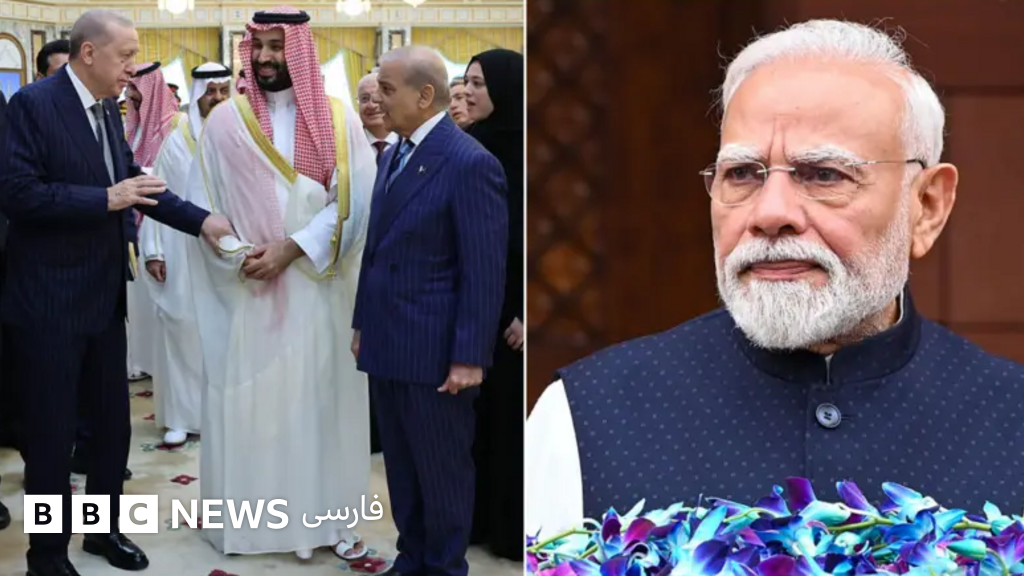
The Mecca defense pact, which stipulates that an armed attack on one signatory is an attack on all, is causing apprehension in India. Experts are debating whether Saudi Arabia and Turkey would intervene in an India-Pakistan conflict, potentially complicating regional stability and India's strategic position.
Imagine three friends, Pakistan, Saudi Arabia, and Turkey, have made a special promise: if one of them gets into a fight, the other two will jump in to help. India, a neighbor of Pakistan, is a bit worried about this new promise. They're thinking, "What if Pakistan and I have a disagreement? Will these new friends make things much bigger and harder to solve?" It's like when you have a small argument with a classmate, but then their whole group of friends gets involved, making it a much bigger problem.
Analysis
The recent signing of a joint defense agreement in Mecca by Pakistan, Saudi Arabia, and Turkey has ignited a flurry of discussions, particularly in India. This pact, which includes a collective defense clause, states that an armed attack on any one of the three nations will be considered an attack on all. India's Ministry of External Affairs has stated it is closely monitoring these developments, reflecting New Delhi's apprehension about the potential ramifications for its security and regional influence. The agreement is seen by some as a new military alliance for Pakistan, reminiscent of its Cold War-era affiliations with CENTO and SEATO, though with different geopolitical implications.
Mecca Defense Pact
The core of the concern stems from the collective defense clause embedded within the Mecca defense pact. This provision, which mirrors Article Five of the NATO pact, legally binds the signatories to mutual defense. While Turkish President Recep Tayyip Erdoğan has stated the pact is not directed at any specific country, international relations experts like Brahma Chellaney suggest it could significantly complicate efforts to de-escalate future conflicts. The pact formalizes a level of support that Pakistan previously received from countries like Turkey during past conflicts, such as the 2025 India-Pakistan conflict, where Turkey provided direct military assistance.
India-Pakistan Conflict
The historical and ongoing tensions between India and Pakistan form the backdrop against which this new alliance is viewed. India is particularly worried about the possibility of Saudi Arabia and Turkey intervening in any future India-Pakistan hostilities. Experts like T.S. Tirumurti, former Indian Ambassador to the United Nations, believe the pact is not beneficial for India, suggesting it could empower Pakistan to act more aggressively. The concern is that if India were to conduct operations targeting military facilities within Pakistan, Islamabad could invoke the collective defense clauses, potentially drawing Turkey and Saudi Arabia into the conflict and escalating it beyond a bilateral dispute.
Saudi Arabia's Economic Ties
Saudi Arabia's involvement in this defense pact is particularly noteworthy given its extensive economic ties with India. Bilateral trade between India and Saudi Arabia stands at $43 billion, with Saudi Arabia expressing interest in investing up to $100 billion in India's energy and infrastructure sectors. Over 2.5 million Indians work in Saudi Arabia, contributing significantly to India's economy through remittances. These strong economic linkages have historically provided Saudi Arabia with diplomatic leverage. However, by linking its security to Pakistan through this pact, Saudi Arabia has, for the second time in 11 months, intertwined its security interests with Pakistan's, potentially creating a complex dynamic where economic interests might clash with defense obligations in the event of an India-Pakistan conflict.
Key points
- Pakistan, Saudi Arabia, and Turkey have signed a joint defense pact in Mecca.
- The pact includes a collective defense clause, treating an attack on one as an attack on all.
- India is concerned about the pact's implications for future conflicts with Pakistan.
- Experts question whether Turkey and Saudi Arabia would intervene in an India-Pakistan war.
- The agreement could complicate de-escalation efforts and regional stability in South Asia and the Middle East.
The Mecca defense pact could significantly escalate future India-Pakistan conflicts by formally drawing in Turkey and Saudi Arabia, complicating de-escalation efforts and potentially leading to a wider regional confrontation. This could destabilize an already volatile region and strain diplomatic relations between India and the pact members.