Why the UK is doubling down on Asean ties amid European reset
Britain's new Labour government is reassuring Southeast Asia that its renewed focus on Europe will not diminish its commitment to the region, with Foreign Secretary Ed Miliband making an ASEAN meeting his first overseas stop.
Intelligence analysis by Gemini 2.5 Flash
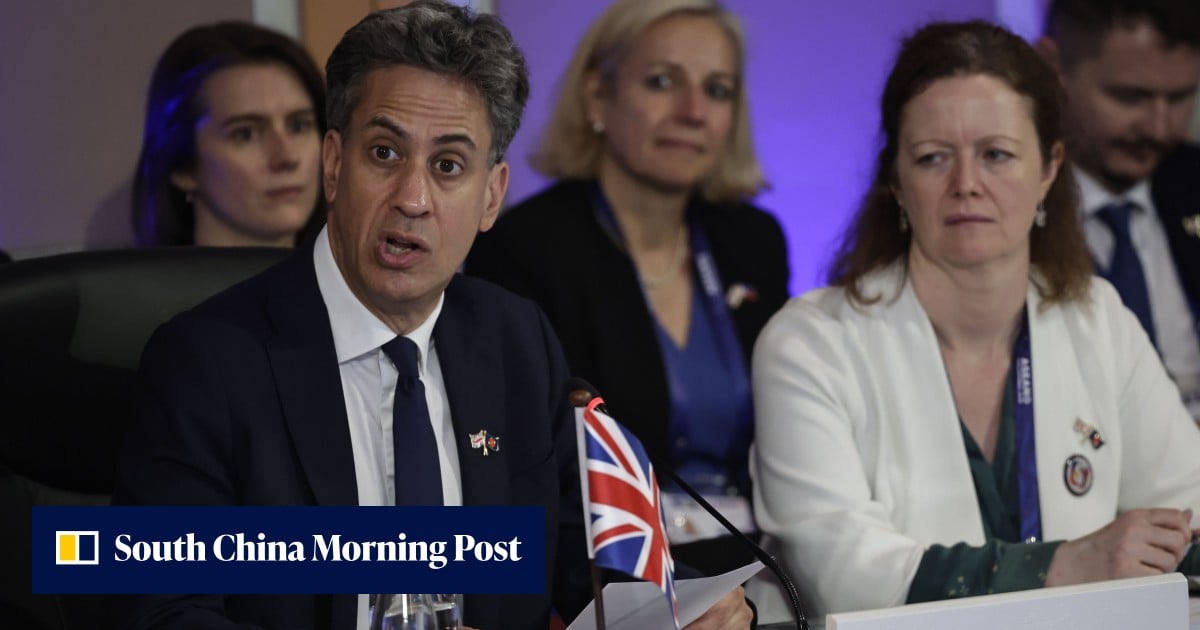
The UK's swift engagement with ASEAN, marked by Foreign Secretary Ed Miliband's inaugural overseas visit, signals a continuity in London's post-Brexit strategy. This approach prioritizes ASEAN for its trade and supply-chain links, maritime and regional security, and a shared interest in maintaining diplomatic space amidst escalating great-power competition.
Imagine the UK, like a kid who just moved schools, is trying to make new friends in a big playground called Southeast Asia. Even though they're also trying to reconnect with old friends in Europe, they want to show their new friends, a group called ASEAN, that they really care about them. They want to play together, trade toys, and help each other stay safe, especially when bigger kids are trying to push everyone around.
Analysis
Post-Brexit Continuity in Asia Engagement
Despite a new Labour government in Britain, the recent actions of Foreign Secretary Ed Miliband underscore a clear continuity in the UK's foreign policy towards Southeast Asia. His decision to attend the ASEAN Foreign Ministers' Meeting as his first overseas engagement, just 48 hours after taking office, was a deliberate signal. This move aims to reassure regional partners that London's efforts to rebuild ties with Europe will not come at the expense of its commitment to the Indo-Pacific, a strategy initiated in the post-Brexit era.
This continuity suggests a bipartisan consensus in the UK regarding the strategic importance of ASEAN. It reflects a long-term vision for global engagement beyond traditional European alliances, positioning the UK as a reliable partner in a dynamic and economically vital region. The emphasis on solidarity and long-term commitment, as articulated by Miliband, seeks to solidify Britain's role as a full dialogue partner, a status achieved five years prior.
Strategic Imperatives for London
The UK's intensified focus on ASEAN is driven by several key strategic imperatives. Economically, the bloc offers crucial opportunities for trade diversification and the strengthening of supply-chain links, particularly vital in a post-Brexit landscape. This helps reduce reliance on European markets and fosters new avenues for growth and resilience.
From a security perspective, engagement with ASEAN addresses shared concerns regarding maritime and regional stability. The UK, as a middle power, also shares an interest with ASEAN nations in preserving diplomatic space and fostering multilateralism amidst increasing pressure from major global powers. This collaboration aims to ensure that regional issues are resolved through dialogue and cooperation, rather than through coercion or unilateral action.
Regional Implications Amid Great Power Dynamics
The UK's doubling down on ASEAN ties carries significant implications for the broader geopolitical dynamics in Southeast Asia, a region increasingly central to great-power competition. While the article does not explicitly mention China, the context of "intensifying great-power pressure" inherently points to the strategic rivalry between the United States and China.
By strengthening its presence and partnerships in ASEAN, the UK contributes to a more diversified set of external relationships for the bloc's member states. This could empower ASEAN nations to maintain greater autonomy and diplomatic flexibility, potentially mitigating the influence of any single dominant power. For China, this means a more crowded and complex regional environment, where its strategic initiatives and economic influence may face additional balancing forces from a coalition of middle powers and Western allies.
Key points
- Britain's new Labour government, led by Prime Minister Andy Burnham, is committed to maintaining strong ties with ASEAN.
- Foreign Secretary Ed Miliband's first overseas trip was to the ASEAN Foreign Ministers' Meeting, signaling continuity in post-Brexit strategy.
- The UK's engagement with ASEAN is driven by interests in trade, supply-chain links, maritime security, and preserving diplomatic space.
- The visit marked five years since the UK became a full dialogue partner of the ASEAN bloc.
- The UK aims to reassure Southeast Asia that its European reset will not come at the region's expense.
Stronger UK-ASEAN ties could foster greater regional stability and economic resilience in Southeast Asia, offering diversified trade opportunities and bolstering multilateral cooperation. This engagement might empower ASEAN nations to navigate complex geopolitical pressures more effectively, promoting a balanced regional order.
The UK's renewed focus on Europe might inadvertently dilute its resources and attention towards ASEAN, leading to a perception of inconsistent commitment. Furthermore, intensifying great-power competition could still overshadow the efforts of middle powers, making it challenging for the UK and ASEAN to maintain significant diplomatic space.