Why use rare earths in rubber production? Chinese scientists are engineering tougher tyres
Chinese researchers have completed trials of a new rare earth-based synthetic rubber production facility, industrialising a major raw material for manufacturing electric vehicle and heavy-duty vehicle tyres.
Intelligence analysis by Llama
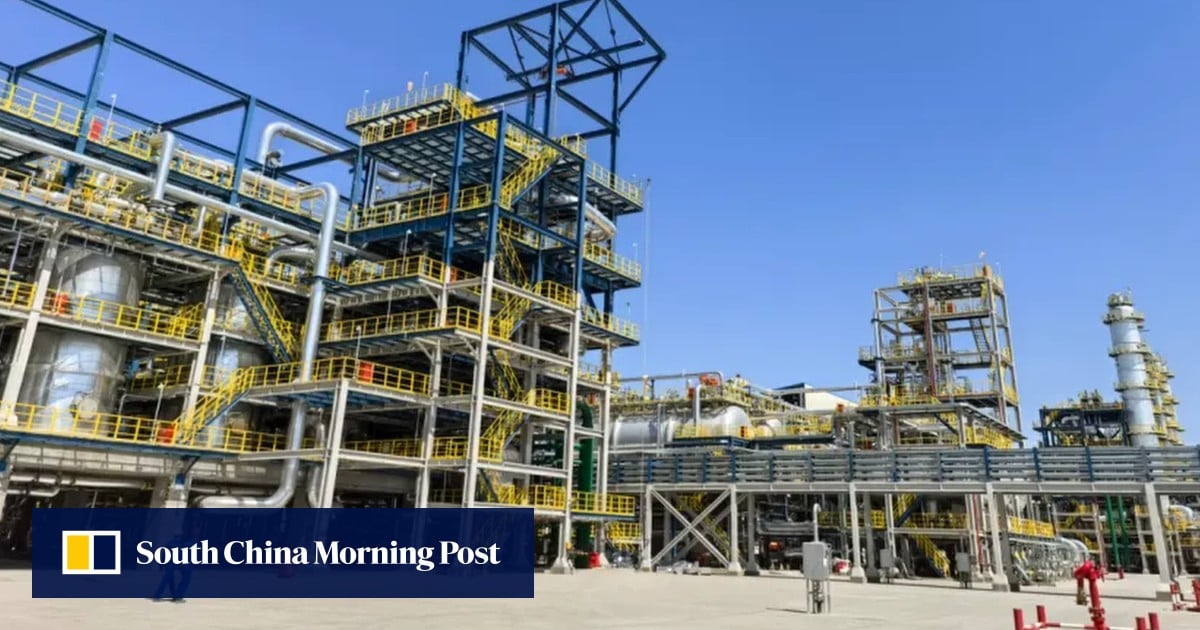
Chinese scientists have engineered a new type of synthetic rubber using rare earth metals, which will be used to produce tougher tyres for electric vehicles and heavy-duty transport. The new facility has a production capacity of 100,000 tonnes a year and draws on over 60 years of research.
Imagine you're driving a car, and the tyres are like the shoes on your feet. They get worn out and need to be replaced. But what if you could make tyres that last longer and don't get worn out as easily? That's what Chinese scientists are trying to do with a new type of synthetic rubber. They're using special metals to make the rubber stronger and more durable, so that tyres can last longer and be more reliable.
Analysis
A $60B Vote of Confidence
Chinese researchers have completed trials of a new rare earth-based synthetic rubber production facility, industrialising a major raw material for manufacturing electric vehicle and heavy-duty vehicle tyres. High-quality synthetic rubber, most of which uses metal as a catalyst during production, is vital to the transport industry, manufacturing and national defence. The unit, built by Xinjiang-based PetroChina subsidiary Dushanzi Petrochemical with support from the Changchun Institute of Applied Chemistry, will have a production capacity of 100,000 tonnes a year. Starting production on July 16, the plant draws on more than 60 years of research into rare earth catalytic synthesis of butadiene rubber, which the institute said it helped to pioneer in the 1960s.
Why Cursor?
The new facility will use a rare earth metal, neodymium, as a catalyst to produce butadiene rubber, a type of synthetic rubber that is highly resilient and wear-resistant. Neodymium is a key component in the production of high-strength magnets, which are used in electric vehicles and other applications. The use of neodymium in the production of synthetic rubber will enable the creation of tyres that are more durable and resistant to wear and tear.
The Road Ahead
The development of this new synthetic rubber has significant implications for the transport industry, as it will enable the production of tyres that are more durable and resistant to wear and tear. The new facility will also help to reduce China's reliance on imported rare earth metals, which are used in a variety of high-tech applications. The success of this project will also pave the way for further research and development in the field of rare earth catalytic synthesis.
Key points
- Chinese researchers have completed trials of a new rare earth-based synthetic rubber production facility.
- The new facility will have a production capacity of 100,000 tonnes a year.
- The facility will use a rare earth metal, neodymium, as a catalyst to produce butadiene rubber.
- The new synthetic rubber will be used to produce tyres that are more durable and resistant to wear and tear.
The development of this new synthetic rubber could lead to significant improvements in the durability and reliability of tyres, which could have a positive impact on the transport industry and the economy as a whole. Additionally, the use of rare earth metals in the production of synthetic rubber could help to reduce China's reliance on imported rare earth metals, which could have a positive impact on the country's trade balance.
One potential downside of this development is that the increased use of rare earth metals in the production of synthetic rubber could lead to a shortage of these metals, which could have a negative impact on the transport industry and the economy. Additionally, the high cost of producing synthetic rubber using rare earth metals could make it difficult for manufacturers to produce tyres that are affordable for consumers.