Why was Alamut Castle and its fortifications recognized by UNESCO?
The historical Alamut Castle and a chain of seven associated fortifications in Qazvin province have been added to UNESCO's World Heritage List at the 48th session of the World Heritage Committee in Busan, South Korea.
Intelligence analysis by Llama
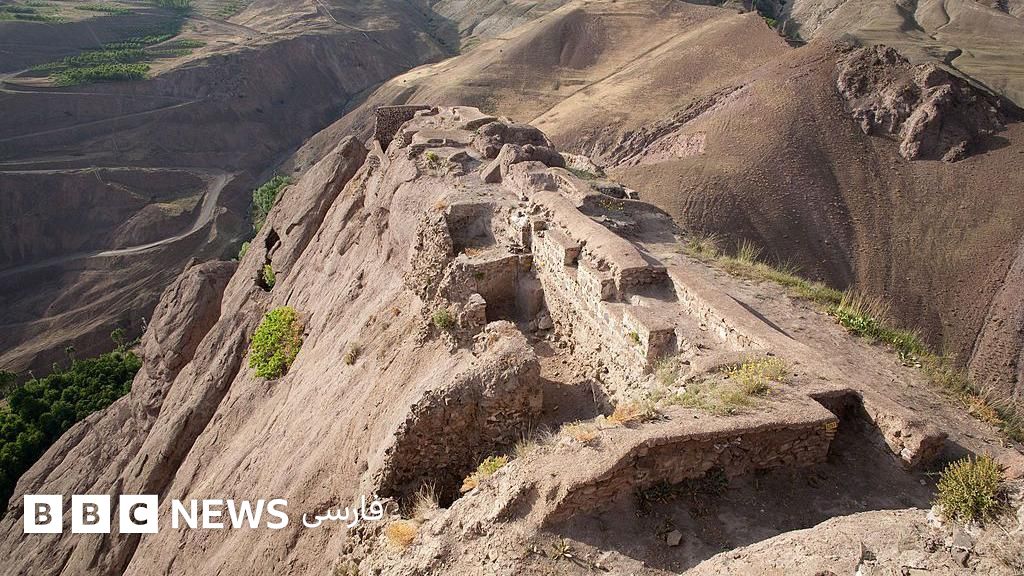
Alamut, the famed Nizari Ismaili stronghold in Iran's Alborz mountains, and six linked fortresses have been inscribed on the UNESCO World Heritage List. The designation elevates the complex from a niche academic subject to globally recognized heritage.
Imagine a giant eagle's nest of stone perched high on a mountain, where a clever group of leaders ran a small kingdom, kept books, and stored water to survive long attacks. Now the United Nations has said this old fortress is so special that everyone in the world should help take care of it.
Analysis
From 'Assassins' Myth to World Heritage
For centuries in Western popular culture, Alamut has lived more as a literary trope than a historical place. Marco Polo's accounts and a long afterlife in literature, cinema, and video games have cemented the fortress as shorthand for the so-called 'Hashashin' legend, often stripped of political and intellectual context. UNESCO's inscription reframes the site: rather than a backdrop for myth, it is now formally recognized as a center of governance, military strategy, and scholarship. According to the article, this shift could pull scholarly attention away from the romanticized narrative and toward the Nizari state's actual administrative, theological, and scientific record.
A Chain of Seven Fortresses, Not a Single Castle
The UNESCO dossier does not cover one isolated castle but a network of seven, with Alamut as the flagship. The others — Lamsar, Navizar Shah, Shams-Kalayeh, Shir-Kuh, Ilan, and Qostin-Lar — sit on mountain peaks with inter-visible sightlines, forming a defensive and administrative spine. Lamsar, the largest, dates back to the Sasanian era and served as a winter residence and seat of the viceroy. Navizar Shah was the last holdout against the Mongols. The article emphasizes that these were not just military works but also reservoirs of learning: Alamut housed a renowned library whose destruction by the Mongols is described as one of the great cultural losses of medieval Iran, and the philosopher Nasir al-Din al-Tusi spent roughly 26 years at the castles, producing major works.
Architecture, Water, and Survival in the Mountains
Built around 865 AD and seized by Hassan-i Sabbah in the late 11th century, Alamut sits at roughly 2,100 meters and divides into an upper and lower fortress of stone, plaster, and brick, integrated into the natural rock. The article highlights the site's sophisticated water and grain storage systems, channels carved into bedrock, and cisterns for collecting rainwater — features that allowed long sieges and made the complex a model of climate-adapted mountain architecture. The fortress fell to Hulagu Khan in 1256, but the inscription now secures a long-term international framework for its preservation and study, and broadens the public frame beyond the martial legend toward the political, cultural, and engineering achievements of the Nizari state.
Key points
- Alamut Castle and six associated fortifications were inscribed on the UNESCO World Heritage List at the 48th session of the World Heritage Committee in Busan, South Korea.
- The complex sits in the Alborz mountains of Qazvin province and was the headquarters of the Nizari Ismaili state from the late 11th century until its fall to the Mongols in 1256.
- The UNESCO dossier covers seven fortresses — Alamut, Lamsar, Navizar Shah, Shams-Kalayeh, Shir-Kuh, Ilan, and Qostin-Lar — linked by inter-visible sightlines.
- The site is noted for its climate-adapted mountain architecture, water harvesting and storage systems, and a celebrated library destroyed during the Mongol invasion.
- The philosopher Nasir al-Din al-Tusi lived in the castles for about 26 years, underscoring their role as centers of scholarship.
The UNESCO status can channel international research funding and conservation expertise toward the seven castles, encouraging rigorous academic study of the Nizari state and its architectural legacy. It may also help displace the 'Assassin' myth in global public memory with a more accurate picture of the site's political and scientific history.
Designation alone does not guarantee protection. Remote mountain sites in Iran face persistent risks of underfunded conservation, looting, and unregulated tourism, and global attention could accelerate wear on fragile structures if visitor management is not strengthened alongside the listing.