Will the Periodic Table Ever Be Complete?
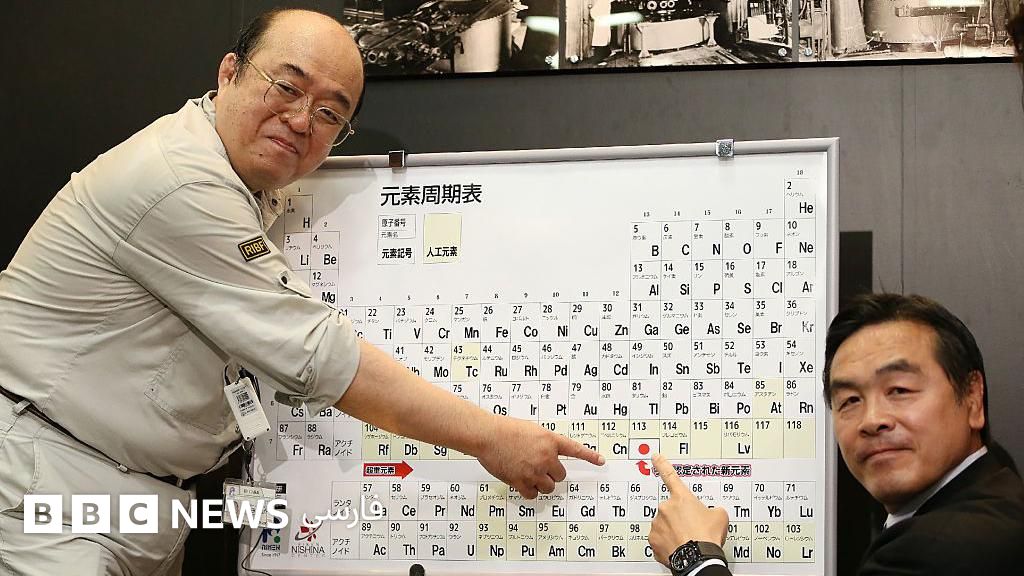
The periodic table, a map of chemical elements, last saw new additions a decade ago with elements 113, 115, 117, and 118. Scientists question if the table will ever be truly complete as creating new, heavier elements becomes increasingly challenging due to their instability.
Intelligence analysis by Gemini 2.5 Flash
The article explores the history and structure of the periodic table, highlighting how elements are discovered and organized. It delves into the scientific challenges of synthesizing new superheavy elements, which are highly unstable and require immense energy, raising questions about the future completeness of the table.
Imagine the periodic table is like a big LEGO instruction book for everything in the universe. Scientists keep trying to find new, bigger LEGO bricks by smashing smaller ones together really, really fast. But the bigger the bricks get, the harder they are to make, and they often fall apart super quickly, like trying to build a really tall, wobbly tower. So, scientists wonder if they'll ever find all the possible bricks, or if it just gets too hard to make the super-wobbly ones.
Analysis
The Quest for New Elements
The periodic table, a cornerstone of chemistry, has been a dynamic entity since its inception, continuously evolving with new discoveries. The last significant update occurred a decade ago, with the formal recognition of elements 113, 115, 117, and 118. This period marked a notable achievement, including the naming of Oganesson (element 118) after living physicist Yuri Oganessian, a rare honor. However, the subsequent ten-year hiatus in new additions has prompted scientists to ponder the future of the table. The article highlights that while naturally occurring elements are largely believed to be discovered, the frontier now lies in synthesizing superheavy elements in laboratories. This endeavor pushes the boundaries of scientific capability, requiring increasingly powerful accelerators and sophisticated techniques to create fleeting, highly unstable atomic structures.
The Mechanics of Element Creation
Creating new, heavier elements is a complex process that involves colliding lighter elements at extremely high energies. Professor Phil Blauer of King's College London explains that this necessitates the construction of larger and more powerful cyclotrons or particle accelerators. The fundamental challenge lies in the inherent instability of these superheavy elements. As more protons are added to an atom's nucleus, the repulsive forces between these positively charged particles increase. To counteract this, a precise ratio of neutrons is required to maintain nuclear cohesion. Dr. Cinzia Imberti further elaborates that heavier elements demand a greater number of neutrons to prevent their rapid collapse. The resulting isotopes are often highly radioactive, decaying almost instantly, making their study and confirmation a painstaking, multi-year process for bodies like the International Union of Pure and Applied Chemistry (IUPAC).
The Future of the Periodic Table
The increasing difficulty in synthesizing new elements raises a profound question: will the periodic table ever be considered complete? While theoretically, there's no hard limit to the number of protons an atom can have, the practical challenges are immense. The energy requirements for creating heavier elements continue to escalate, and the resulting atoms become progressively more unstable, existing for mere fractions of a second. This means that even if new elements are created, their fleeting existence makes it incredibly difficult to study their properties or even definitively confirm their creation. The article suggests that while the human quest for knowledge will likely continue to push these boundaries, the rate of new discoveries may slow significantly, and the "completeness" of the periodic table might eventually be defined by the practical limits of our technology and the inherent instability of matter at extreme atomic numbers.
Key points
- The last new elements (113, 115, 117, 118) were added to the periodic table a decade ago.
- Dmitri Mendeleev is credited with creating the modern periodic table, which organizes elements by atomic number.
- Heavier elements are artificially created in laboratories by colliding lighter elements at high energies.
- These superheavy elements are highly unstable and radioactive, requiring increasingly powerful accelerators to produce.
- The International Union of Pure and Applied Chemistry (IUPAC) verifies new element discoveries, a process that can take years.
Continued advancements in particle accelerator technology and nuclear physics could enable scientists to synthesize even heavier, albeit fleeting, elements, expanding our understanding of matter and the fundamental forces of the universe. Each new discovery, however brief, offers valuable data.
The escalating energy requirements and extreme instability of superheavy elements may eventually make the creation and confirmation of new elements practically impossible, leading to a plateau in the expansion of the periodic table.