With Japan, China faces a corrosive security dilemma
Japan's 2026 defence white paper labels China an "unprecedented and the greatest strategic challenge," accelerating Tokyo's rearmament efforts amid perceived US alliance fragility.
Intelligence analysis by Gemini 2.5 Flash
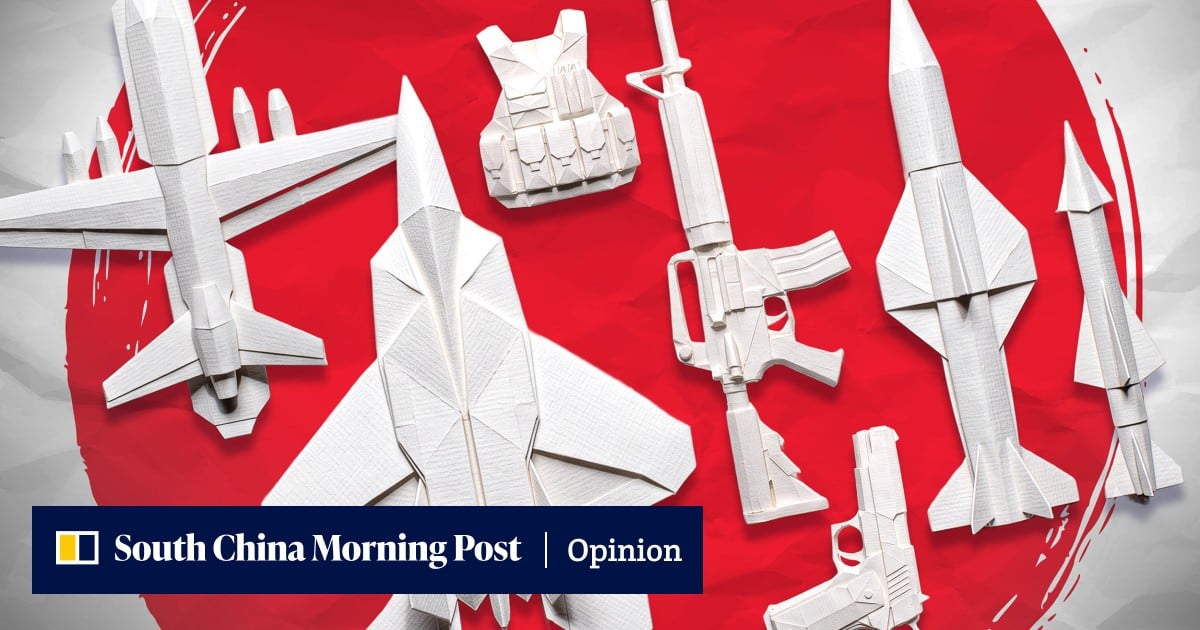
Japan's latest defence white paper solidifies its view of China as a major strategic threat, prompting Tokyo to dismantle post-war pacifist guard rails and boost its military capabilities. This move is partly driven by Japan's assessment of a 'leaky' US security umbrella and China's increasing military presence, creating a deepening security dilemma for both nations.
Imagine two kids, Japan and China, playing in a big sandbox. Japan used to have rules about only building small sandcastles, but now it sees China building bigger ones and moving its toys around a lot. Japan worries its big friend, America, might not always be there to help, so it's starting to build bigger, stronger sandcastles too. This makes China worry even more, and both keep building, making the sandbox a bit tense.
Analysis
Japan's recent 2026 defence white paper marks a significant escalation in its strategic posture towards China, explicitly labeling Beijing as an "unprecedented and the greatest strategic challenge." This framing, which dates back to 2014, has been consistently reinforced, indicating a long-term shift in Tokyo's security policy. The paper's release confirms Chinese strategists' fears regarding the dismantling of Japan's post-war pacifist guard rails, now justified under the guise of 'self-defence.' This trajectory, accelerated by Prime Minister Sanae Takaichi, suggests a more assertive Japan in regional security affairs.
2026 Defence White Paper
The 610-page document from Japan's Ministry of Defence outlines a comprehensive strategic shift, emphasizing the perceived threats from China. It highlights Beijing's East China Sea Air Defence Identification Zone, grey-zone blockades, and the tilting cross-strait balance as triggers for Japan's rearmament. The white paper also details Chinese military activities, such as the Liaoning aircraft carrier's deployment beyond the second island chain and the first simultaneous Pacific deployment of the Liaoning and Shandong aircraft carriers, recording over 1,400 aircraft launches and recoveries during these operations. These details serve as domestic rallying cries for increased defence spending and capabilities.
Japan's assessment of the US security umbrella's fragility, particularly after observing the Iran war's impact on US interceptor deployments, reinforces Beijing's concerns about alliance reliability. Japanese Defence Minister Shinjiro Koizumi's acknowledgment of a Pacific "defence vacuum" further solidifies Tokyo's rationale for autonomous rearmament. This perception of a weakening US commitment, coupled with China's growing military assertiveness, creates a complex and potentially volatile regional dynamic. Beijing views Tokyo's rearmament as a direct response to this perceived vacuum, heightening its own anxieties about regional power shifts.
Liaoning and Shandong
The white paper specifically cites the activities of China's aircraft carriers, the Liaoning and Shandong, as key indicators of Beijing's expanding military reach. Their deployment beyond traditional operational areas and their first simultaneous Pacific deployment are presented as evidence of China's intent to normalize its military presence as a "fait accompli." While China maintains these operations are consistent with international law, Japan interprets them as part of a broader strategy to assert sovereignty and project power. This difference in interpretation fuels the security dilemma, where actions taken by one side for defensive purposes are perceived as offensive by the other.
Furthermore, Japan's new framing of the East and South China seas and the Taiwan Strait challenges as a single, interconnected threat underscores its comprehensive approach to regional security. The inclusion of a chapter on "new forms of warfare," drawing lessons from the Ukraine conflict regarding drones and artificial intelligence, indicates Japan's intent to modernize its military capabilities beyond traditional platforms. This move, coupled with the defence production section calling the industry "defence capability itself," signals a deeper integration of militarization into Japan's economy, a development Beijing would undoubtedly view with significant concern and as a further step towards a regional arms race.
Key points
- Japan's 2026 defence white paper labels China as its "greatest strategic challenge" for the fourth consecutive year.
- Tokyo is accelerating its rearmament, dismantling post-war pacifist guard rails under the guise of self-defence.
- Japan's strategic shift is partly influenced by its assessment of a 'leaky' US security umbrella, particularly after the Iran war.
- The white paper cites Chinese military activities, including aircraft carrier deployments and grey-zone operations, as triggers for its rearmament.
- Japan now views challenges in the East China Sea, South China Sea, and Taiwan Strait as a single, interconnected threat.
The escalating rhetoric and military buildup described in the article could lead to a dangerous arms race in the Indo-Pacific, increasing the risk of miscalculation or accidental conflict. The perceived fragility of the US security umbrella might encourage both Japan and China to act more unilaterally, further destabilizing regional security dynamics.