WP to table a motion setting out its vision for Singapore’s economy in Parliament on Aug 4
The Workers’ Party will table a motion in Parliament on Aug 4 to set out its vision for Singapore’s economy and respond to the Government’s economic plans. The motion will cover themes including innovation, the cost of doing business, jobs and helping Singapore’s business…
Intelligence analysis by Llama
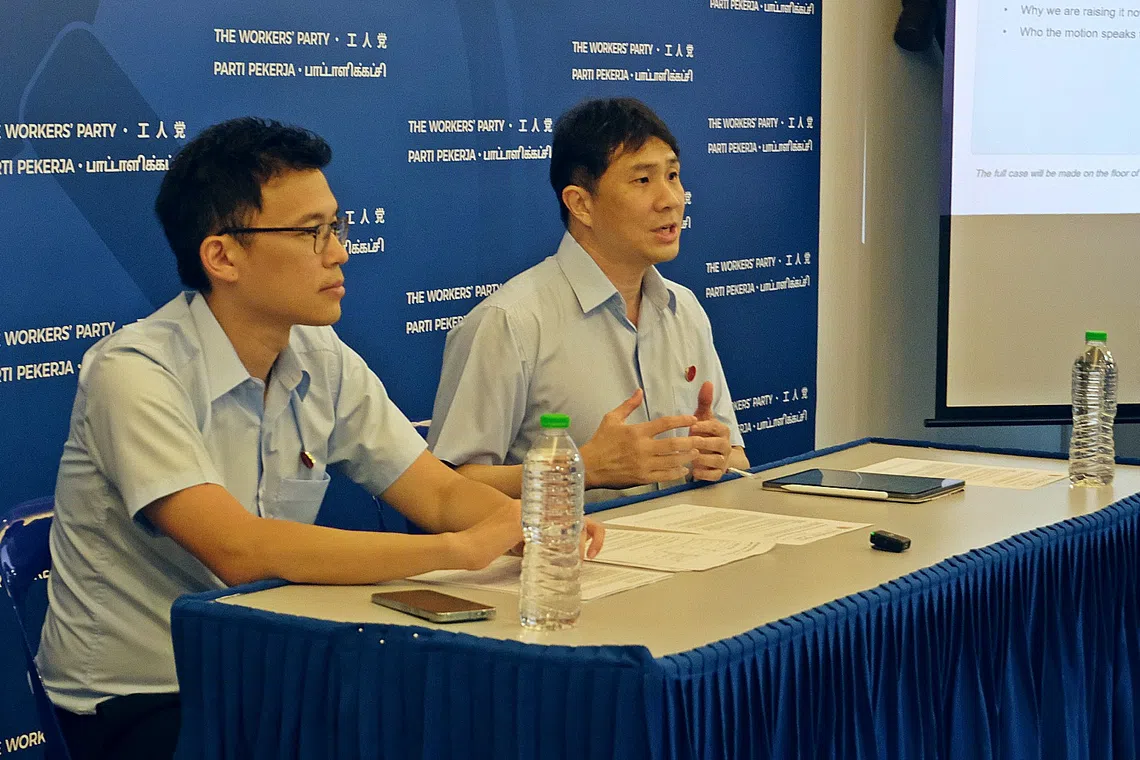
The Workers’ Party will table a motion in Parliament on Aug 4 to set out its vision for Singapore’s economy. The motion will cover themes including innovation, the cost of doing business, jobs and helping Singapore’s businesses to regionalise.
The Workers’ Party is going to tell the government what they think Singapore’s economy should be like. They want to make sure everyone has a chance to succeed and that Singapore’s companies can grow and be successful. They also want to make sure that Singapore’s economy is not just driven by big companies from other countries, but also by local companies and Singaporeans.
Analysis
A New Economic Playbook for Singapore
The Workers’ Party will table a motion in Parliament on Aug 4 to set out its vision for Singapore’s economy. This motion is a significant development in the country’s economic landscape, as it provides an alternative vision to the Government’s economic plans. The motion will cover themes including innovation, the cost of doing business, jobs and helping Singapore’s businesses to regionalise.
The motion has two parts. The first will ask if the House believes in a more equal and inclusive economy: one with opportunities for entrepreneurs to experiment; for households and businesses to succeed; for workers to thrive; and for ideas and innovation to flourish. The second will ask if it believes in an economic engine driven by dynamic local companies, healthy domestic demand, and Singaporeans and Singaporean capital venturing abroad.
According to Kenneth Tiong, a first-term MP and the one who filed the motion, Singapore’s economy has historically been driven by investment from large multinational corporations (MNCs). However, this plan is now facing challenges. Companies are now setting up their regional headquarters elsewhere in Asia because manpower and rent cost less. For example, Standard Chartered bank has moved jobs to India. Singapore therefore faces a new set of challenges and cannot rely on the same playbook to succeed.
Jamus Lim, another MP who seconded the motion, noted that the Government had launched a review of Singapore’s economy and released its plans in June. The committee behind the Government’s Economic Strategy Review then set out in a report 32 recommendations across eight focus areas to navigate global shifts like AI and tariffs. The WP will, in the coming months, push the Government about details in the report, but also wants to sketch out its own vision of how these details should be executed.
For example, the report talks about the internationalisation of local firms – which the WP is in favour of. But it does not talk enough about some of the pain points Singapore’s businesses continue to face. Lim said he hopes the WP’s ideas set out during the motion are not seen as a substitute but a complement to the Government’s plans. ‘We think that there are still some gaps in that vision, and we provide both an alternative vision and a way forward that we think fills in many of these gaps,’ he said.
Tiong said the WP filed the motion as part of its MPs’ responsibilities as political representatives. Worries about how Singapore’s economic model will continue to provide inclusive prosperity and more equal growth has been top of mind for many Singaporeans he has spoken to. ‘It’s our duty to come up with our answer,’ he said.
The motion will be opened by Tiong, who will be allowed a 40-minute speech. He will also close the motion, with every other MP allowed 20 minutes to speak. The last time the WP filed a motion in Parliament was in 2023, when party chief Pritam Singh tabled a debate on how to help Singaporeans with the cost of living. The motion passed after a seven-hour debate, with amendments from the PAP. The WP eventually voted against the amended motion.
Key points
- The Workers’ Party will table a motion in Parliament on Aug 4 to set out its vision for Singapore’s economy.
- The motion will cover themes including innovation, the cost of doing business, jobs and helping Singapore’s businesses to regionalise.
- The motion has two parts, asking if the House believes in a more equal and inclusive economy and an economic engine driven by dynamic local companies.
- The Workers’ Party wants to provide an alternative vision to the Government’s economic plans and highlight the concerns of many Singaporeans about the country’s economic model.
If the Workers’ Party’s motion is successful, it could lead to a more inclusive and innovative economy in Singapore. This could result in more opportunities for entrepreneurs, households, and businesses to succeed, and for workers to thrive. It could also lead to a more dynamic and competitive economy, with local companies and Singaporeans playing a bigger role.
However, there are also risks associated with the Workers’ Party’s motion. For example, if the government does not adopt the WP’s vision, it could lead to a more divided and unequal economy. It could also lead to a loss of confidence in the government and the economy, which could have negative consequences for businesses and investors.