X Money begins limited US rollout
X has launched X Money, a financial services platform for its Premium and Premium+ subscribers in the US, offering deposit accounts, peer-to-peer payments, and a Visa-integrated debit card.
Intelligence analysis by Llama
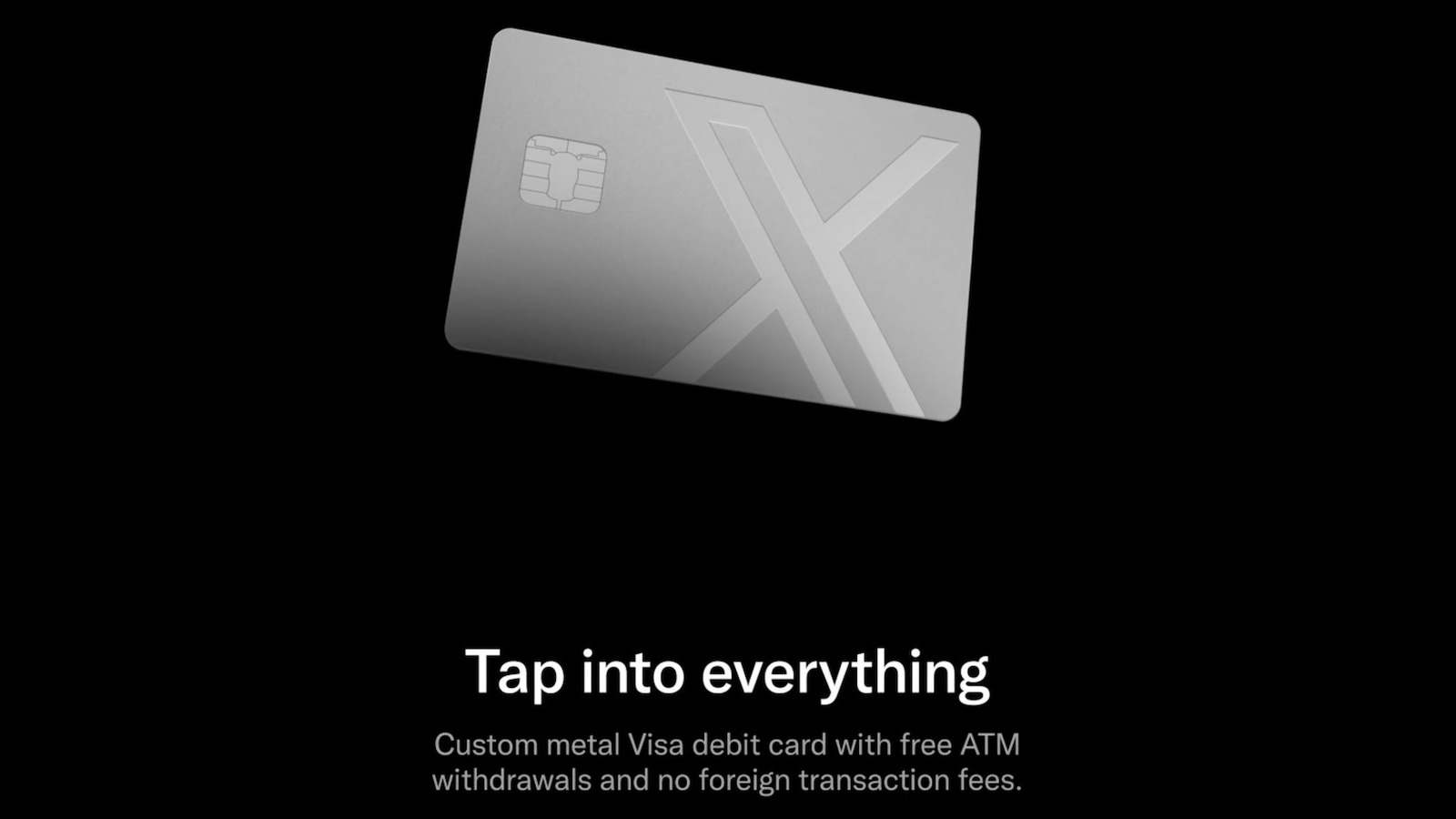
X Money debuts as an invite-only beta for paying US subscribers, bundling a deposit account, P2P payments, and a metal debit card with up to 6% APY into the X app — another step in Musk's everything-app vision.
X — the app that used to be called Twitter — just started letting some of its paying users in America do their banking right inside the app. They can save money, send cash to friends, and get a shiny metal card, kind of like turning a chat app into a mini bank.
Analysis
From Posts to Payments
For years, Elon Musk has talked openly about turning X into an "everything app" modeled loosely on China's WeChat, where messaging, shopping, banking, and services share a single login. X Money is the first consumer-facing product that genuinely tests that thesis in the United States. By baking a deposit account, peer-to-peer payments, and a Visa-backed debit card into the same app where users already follow news, argue, and scroll, X is collapsing the distance between attention and commerce in a way most Western platforms have avoided. The 6% APY headline and 3% cashback are not incidental — they are the hook designed to convert a captive audience of Premium subscribers into active banking customers.
The Regulatory Architecture
Banking-as-a-feature is rarely simple, and the article makes clear X chose a partner-bank model rather than pursuing its own charter. Deposits sit at Cross River Bank, an FDIC-member institution, which means balances up to standard insurance limits are protected even though X Payments LLC itself is not an FDIC-insured bank. The Visa and Apple Wallet integrations handle the card rails and contactless layer. This structure lets X ship a checking-like product without waiting years for a banking license, but it also means compliance, KYC, and risk ultimately run through Cross River — a relationship that will be tested the moment regulators or card networks ask harder questions about content moderation, scams, and the political speech that flows through the parent platform.
Yield as a Trust Lever
The most striking number in the launch is the 6% APY, which towers over the rates offered by most neobanks and traditional high-yield savings accounts. That gap is the real product, because the rest of the feature set — early direct deposit, no foreign transaction fees, a customizable metal card — is table stakes in 2026. X is effectively paying users to try banking with a platform whose recent history includes rebrands, mass layoffs, content-policy whiplash, and an AI chatbot the article pointedly references. Whether that premium yield is sustainable, what revenue backs it, and how it will move once the promotional period ends are the questions that will determine if X Money becomes a long-term financial product or another short-lived Musk experiment.
Key points
- X Money is rolling out to Premium and Premium+ subscribers aged 18+ in the US via invite-only beta
- The platform bundles a deposit account, peer-to-peer payments, and a Visa-backed debit card inside the X app
- Deposits are held at Cross River Bank, an FDIC member, so balances are insured even though X Payments LLC is not itself a bank
- Headline perks include up to 6% APY, 3% cashback, no foreign transaction fees, and early direct deposit
- The launch advances X's long-stated goal of becoming an everything app à la WeChat
If X Money delivers reliably on its 6% APY and cashback perks while keeping deposits safely at Cross River Bank, it could pull a meaningful slice of everyday banking away from incumbents and give the everything-app thesis its first real US foothold. Strong adoption among Premium subscribers would also give X a direct revenue stream less dependent on advertising.
Trust is the obvious risk: users may be unwilling to park their paychecks with a platform tied to Musk and his AI chatbot, especially given X's history of policy upheaval and layoffs. Regulatory scrutiny on the Cross River partnership, fraud exposure on P2P payments, and an unsustainable promotional yield that gets slashed after launch could each independently choke the product before it scales.


