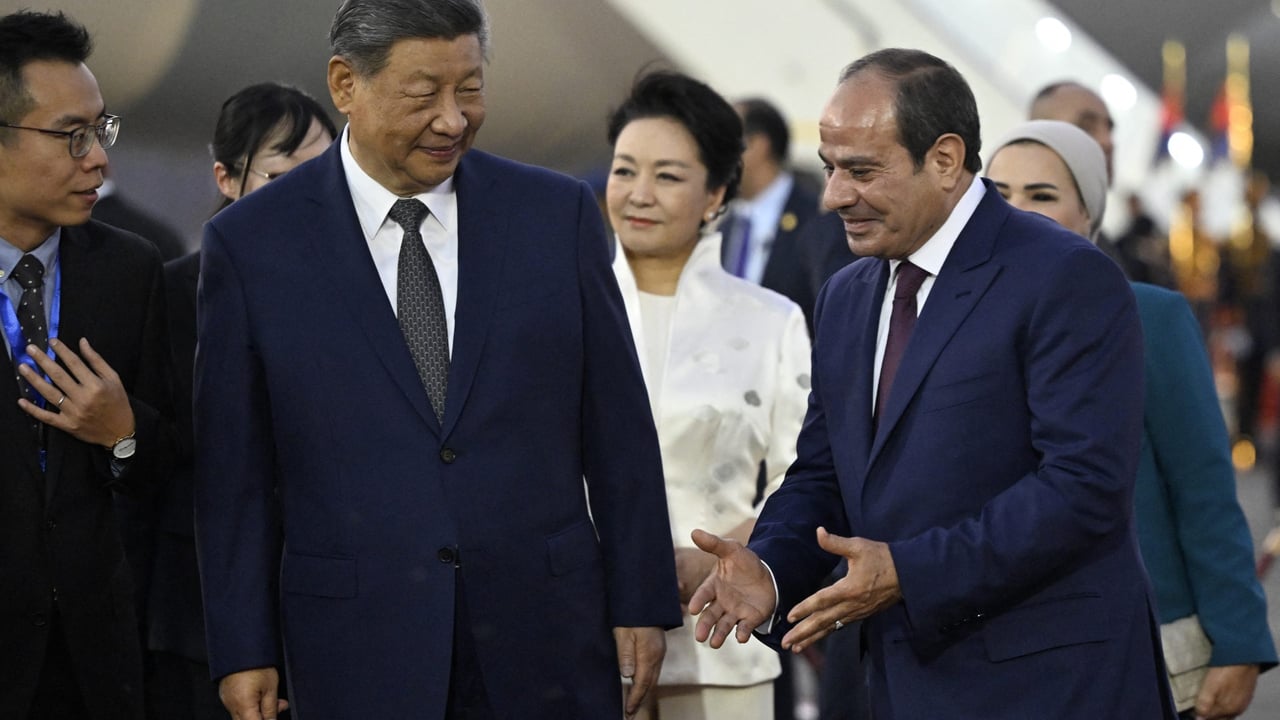
Xi Jinping in Egypt: Middle East War on the Discussion Agenda
Chinese President Xi Jinping is visiting Egypt to meet with Abdel Fattah al-Sissi, with discussions focusing on investments and the repercussions of the Middle East war and US sanctions on global economy and diplomacy. Both countries, partners of Iran, seek to strengthen …
Intelligence analysis by Gemini 2.5 Flash
Amid renewed Middle East hostilities and increased US pressure on Iran's trading partners, Chinese President Xi Jinping's visit to Egypt aims to solidify economic ties and coordinate diplomatic strategies with President al-Sissi. The talks will address the global economic and diplomatic fallout from the regional conflict and American sanctions, as both Beijing and Cairo navigate compl…
Imagine two big countries, China and Egypt, are friends. The leader of China, Xi Jinping, is visiting Egypt's leader, al-Sissi. They're talking about how to make their countries richer by trading more, but also about a big fight happening in the Middle East and how another big country, America, is telling everyone not to trade with one of the fighting countries, Iran. Egypt and China want to show they can be friends with everyone and help make the world a fairer place for all countries, not just the biggest ones.
Analysis
Abdel Fattah al-Sissi
President al-Sissi is leveraging Xi Jinping's visit to demonstrate Egypt's independent foreign policy, emphasizing its ability to maintain strong ties with both Washington and Beijing. Egypt, a significant recipient of US military aid and a key mediator in the Middle East, seeks to maximize its diplomatic flexibility. Al-Sissi's public statements underscore a commitment to strengthening the "Global South" alongside China, reflecting a desire for a more multipolar world order.
This strategic positioning allows Egypt to pursue its national interests by diversifying its international partnerships, rather than being solely reliant on any single superpower. The visit reinforces Egypt's ambition to play a more prominent role in regional and global affairs, using its diplomatic influence to navigate complex geopolitical challenges.
Banque Misr
The recent US sanctions against the Emirati branch of Banque Misr, Egypt's second-largest bank, for alleged financial exchanges with Tehran, highlight the direct economic pressure Washington is exerting on countries maintaining ties with Iran. This move underscores the risks faced by financial institutions in nations like Egypt and China, which are significant trading partners with Iran, particularly in oil purchases.
The targeting of Banque Misr serves as a clear warning from the US Treasury, aiming to cut off countries from the Western financial system if they continue to engage with Iran. This situation forces both Egypt and China to reassess their financial strategies and seek alternative mechanisms or stronger diplomatic backing to protect their economic interests from extraterritorial sanctions.
Canal de Suez
The strategic importance of the Suez Canal zone is a key discussion point between Xi Jinping and al-Sissi, with China having already established a major presence there. Chinese investments are pivotal to Egypt's large-scale infrastructure projects, including the new administrative capital's financial district, showcasing Beijing's significant economic footprint in the country.
China's role as a major exporter to Egypt, with a substantial trade surplus, further solidifies their economic interdependence. Expanding cooperation in areas like artificial intelligence, transport, and energy, alongside military collaboration, indicates a deepening strategic partnership that extends beyond mere trade, impacting regional logistics and global supply chains.
Key points
- Chinese President Xi Jinping is visiting Egypt to meet President Abdel Fattah al-Sissi.
- Discussions will cover investments, the Middle East war, and the impact of US sanctions on global economy and diplomacy.
- Both China and Egypt are partners of Iran and face US pressure regarding these ties.
- Egypt aims to demonstrate an independent foreign policy, balancing relations with the US and China.
- Bilateral agreements are expected in AI, transport, and energy, alongside military cooperation.
The visit could lead to significant new investments and bilateral agreements, boosting Egypt's economy and infrastructure development, particularly in AI, transport, and energy. It could also strengthen the "Global South's" influence on the world stage, fostering a more balanced international order and providing Egypt with greater diplomatic leverage.
Increased US pressure and sanctions on countries dealing with Iran could escalate, potentially impacting Egyptian and Chinese banks and economies. This could force difficult choices for Egypt, caught between its long-standing alliance with the US and its growing economic ties with China, leading to economic instability or diplomatic strain.