Yemeni forces attack Saudi Aramco oil facility in response to airspace violation
Yemeni forces have targeted a Saudi oil refinery in response to the violation of Yemeni airspace. The attack came after Saudi Arabia targeted Sanaa International Airport in an attempt to prevent an Iranian aircraft from landing.
Intelligence analysis by Llama
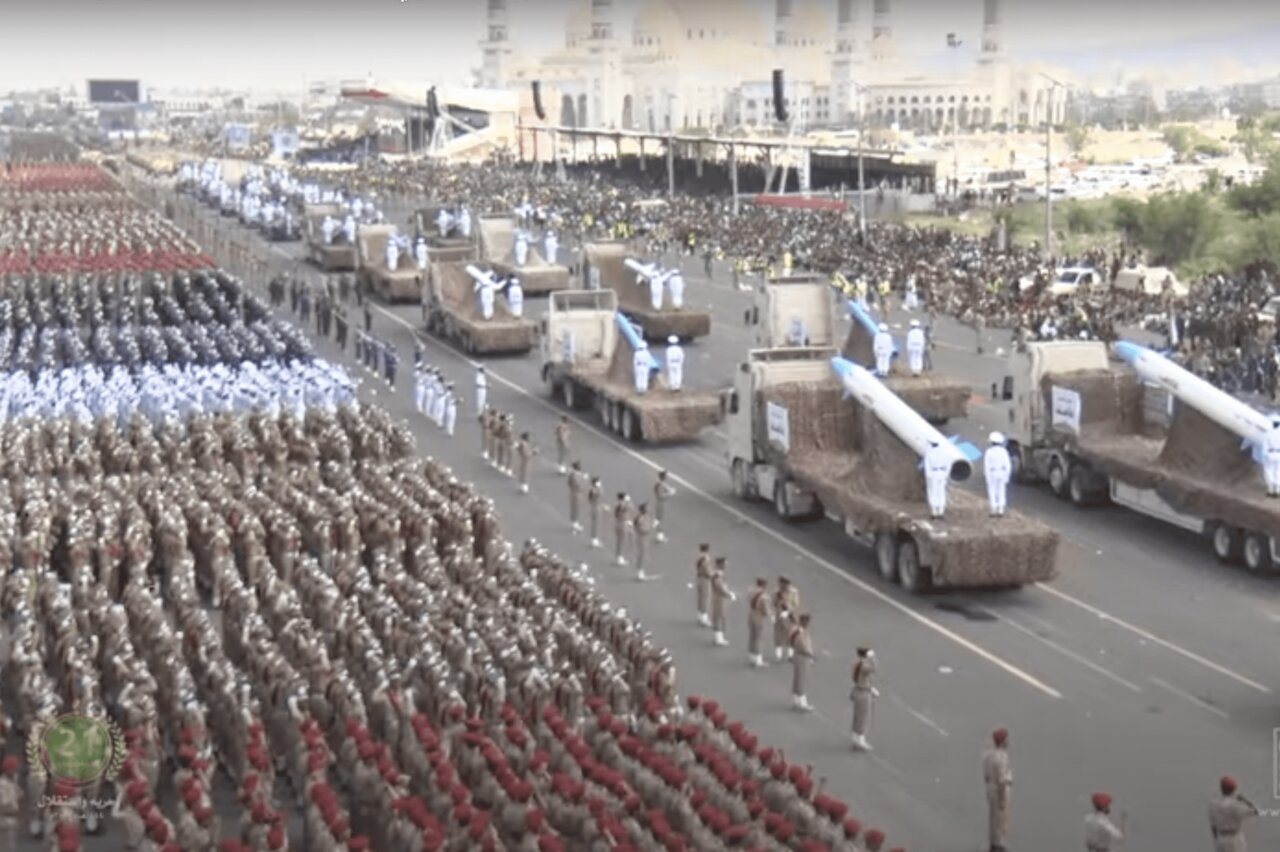
Yemeni forces have attacked a Saudi oil refinery in response to the violation of Yemeni airspace. The attack is part of a larger military operation targeting Saudi mobilizations and weapons depots in the Al-Mokha area.
Imagine a country, Yemen, that is being attacked by another country, Saudi Arabia. Yemen wants to protect itself, so it uses drones to attack a Saudi oil refinery. This is like a big game of defense, where Yemen is trying to keep itself safe from Saudi Arabia's attacks.
Analysis
Yemeni Forces' Response to Airspace Violation
The Yemeni Armed Forces (YAF) have announced that they targeted a Saudi oil refinery in response to the violation of Yemeni airspace. This attack is part of a larger military operation targeting Saudi mobilizations and weapons depots in the Al-Mokha area.
The YAF has stated that the operation was carried out using a large number of ballistic missiles and UAVs, resulting in widespread destruction of equipment and weapons, with dozens killed and wounded, including Saudis. This operation is a significant escalation of the conflict between Yemen and Saudi Arabia, and highlights the increasing use of military force by the Yemeni government in response to perceived violations of its sovereignty.
Background on the Conflict
The conflict between Yemen and Saudi Arabia has been ongoing for several years, with the YAF accusing Saudi Arabia of violating Yemeni airspace and targeting its military installations. The YAF has also imposed a naval blockade on Riyadh, following a broad popular mandate expressed by Yemenis during the massive Friday demonstrations in the capital Sanaa and several provinces.
Implications of the Attack
The attack on the Saudi oil refinery has significant implications for the conflict between Yemen and Saudi Arabia. It highlights the increasing use of military force by the Yemeni government in response to perceived violations of its sovereignty, and raises the stakes for Saudi Arabia in the conflict. The attack also raises concerns about the potential for further escalation of the conflict, and the impact on the civilian population in the region.
Yemen's Blockade-for-Blockade Equation
The YAF has established a new equation inside Yemeni territory, one that “will become firmly established on a daily basis.” The new equation is that “any military presence or movement by Saudi forces toward Yemen, or in the opposite direction, will be directly targeted.” This equation is aimed at settling the battle on the ground, cutting off the forces affiliated with Saudi Arabia, and preventing them from moving between the provinces.
Key points
- Yemeni forces have targeted a Saudi oil refinery in response to the violation of Yemeni airspace.
- The attack is part of a larger military operation targeting Saudi mobilizations and weapons depots in the Al-Mokha area.
- The YAF has established a new equation inside Yemeni territory, one that “will become firmly established on a daily basis.”
- The new equation is that “any military presence or movement by Saudi forces toward Yemen, or in the opposite direction, will be directly targeted.”
If the Yemeni government continues to successfully target Saudi oil refineries and commercial vessels, it may be able to weaken Saudi Arabia's economy and force it to negotiate a peace deal. This could lead to a reduction in violence and a more stable region.
However, if the conflict escalates further, it could lead to a humanitarian crisis, with civilians caught in the crossfire. The attack on the Saudi oil refinery also raises concerns about the potential for further escalation of the conflict, and the impact on the civilian population in the region.