Yemen’s Houthis attack Saudi refinery after kingdom signs defence pact
Yemen's Iran-aligned Houthis attacked Saudi Aramco's Jazan refinery with a drone, two days after Saudi Arabia signed a defense pact with Turkey and Pakistan.
Intelligence analysis by Gemini 2.5 Flash
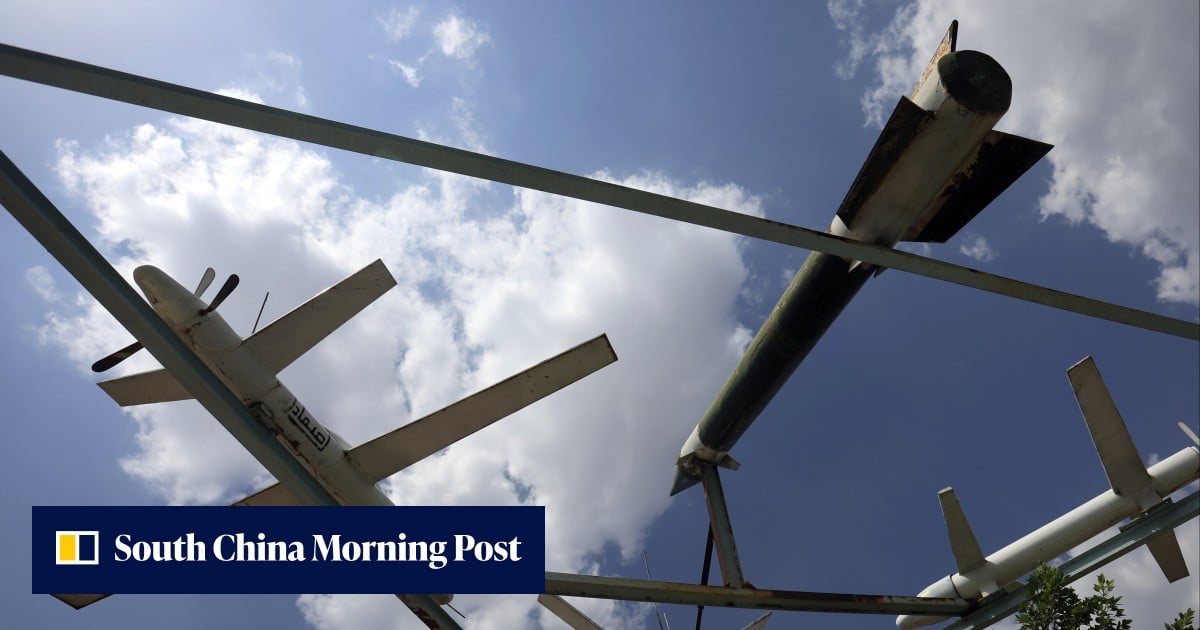
Houthi rebels launched a drone strike on Saudi Aramco's Jazan refinery, causing a fire that was quickly extinguished without injuries. This incident occurred shortly after Saudi Arabia, Turkey, and Pakistan formed a new defense alliance to counter regional instability, raising questions about the pact's immediate effectiveness.
Imagine a big gas station that makes fuel for cars. Some rebels, called Houthis, used a flying robot (a drone) to hit one of these big gas stations in Saudi Arabia, called Jazan refinery. This happened just after Saudi Arabia made a new promise with two other countries, Turkey and Pakistan, to help each other if they get attacked. Luckily, no one got hurt, but it shows things are still a bit tense in that part of the world.
Analysis
Jazan refinery
The Houthi forces launched a drone attack targeting Saudi Aramco's Jazan refinery, a critical piece of infrastructure in southwestern Saudi Arabia. This facility is significant, processing an estimated 400,000 barrels of crude oil per day, making it a vital component of the kingdom's energy production capabilities. While the Saudi energy ministry confirmed a fire broke out, it was quickly extinguished, and crucially, no injuries were reported, indicating a successful containment of the incident.
This is not an isolated event, as the Houthis have a history of striking Aramco sites in Jazan and other strategic locations like Yanbu on the Red Sea. These repeated attacks underscore the persistent vulnerability of Saudi Arabia's oil infrastructure to asymmetric warfare tactics employed by the Iran-aligned group. The ability of the Houthis to penetrate Saudi airspace and target such facilities continues to pose a significant security challenge for Riyadh.
Defence pact
The Houthi attack occurred just two days after Saudi Arabia formalized a new defense pact with Turkey and Pakistan. This alliance, described as a collective deterrence against aggression, stipulates that an armed attack against any of the three signatories would be considered an attack on all. The timing of the Houthi strike immediately after this significant diplomatic development raises questions about the pact's immediate deterrent effect and its practical implications.
The alliance brings together Sunni Muslim US allies, aiming to bolster regional stability amidst growing instability, particularly in the context of the US-Israeli war on Iran mentioned in the article. However, the article explicitly notes that it was unclear whether or how either Pakistan or Turkey would join in any Saudi response to the latest attacks. This ambiguity highlights the challenges of translating a defensive agreement into immediate, coordinated action, especially when dealing with non-state actors like the Houthis.
Yahya Saree
The Houthi military spokesman, Yahya Saree, promptly claimed responsibility for the drone attack on the Jazan refinery via social media. This public declaration is a consistent feature of Houthi operations, serving to assert their capabilities and send a clear message to their adversaries. Saree's statement confirmed the use of a drone, a weapon system that has become central to the Houthis' long-range strike capabilities.
The Houthis' willingness to openly claim such attacks, even in the face of a newly formed regional defense alliance, demonstrates their resolve and their strategy of challenging Saudi security. Their actions are framed by their own narrative of a Saudi siege, an allegation that Riyadh denies. Saree's role in disseminating information about these strikes is crucial for understanding the Houthi's communication strategy and their efforts to control the narrative surrounding their military operations.
Key points
- Yemen's Iran-aligned Houthis attacked Saudi Aramco's Jazan refinery with a drone.
- The attack occurred two days after Saudi Arabia signed a defense pact with Turkey and Pakistan.
- The Saudi energy ministry reported a fire at the refinery, which was extinguished without injuries.
- The Jazan refinery processes 400,000 barrels of crude oil daily.
- The defense pact aims to strengthen collective deterrence against aggression in the region.
The quick extinguishing of the fire and lack of injuries at the Jazan refinery suggest that Saudi defenses and emergency responses are effective in mitigating the immediate impact of such attacks. The newly formed defense pact, while not immediately tested in a collective response, could still serve as a long-term deterrent, potentially leading to greater regional stability if its members coordinate effectively.
The Houthi attack, despite the new defense pact, highlights the persistent vulnerability of critical Saudi infrastructure to drone strikes. The lack of clarity on how Turkey or Pakistan would respond to such an incident could undermine the perceived strength of the alliance, potentially emboldening further aggression and escalating regional tensions.
Market signals
- OIL The attack on Saudi Aramco's Jazan refinery, a significant oil processing facility, raises concerns about supply stability in the Middle East, potentially pushing crude oil prices higher.
AI-generated analysis of potential market relevance. Not financial advice.