Yemen's Houthis escalate deadly attacks on Saudi-backed troops
Yemen's Houthi rebels have launched fresh missile and drone attacks on Saudi-backed government troops in the eastern Yemeni city of Marib, leaving dozens dead and wounded. The attacks come a day after a series of strikes on government military positions.
Intelligence analysis by Llama
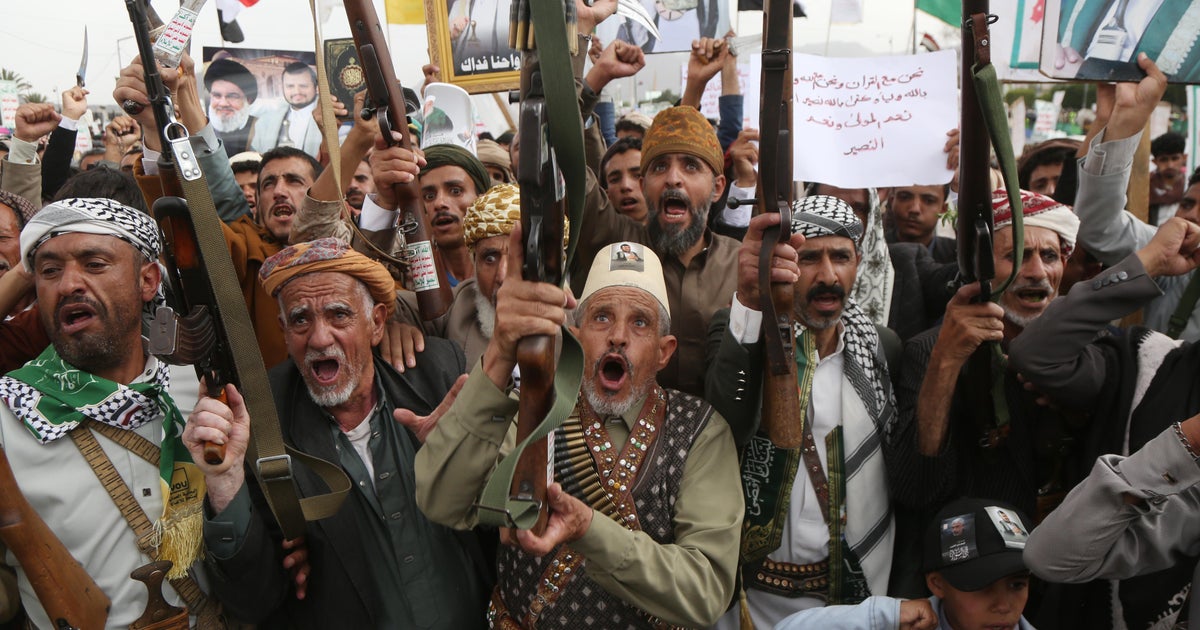
Yemen's Houthi rebels have escalated their attacks on Saudi-backed troops in the eastern city of Marib, leaving dozens dead and wounded. The attacks come a day after a series of strikes on government military positions.
Imagine a big fight between different groups in a country called Yemen. One group, the Houthis, is getting help from another country called Iran. The other group, the Saudi-backed troops, is getting help from countries like the US. The fight is making it hard for oil to get to other countries, which is making oil prices go up.
Analysis
Iran's Role in the Conflict
The Houthi rebels in Yemen are backed by Iran, which has been accused of providing them with military support and training. The conflict in Yemen is a key aspect of the larger proxy war between Iran and Saudi Arabia, with both countries vying for influence in the region.
The Mecca Defense Agreement
In response to the escalating conflict, Saudi Arabia, Pakistan, and Turkey have signed a joint defense pact, known as the Mecca Joint Deterrence Agreement. This agreement provides for mutual defense in the event of an attack on one of the three countries, and is seen as a move to counter Iran's influence in the region.
Impact on Oil Prices
The conflict in Yemen has had a significant impact on oil prices, with Brent crude rising to over $83 a barrel. The disruption to oil shipments through the Strait of Hormuz and Bab el-Mandeb Strait has led to a shortage of oil and gas, driving up prices. The US administration has acknowledged the impact of the conflict on oil prices and is working to reduce the stress on consumers.
Regional Implications
The conflict in Yemen has significant regional implications, with the Houthi rebels receiving support from Iran and the Saudi-led coalition receiving support from the US and other countries. The conflict has also led to a significant increase in military spending in the region, with Saudi Arabia and the UAE increasing their military budgets in response to the threat from Iran.
Key points
- Yemen's Houthi rebels have launched fresh missile and drone attacks on Saudi-backed government troops in the eastern city of Marib.
- The attacks come a day after a series of strikes on government military positions.
- The conflict in Yemen is a key aspect of the larger proxy war between Iran and Saudi Arabia.
- Saudi Arabia, Pakistan, and Turkey have signed a joint defense pact, known as the Mecca Joint Deterrence Agreement.
- The conflict in Yemen has had a significant impact on oil prices, with Brent crude rising to over $83 a barrel.
If the conflict in Yemen can be resolved through diplomacy, it could lead to a reduction in oil prices and a decrease in military spending in the region. Additionally, a peaceful resolution could also lead to increased trade and economic cooperation between countries in the region.
If the conflict in Yemen continues to escalate, it could lead to a further increase in oil prices and a decrease in global economic growth. Additionally, the conflict could also lead to a increase in military spending and a decrease in regional stability.