Zelenskyy says Ukraine will respond after 10 killed in overnight Russian attack – Europe live
Ukraine launched over 600 drones at Moscow and surrounding areas, while Russia's overnight attack on Ukraine killed 10 people, prompting President Zelenskyy to vow a response.
Intelligence analysis by Gemini 2.5 Flash
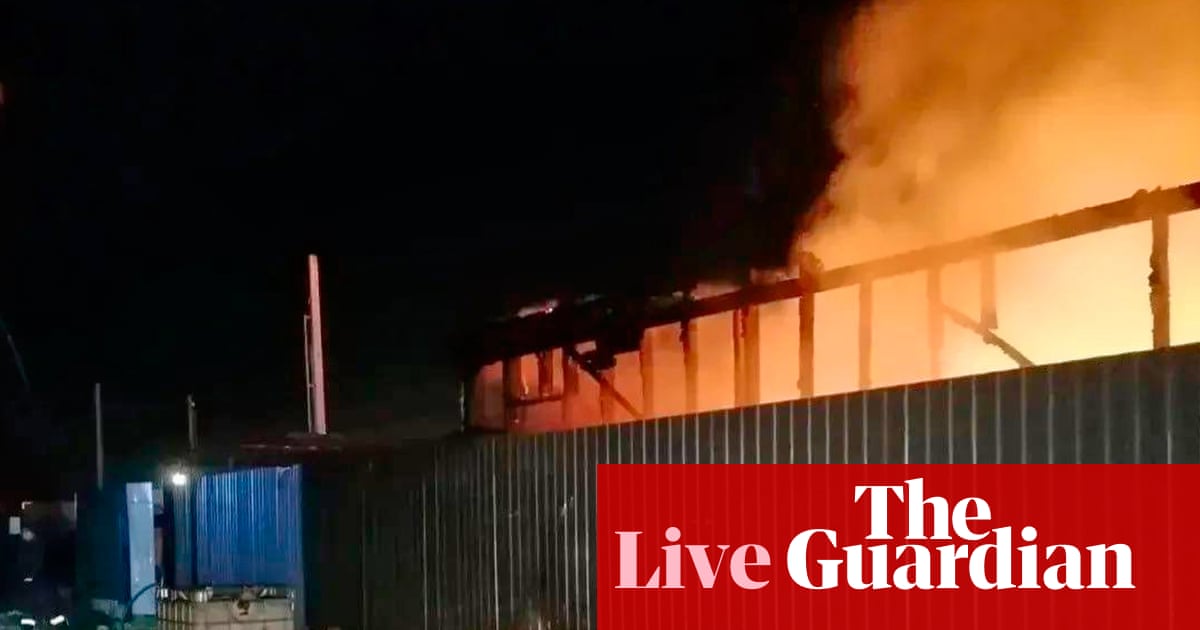
The ongoing conflict between Ukraine and Russia escalated with significant drone attacks by Ukraine on Russian territory, including Moscow, and a deadly Russian strike on Ukraine. Russia has also warned the UK of 'consequences' over reports of British drones being used in Ukrainian strikes, further raising international tensions.
Imagine two neighbors, Ukraine and Russia, are having a big fight. Ukraine just sent a huge swarm of over 600 tiny flying robots, called drones, to hit places near Russia's main city, Moscow, and other areas. At the same time, Russia attacked a village in Ukraine, killing 10 people. Ukraine's leader says they will fight back, and Russia is upset because some of the drones Ukraine used might have come from Britain, warning Britain of trouble. It's like a very serious game of tag, but with real consequences.
Analysis
The recent surge in drone attacks by Ukraine on Russian territory, including Moscow and surrounding areas, marks a notable shift in the conflict, bringing the realities of war closer to the Russian capital. Over 600 drones were reportedly launched, targeting not only military and energy facilities but also civilian infrastructure like a Wildberries warehouse, indicating a strategy to inflict economic damage and increase public pressure within Russia. This intensification follows earlier, even larger weekend strikes, suggesting a sustained campaign by Kyiv to disrupt Russian operations and supply lines.
600 Drones
The scale of Ukraine's recent drone offensive, with over 600 drones targeting Moscow and its vicinity, represents a significant escalation in its 'deep strike campaign.' These attacks are designed to hit targets far behind the front lines, including military industries and energy facilities crucial to Russia's war effort. The use of such a large number of unmanned aerial vehicles aims to overwhelm Russian air defenses and demonstrate Ukraine's growing capability to project power into Russian territory.
Beyond military objectives, these drone strikes have also targeted commercial infrastructure, such as the Wildberries e-commerce giant's depots. By destroying billions of pounds worth of merchandise, Ukraine aims to disrupt the Russian economy and bring the direct consequences of the war home to the Russian populace. This strategy seeks to erode public support for the conflict by making its costs tangible to ordinary citizens, four years into Moscow's full-scale invasion.
Pechenihy
Amidst Ukraine's offensive actions, Russia continues its own deadly strikes, with an overnight attack on the village of Pechenihy in the Kharkiv region resulting in 10 fatalities. Ukrainian President Volodymyr Zelenskyy condemned the attack, vowing a definitive response and calling on international partners to complement Ukraine's 'kinetic responses' with increased pressure on Russia and continued support for Kyiv. This highlights the brutal tit-for-tat nature of the conflict, where civilian casualties remain a tragic consequence of ongoing hostilities.
Ukraine's foreign minister, Andrii Sybiha, reiterated calls for additional sanctions, isolation, and strict accountability for Russian crimes, arguing that Moscow's refusal to accept peace proposals necessitates a growing cost for prolonging the war. He urged international states to join accountability efforts, including the Special Tribunal for the Crime of Aggression Against Ukraine, which is set to begin operations in The Hague. These diplomatic efforts run parallel to military actions, aiming to leverage international legal and economic pressure against Russia.
Wildberries
The targeting of Wildberries, Russia’s largest online retailer, by Ukrainian drones signifies a deliberate strategy to impact Russia's domestic economy and public morale. The destruction of giant depots, reportedly burning billions of pounds worth of merchandise, aims to disrupt consumer supply chains and create tangible economic losses. This tactic brings the war's consequences directly to the Russian public, who might otherwise feel insulated from the conflict's immediate effects.
Such attacks on civilian-linked economic targets are intended to increase domestic pressure on the Russian government to reconsider its prolonged military engagement. By demonstrating the vulnerability of key commercial infrastructure, Ukraine seeks to underscore the escalating costs of the war for Russia, both militarily and economically. This approach complements military strikes by adding an economic dimension to Ukraine's defensive and counter-offensive operations.
Key points
- Ukraine launched over 600 drones at Moscow and surrounding areas, continuing its large-scale attacks on Russian targets.
- An overnight Russian attack on Ukraine killed 10 people in the village of Pechenihy, prompting President Zelenskyy to vow a response.
- Russia warned the UK of 'consequences' over reports that British drones were used in Ukrainian strikes on its mainland.
- Ukrainian drone attacks have targeted military industries, energy facilities, and commercial sites like Wildberries depots in Russia.
- Ukraine's foreign minister called for additional sanctions, isolation, and accountability for Russian crimes, including a Special Tribunal.
The international community's continued support for Ukraine, coupled with calls for a Special Tribunal for the Crime of Aggression, could lead to increased accountability for Russian actions and potentially stronger international pressure for a peaceful resolution. Ukraine's foreign minister's push for additional sanctions and isolation might eventually compel Moscow to consider realistic ceasefire proposals.
The escalating drone attacks by Ukraine and Russia's retaliatory strikes risk further intensifying the conflict, leading to more civilian casualties and widespread destruction. Russia's warning to the UK over British-made drones could also draw more international actors into the direct consequences of the war, potentially broadening the scope of the conflict.