$1.04 billion Powerball jackpot won in Illinois
A single Illinois ticket won the $1.04 billion Powerball jackpot after 44 drawings without a winner.
Intelligence analysis by GPT-5.4 Mini
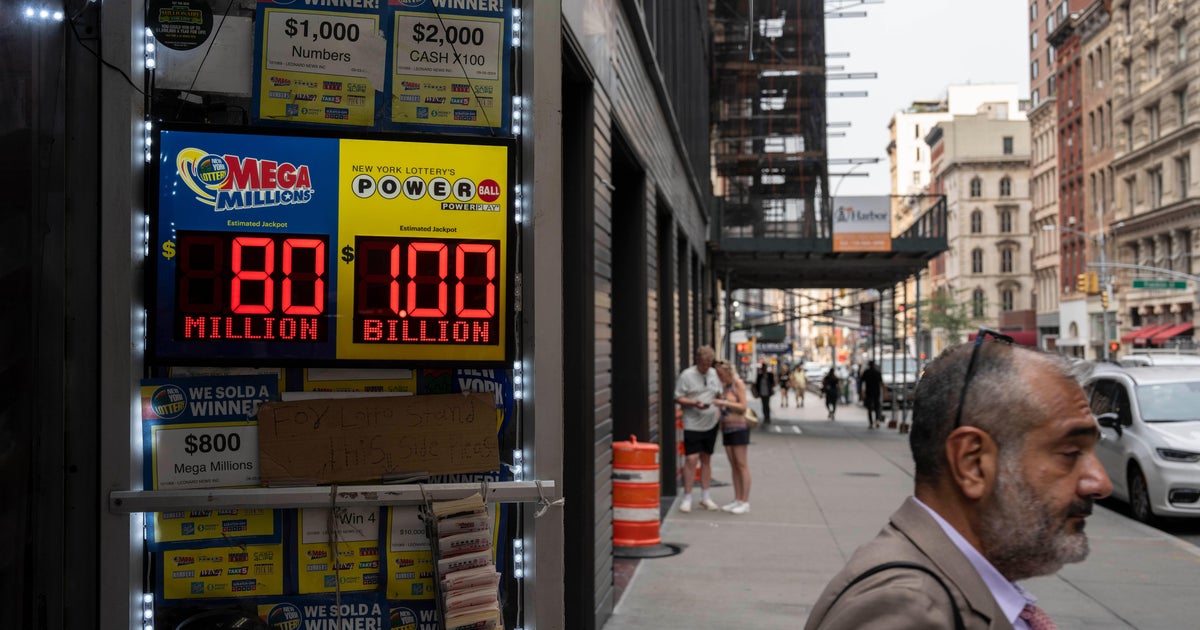
CBS says the billion-dollar prize went to one Illinois ticket, making it Powerball's biggest jackpot of 2026 and one of the largest in game history. The piece also stresses the cash value, the annuity option, and the brutal odds behind the spectacle.
It was like one tiny key out of millions opening a giant treasure chest: a ticket in Illinois matched all the Powerball numbers and won $1.04 billion. The winner can take one big pile of money now or smaller payments over many years.
Analysis
Illinois
The win gives Illinois the headline, but the article makes clear that the game itself is national in scope. Powerball is played across 45 states, the U.S. Virgin Islands, and Washington, D.C., so the prize sits at the intersection of local luck and broad public participation.
That matters because these stories are never really just about one winner. They are about a shared ritual in which millions of people buy into the same low-probability dream and then watch the number climb every time nobody hits it.
The article also frames the result as a single-ticket win, which keeps the focus on chance rather than strategy. That simplicity is part of why jackpot stories travel so widely: the whole event can be understood in one sentence, even if the odds behind it are enormous.
1.04 billion
A billion-dollar jackpot is less a normal prize than a public milestone. CBS notes that this was Powerball's eighth-largest grand prize ever and the 15th $1 billion pot in U.S. lottery history, which shows how jackpot inflation has become part of the game's modern identity.
The rollover pattern is the engine here. After Monday's drawing produced no winner, the prize cleared the $1 billion mark, turning an ordinary scheduled drawing into a national event.
The article quietly undercuts the headline with the cash value: $450.5 million for a lump sum, before taxes. That gap between the advertised jackpot and the spendable amount is central to how lottery narratives work, because the big number is designed to grab attention while the smaller number is the one that actually matters to the winner.
29 years
The payout choice is a financial story inside a lottery story. CBS says the winner can take the money in 30 payments over 29 years, with each payment rising 5% per year, which turns the prize into a long-term income stream rather than a single payday.
That structure can be seen as a guardrail as much as a reward. A staged payout may reduce the risk of a sudden windfall being mishandled, but it also means the winner is locked into the lottery's timeline for decades.
The odds, 1 in 292.2 million, are the other side of that equation. Even with the game's expansion to ticket sales in the U.K. in late July, the article leaves the same basic message intact: the dream is huge, but the probability stays microscopic.
Key points
- A single ticket in Illinois won the $1.04 billion Powerball jackpot.
- The jackpot hit $1 billion after Monday's drawing had no winner.
- The cash value for a lump sum is $450.5 million before taxes.
- The winner can also choose 30 payments over 29 years with 5% annual increases.
- Powerball is played in 45 states, the U.S. Virgin Islands, Washington, D.C., and now also had the possibility of a winner from the U.K.
The winner has two ways to handle the prize: a lump sum or 30 yearly payments that rise 5% each year. That structure could make the windfall easier to manage than getting everything at once.
The headline amount is before taxes, and the cash option is much smaller than the advertised jackpot. The article also shows how the 1 in 292.2 million odds will keep luring players into a game they are overwhelmingly unlikely to win.