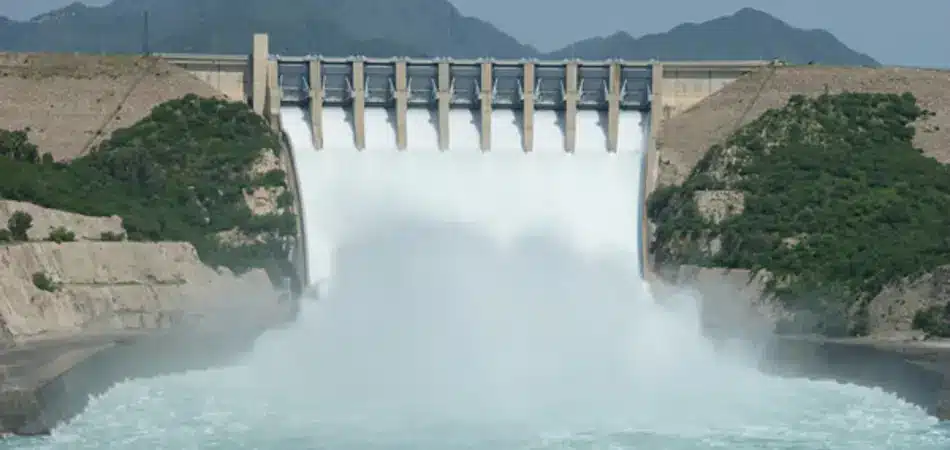
1,960MW hydropower capacity to be added in 2026-27
Pakistan plans to add 1,960 megawatts of hydropower capacity to its national grid between July 2026 and June 2027, primarily through the Tarbela 5th Extension Project.
Intelligence analysis by Gemini 2.5 Flash

The Pakistani government has outlined a power generation commissioning schedule for 2026-27, aiming to integrate 1,960MW of hydropower. This significant addition, representing over half of the total planned capacity, will largely come from three units of the Tarbela 5th Extension Project, alongside contributions from the Dasu Hydropower Project and Mangla refurbishment.
Imagine Pakistan needs more electricity, like a big house needing more lights. Instead of using expensive, smoky generators, the government is building giant water wheels, called hydropower plants, that use flowing river water to make clean electricity. By 2026-27, they plan to add enough new water wheels, especially a huge one called Tarbela, to power many more homes, making electricity cheaper and better for the environment.
Analysis
Tarbela 5th Extension Project
The Tarbela 5th Extension Project is poised to be the cornerstone of Pakistan's planned hydropower expansion in 2026-27. With three units, each contributing 510MW, the project will collectively add a substantial 1,530MW to the national grid. This single project alone accounts for approximately 78% of the total hydropower capacity scheduled for commissioning and over 40% of the entire power generation program for that fiscal year.
The commissioning timeline for these critical units is set for the latter half of 2026, with Unit-I expected in September, Unit-II in November, and Unit-III in December. This concentrated rollout within a few months underscores the government's commitment to rapidly integrating this significant clean energy source. The project's scale highlights its strategic importance in meeting Pakistan's growing energy demands and shifting towards a more sustainable energy mix.
1,960MW Hydropower Capacity
The total planned hydropower capacity addition of 1,960MW represents a major step in Pakistan's energy strategy. This figure constitutes about 51.8% of the overall 3,787.24MW capacity listed in the power generation commissioning schedule for 2026-27. Beyond the dominant Tarbela project, other significant contributions include the first 360MW unit of the Dasu Hydropower Project, scheduled for May 2027, which alone accounts for about 18.4% of the hydropower target.
Further bolstering this capacity is the refurbishment of Units 9 and 10 at the Mangla Dam, which will add 70MW by June 2027. These diverse projects collectively aim to bring a substantial amount of clean energy online within a relatively short timeframe. The emphasis on hydropower reflects a broader national policy to leverage Pakistan's extensive water resources for electricity generation, thereby reducing dependence on imported fuels and enhancing energy independence.
WAPDA's Role
The Water and Power Development Authority (WAPDA) is central to these ambitious hydropower plans, being responsible for developing or refurbishing all five hydropower entries listed in the schedule. This includes the massive Tarbela 5th Extension and Dasu projects, as well as the Mangla refurbishment. WAPDA's oversight ensures a coordinated approach to these large-scale infrastructure developments, which are vital for the country's long-term energy security.
While hydropower dominates the schedule, the plan also includes other renewable sources, such as 301.9MW from photovoltaic and 49.2MW from wind projects, alongside 1,476.14MW of net-metering solar capacity managed by power distribution companies. However, the sheer volume of hydropower, particularly from Tarbela and Dasu, underscores its primary role in the government's strategy to diversify and green its energy portfolio. The successful execution of these WAPDA-led projects is critical for Pakistan to achieve its energy goals for the coming years.
Key points
- Pakistan plans to add 1,960MW of hydropower capacity in fiscal year 2026-27.
- The Tarbela 5th Extension Project will contribute 1,530MW from three units, commissioned between September and December 2026.
- The Dasu Hydropower Project will add 360MW with its first unit in May 2027.
- Refurbishment of Mangla Units 9 and 10 will provide an additional 70MW by June 2027.
- Hydropower constitutes 51.8% of the total 3,787.24MW capacity in the 2026-27 commissioning schedule.
The successful commissioning of these hydropower projects will significantly boost Pakistan's clean energy supply, leading to greater energy independence and reduced reliance on costly fossil fuel imports. This could stabilize electricity prices, improve grid reliability, and contribute positively to the nation's economic growth and environmental sustainability goals.
Despite the ambitious schedule, large-scale infrastructure projects like these often face risks of delays due to funding issues, technical challenges, or unforeseen logistical hurdles. Any significant postponement in commissioning could impact Pakistan's energy security targets and lead to continued reliance on more expensive power generation sources.