2 US-controlled oil tankers hit by mines in Hormuz Strait
The Islamic Revolutionary Guards Corps (IRGC) announced that two US-controlled oil tankers were hit by mines and disabled in the Strait of Hormuz after attempting to use an unauthorized route.
Intelligence analysis by Gemini 2.5 Flash

The IRGC's Public Relations Office reported that two oil tankers, under American control, were struck by mines and caught fire in the Strait of Hormuz. The incident occurred as the vessels allegedly deviated from Iran’s designated safe passage, opting for an unauthorized route through the critical waterway.
Imagine a very busy road where big trucks carry lots of important stuff. There's a special lane everyone is supposed to use. But two trucks, controlled by American companies, went off the special lane and into a forbidden area. Suddenly, they hit hidden bumps, like underwater landmines, and caught fire! Iran's special guards say the trucks shouldn't have been there, making the situation very tense for everyone who uses that important road.
Analysis
Hormuz Strait
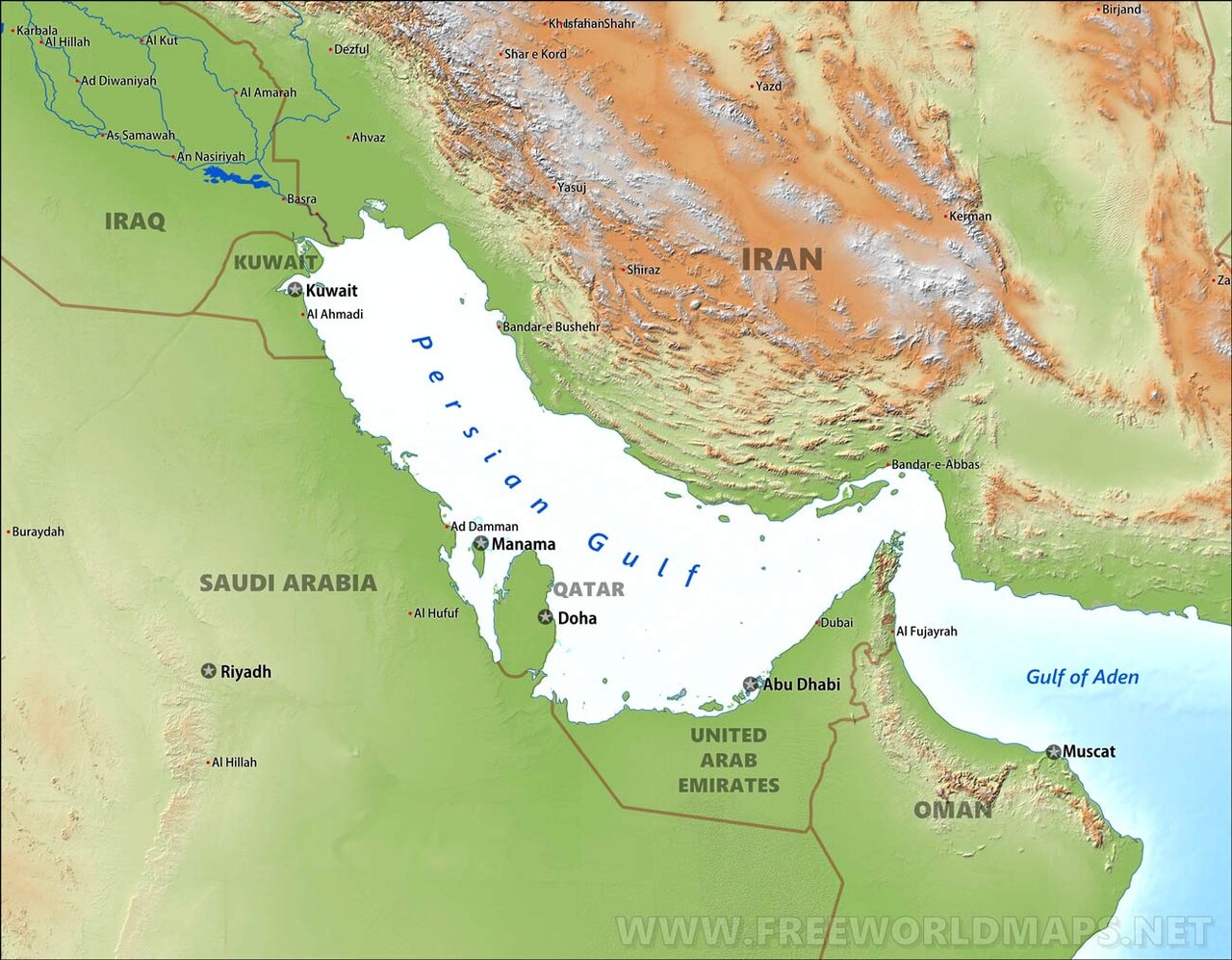
The Strait of Hormuz is a globally critical maritime chokepoint, through which a significant portion of the world's oil supply passes daily. Any disruption in this narrow waterway has immediate and far-reaching implications for global energy markets and international trade. The reported mining incident underscores the inherent volatility and strategic importance of the Strait, highlighting its vulnerability to geopolitical tensions and potential for escalation. This incident serves as a stark reminder of the delicate balance of power and the constant risk of maritime security breaches in one of the world's most vital shipping lanes.
The Strait's geography, with Iran bordering its northern coast, grants Tehran considerable leverage over maritime traffic. International law designates specific safe passages, and any deviation, as alleged by the IRGC, can be interpreted differently by various actors. This incident, therefore, not only concerns the immediate damage to the tankers but also the broader implications for freedom of navigation and the established norms governing international waters. The international community closely monitors such events, as they can quickly escalate into broader regional or even global crises, impacting everything from oil prices to diplomatic relations.
IRGC
The Islamic Revolutionary Guards Corps (IRGC) is a powerful and influential military force within Iran, distinct from the regular army, with significant political and economic sway. Its statement regarding the mining of two US-controlled oil tankers carries substantial weight, as the IRGC often acts as a key instrument of Iranian foreign policy and security operations. The assertion that the tankers were struck after attempting to use an "unauthorized route" frames the incident as a consequence of the vessels' actions rather than an unprovoked attack, aligning with Iran's narrative of defending its territorial integrity and maritime regulations.
This declaration by the IRGC also serves as a clear signal of Iran's capabilities and its willingness to assert control over the Strait of Hormuz. Such actions, whether directly attributed or implied, contribute to the ongoing regional tensions between Iran and the United States. The IRGC's public relations office issuing the statement suggests a deliberate communication strategy aimed at shaping international perception and reinforcing Iran's position on maritime security in the region. The incident, as presented by the IRGC, highlights their role as a primary actor in safeguarding Iran's strategic interests in the Persian Gulf.
Unauthorized Route
The IRGC's claim that the two oil tankers were hit by mines while attempting to pass through an "unauthorized route" is a crucial detail that shapes the narrative of the incident. This assertion implies that the vessels were operating outside established international maritime protocols or Iranian-designated safe passages, potentially justifying the IRGC's actions or framing the incident as a consequence of the tankers' own disregard for regulations. The concept of "unauthorized routes" in a highly sensitive area like the Strait of Hormuz is often a point of contention, with different nations holding varying interpretations of maritime law and navigational rights.
This specific detail could be used by Iran to deflect blame or to assert its sovereign control over the waters it considers its territory. Conversely, international maritime bodies and other nations might view such claims as an attempt to restrict freedom of navigation or to create new, unilateral rules for international waterways. The dispute over the legitimacy of the route taken by the tankers will likely be a central point of contention in any subsequent investigations or diplomatic exchanges, further complicating an already tense regional security environment. The incident thus becomes not just about the physical damage, but also about the legal and political interpretations of maritime conduct.
Key points
- Two US-controlled oil tankers were reportedly hit by mines in the Strait of Hormuz.
- The Islamic Revolutionary Guards Corps (IRGC) announced the incident, stating the tankers were disabled and on fire.
- The IRGC claims the tankers were using an 'unauthorized route' instead of Iran’s designated safe passage.
- The Strait of Hormuz is a critical chokepoint for global oil shipments, making such incidents highly sensitive.
The incident risks further escalation of military tensions between Iran and the United States, potentially leading to retaliatory actions or a broader conflict in the Persian Gulf. Disruptions to oil shipping in the Strait of Hormuz could severely impact global energy supplies and trigger economic instability.
Market signals
- OIL The reported mining of oil tankers in the Strait of Hormuz creates supply route risk, likely pushing crude oil prices higher.
AI-generated analysis of potential market relevance. Not financial advice.