30% more delivery capacity, 20% lower fuel bill: How this S’pore courier found a greener route to growth
XDel, a Singapore-based courier service, has increased its delivery capacity by 30% and reduced its monthly fuel bill by 20% through the use of real-time route planning and automation. The company's proprietary Vehicle Route Planning system dynamically recalculates routes…
Intelligence analysis by Llama
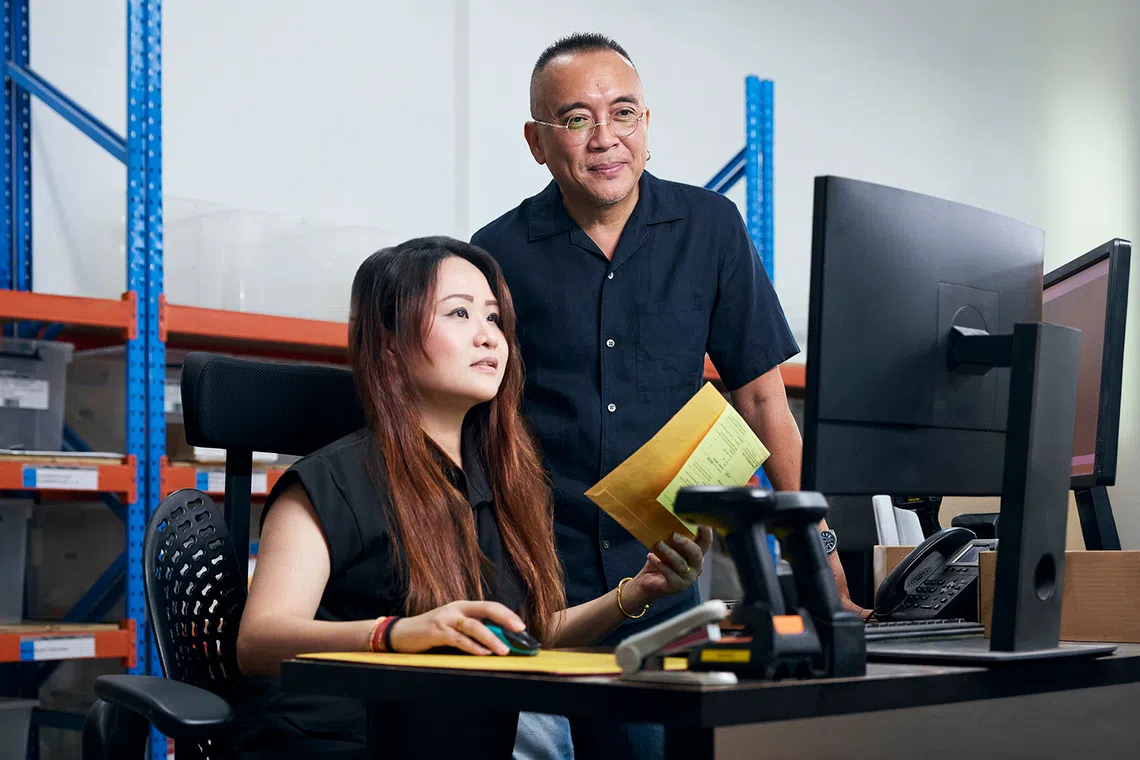
XDel, a Singapore-based courier service, has implemented a proprietary Vehicle Route Planning system that dynamically recalculates routes in real time, increasing delivery capacity by 30% and reducing fuel consumption. This has not only improved efficiency but also strengthened the company's sustainability credentials, making it an attractive partner for larger corporate clients.
XDel, a Singapore-based courier service, uses a special computer system to plan the best routes for its drivers. This helps the company deliver more packages and use less fuel, making it a more sustainable business. The company is also working with other businesses to collect and recycle electronic waste, which is good for the environment.
Analysis
A Greener Route to Growth for XDel
XDel, a Singapore-based courier service, has made significant strides in increasing its delivery capacity and reducing its environmental impact. By implementing a proprietary Vehicle Route Planning system, the company has been able to dynamically recalculate routes in real time, eliminating wasted mileage and strengthening its sustainability credentials.
The story of XDel's success began in 1993 when the company started as a humble courier service delivering flowers and hampers across Singapore. As the business expanded, many core operations remained manual, recalls Harold Lee, XDel's founder and managing director. Delivery manifests were printed on paper, drivers planned their own routes, and operations staff manually sorted shipments and coordinated deliveries.
However, in 2015, XDel worked with A*STAR through an innovation programme managed by Enterprise Singapore (EnterpriseSG), then known as SPRING Singapore, to develop its proprietary VRP system. EnterpriseSG also supported the project with funding. Unlike conventional route-planning software that fixes delivery schedules before vehicles leave the depot, XDel's system recalculates routes throughout the day as traffic and delivery conditions change, says director Eddie Lee, who joined the company in 2012.
The company also introduced mobile apps that send updated routes directly to drivers' phones while allowing operations staff to monitor deliveries in real time, avoiding the need to issue dedicated devices. "Through better systems, automation and workflow visibility, we were able to reduce manual processes, improve job coordination between customer service and operations, and lessen operational constraints on the ground," Eddie says.
That investment proved its worth when the Covid-19 pandemic disrupted supply chains. Having entered healthcare logistics in 2019, XDel was able to respond quickly to surging demand for medications and vaccines without increasing manpower. Lee says: "This would have been impossible if XDel did not have the technology it had built."
Today, the company handles around 2,000 deliveries a day, with pharmaceuticals, lab samples and clinical trial shipments for hospitals accounting for much of its business. Winning corporate clients with green logistics Many of the changes XDel introduced to improve efficiency later became sustainability advantages as customers placed greater emphasis on environmental performance. In healthcare logistics, for example, the company chose specialised medical-grade cooler boxes instead of refrigerated vehicles for temperature-sensitive deliveries.
This approach allowed it to provide cold-chain services while avoiding the additional energy use and emissions associated with refrigerated fleets. Unlike fixed route-planning systems, XDel's proprietary Vehicle Route Planning system recalculates routes throughout the day as traffic and delivery conditions change.
The company has since expanded into electronic waste logistics. Through a partnership with PC Dreams – established after the companies connected through an EnterpriseSG programme around 2022 – XDel collects and returns used electronic devices for refurbishment and recycling, supporting Singapore's circular economy.
Lee explains: "The partnership has given us the opportunity to develop operational capabilities in reverse logistics, asset recovery and sustainable processes – areas that we believe will become increasingly important in the future logistics landscape."
Those capabilities are also helping XDel compete for larger corporate contracts. As more companies incorporate environmental, social and governance criteria into procurement, factors such as carbon emissions, fleet efficiency, waste reduction and sustainability reporting are becoming increasingly important when selecting logistics partners.
Recognising this shift, XDel has started tracking vehicle mileage more closely to better understand its carbon footprint and identify further opportunities to reduce emissions.
Key points
- XDel has increased its delivery capacity by 30% and reduced its monthly fuel bill by 20% through the use of real-time route planning and automation.
- The company's proprietary Vehicle Route Planning system dynamically recalculates routes in real time as delivery conditions change.
- XDel has expanded into electronic waste logistics through a partnership with PC Dreams.
- The company is tracking vehicle mileage more closely to better understand its carbon footprint and identify further opportunities to reduce emissions.
XDel's success in implementing a proprietary Vehicle Route Planning system and expanding into electronic waste logistics suggests that the company is well-positioned to continue growing and innovating in the logistics industry. With its focus on sustainability and efficiency, XDel may be able to attract even more corporate clients and increase its market share.
However, XDel's reliance on technology and automation may make it vulnerable to disruptions in the supply chain or changes in customer demand. Additionally, the company's expansion into electronic waste logistics may be subject to regulatory changes or market fluctuations.