40 Seconds That Could Change Japan's and Germany's Spaceflight
Japan's space agency JAXA has successfully tested a reusable rocket, RV-X, which could change the face of spaceflight. The test, which lasted just 40 seconds, saw the rocket hover in mid-air before landing safely. This breakthrough could give Elon Musk's SpaceX some compe…
Intelligence analysis by Llama
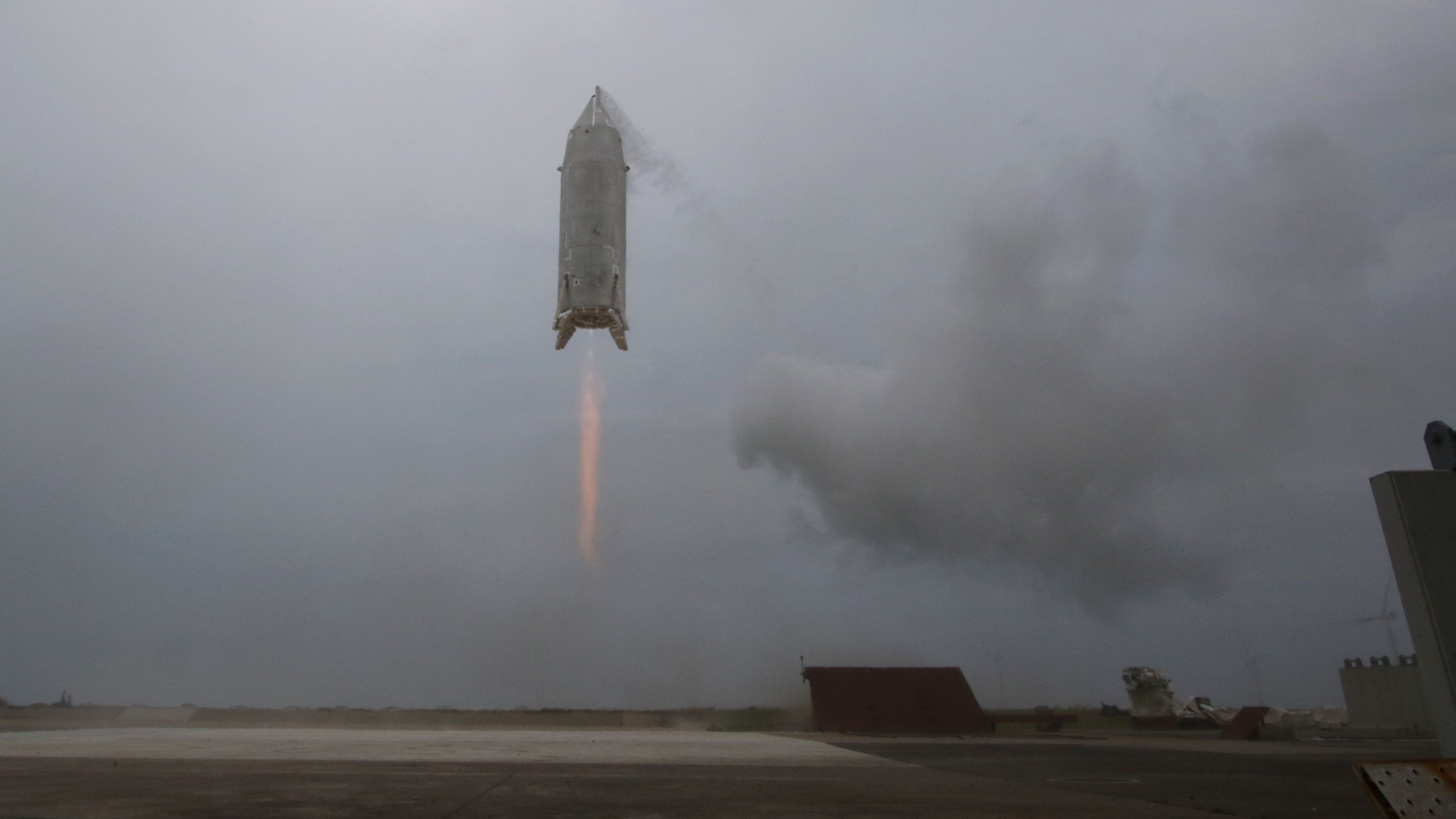
Japan's space agency JAXA has made a significant breakthrough in spaceflight with the successful testing of a reusable rocket. The RV-X rocket hovered in mid-air for 40 seconds before landing safely, marking a crucial step towards commercial spaceflight. This achievement could give Elon Musk's SpaceX some competition.
Imagine a rocket that can fly up into space, do some work, and then come back down to Earth. That's what Japan's space agency just did with their new rocket, RV-X. It's like a super-powerful car that can go all the way up to space and then come back down safely. This is a big deal because it could make space travel cheaper and more efficient.
Analysis
A $60B Vote of Confidence in Japan's Space Program
The successful testing of the RV-X rocket is a significant vote of confidence in Japan's space program. With a budget of over $60 billion, the Japanese government has been investing heavily in space research and development. This breakthrough is a testament to the country's commitment to space exploration and its potential to become a major player in the industry.
Why This Matters for Germany
Germany's space industry has been growing rapidly in recent years, with companies like Airbus and Siemens playing a significant role. The success of the RV-X rocket could have significant implications for Germany's space industry, potentially leading to new partnerships and collaborations with Japanese companies. Additionally, the breakthrough could also lead to new opportunities for German companies in the space industry, such as in the development of reusable rockets.
The Road Ahead
The success of the RV-X rocket is just the beginning for Japan's space program. With this breakthrough, the country is poised to become a major player in the global space industry. As the industry continues to evolve, it will be interesting to see how Japan's space program develops and how it will impact the global space industry.
Key points
- Japan's space agency JAXA has successfully tested a reusable rocket, RV-X.
- The rocket hovered in mid-air for 40 seconds before landing safely.
- This breakthrough could give Elon Musk's SpaceX some competition.
- The success of the RV-X rocket has significant implications for Germany's space industry.
- The breakthrough could lead to new partnerships and collaborations between Japanese and German companies.
If this technology continues to develop, it could lead to more frequent and affordable space missions. This could open up new opportunities for space exploration and potentially even lead to the establishment of a human settlement on the moon or Mars.
However, there are also risks associated with this technology, such as the potential for accidents or malfunctions. Additionally, the development of reusable rockets could also lead to increased competition in the space industry, potentially making it harder for companies to succeed.