5 lessons for Asia as it studies wars from the privilege of peace
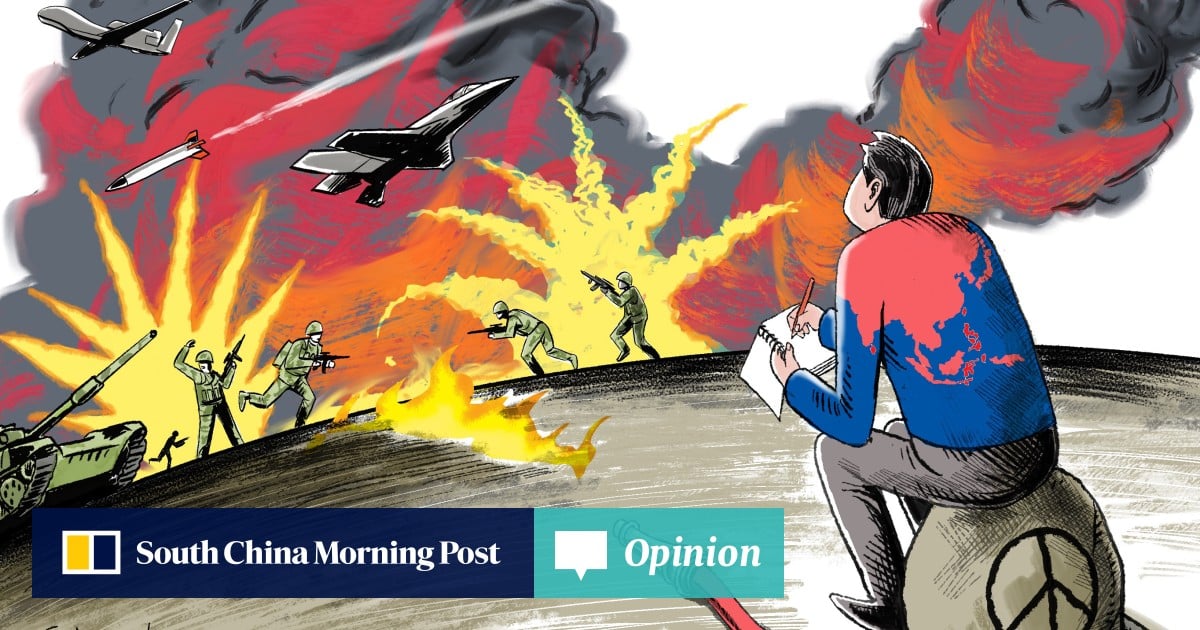
Asia can study wars from relative peace, and the first lesson is that conflicts rarely unfold as predicted.
Intelligence analysis by GPT-5.4 Mini
The column argues that Asia should treat wars abroad as a hard lesson in realism: conflict reshapes energy, trade, security and public life, and it rarely follows the script analysts expect. The first lesson highlighted is that war is a long, adaptive contest, not a quick opening move.
The article says Asia is like a neighbor watching a house fire from a safe street. That helps people learn before danger comes close, because wars often do not go the way experts expect, like a game that changes rules halfway through.
Analysis
The core argument
Christine Loh says Asia is watching the wars in Ukraine, Gaza and the Middle East from a rare position of relative peace. That distance, she argues, is a privilege: it gives Asian countries time to observe, compare and think clearly before any similar logic reaches their own region.
The column frames war as something that travels well beyond the battlefield. It moves through energy prices, shipping lanes, food security, sanctions, public opinion, military budgets, alliances, diplomatic pressure and human suffering. Just as important, it changes how people think. Once a country is at war, judgment narrows, fear rises, and compromise can start to look like betrayal.
The first lesson: war does not follow the script
The visible excerpt focuses on one main lesson. Many observers expected Ukraine to fall quickly in 2022, while others assumed Russia would soon run out of capacity. Instead, the war became a grinding contest of endurance, industrial strength, political will and outside support. That, Loh writes, is why predictions about war should be treated cautiously.
War games and strategic doctrines can still be useful, but the column argues they cannot fully recreate the fog, fear, incompetence, improvisation and stubbornness of real fighting. They may show how a conflict begins, but they often fail to show how it changes over time.
The wider warning
The piece is less about one battlefield than about preparation. Its message is that Asia should learn before crisis arrives, because once violence starts, facts and emotions become much harder to separate.
Key points
- Asia is watching wars elsewhere from a position of relative peace, which the column treats as an advantage for learning.
- War affects more than battlefields; it can spill into shipping lanes, energy prices, food security, sanctions and alliances.
- The first lesson highlighted is that war rarely follows the expected script.
- Ukraine is used as an example of a conflict that became a long test of endurance rather than a quick outcome.
- War games and doctrines can help, but they cannot fully capture the fog and improvisation of real conflict.
If Asian countries take the lesson seriously, they may think more carefully about how war could affect trade, energy, food and security before any crisis arrives. That could help governments stay calmer and make better choices while they still have room to think.
If leaders assume wars will unfold neatly or end quickly, they may misjudge risk and overtrust predictions. The article also warns that once conflict starts, fear and hardening attitudes can make compromise much harder.