8kg of cocaine seized from foreign-registered commercial vessel in Singapore waters
Officers from the Police Coast Guard and the Central Narcotics Bureau seized more than 8kg of cocaine from a foreign-registered commercial vessel in Singapore waters on Aug 5. The drugs were concealed in the sea chest strainers and were not meant for the local market.
Intelligence analysis by Llama
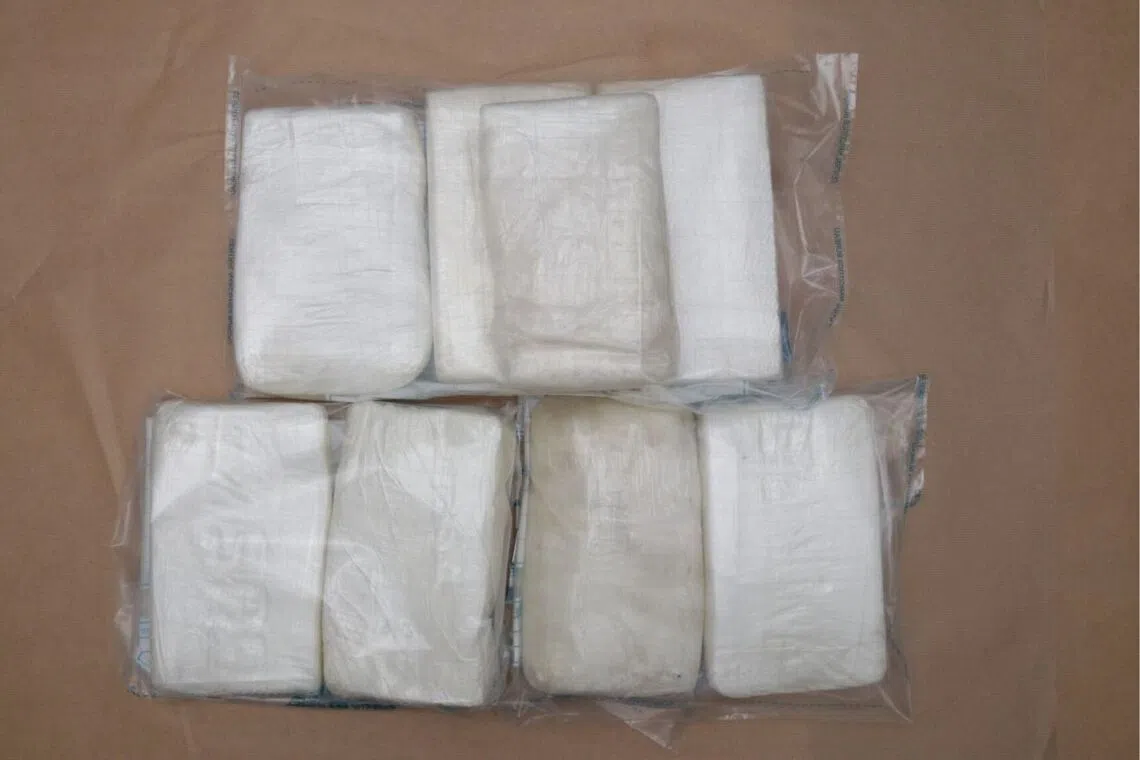
Singapore's Central Narcotics Bureau seized over 8kg of cocaine from a foreign-registered commercial vessel in Singapore waters on Aug 5. The drugs were concealed in the sea chest strainers and were not meant for the local market.
Imagine you're on a big boat, and someone tries to hide a big bag of cocaine in a special machine that filters the water. The police found the bag and took it away because it's against the law to have that kind of stuff on the boat. The police think the cocaine was meant to go somewhere else, not to Singapore.
Analysis
Cocaine Seizure Highlights Ongoing Efforts Against Drug Trafficking in Singapore Waters
The recent seizure of over 8kg of cocaine from a foreign-registered commercial vessel in Singapore waters is a significant development in the ongoing efforts of law enforcement agencies to combat drug trafficking in the region. The Central Narcotics Bureau (CNB) and the Police Coast Guard (PCG) have been working tirelessly to identify and disrupt drug trafficking routes, and this seizure is a testament to their dedication and expertise.
The drugs were concealed in the sea chest strainers, which are heavy-duty marine filtration devices. This method of concealment is not uncommon in drug trafficking cases, as it allows the drugs to be hidden in plain sight. However, the CNB's preliminary investigations found that the drugs were not meant for the local market, but were instead transiting through Singapore.
This raises questions about the role of Singapore in the global drug trade. As a major shipping hub, Singapore is a key transit point for goods and commodities, including illicit substances. The CNB's efforts to combat drug trafficking in Singapore waters are crucial in preventing the spread of drugs to other countries in the region.
In Singapore, individuals who import or export more than 30g of cocaine may face the mandatory death penalty. This severe punishment serves as a deterrent to those who would seek to engage in drug trafficking activities in the country. The CNB's efforts to combat drug trafficking are not only crucial in preventing the spread of drugs, but also in upholding the rule of law and maintaining public safety.
The recent seizure of cocaine from a foreign-registered commercial vessel in Singapore waters is a significant development in the ongoing efforts of law enforcement agencies to combat drug trafficking in the region. It highlights the importance of continued vigilance and cooperation between law enforcement agencies to prevent the spread of illicit substances.
Key points
- Over 8kg of cocaine was seized from a foreign-registered commercial vessel in Singapore waters on Aug 5.
- The drugs were concealed in the sea chest strainers and were not meant for the local market.
- The CNB's preliminary investigations found that the drugs were transiting through Singapore.
- Individuals who import or export more than 30g of cocaine may face the mandatory death penalty in Singapore.
If the CNB's efforts to combat drug trafficking in Singapore waters continue to be successful, it may lead to a decrease in the availability of illicit substances in the region, ultimately contributing to a safer and more secure community.
If the CNB's efforts to combat drug trafficking in Singapore waters are unsuccessful, it may lead to an increase in the availability of illicit substances in the region, resulting in a higher risk of drug-related crimes and public safety concerns.