A Little Story About Inflation – An Excerpt from Bitcoin: The Honest Money
An excerpt argues inflation steadily erodes wages, savings, and purchasing power, while bitcoin’s fixed supply is presented as protection.
Intelligence analysis by GPT-5.4 Mini
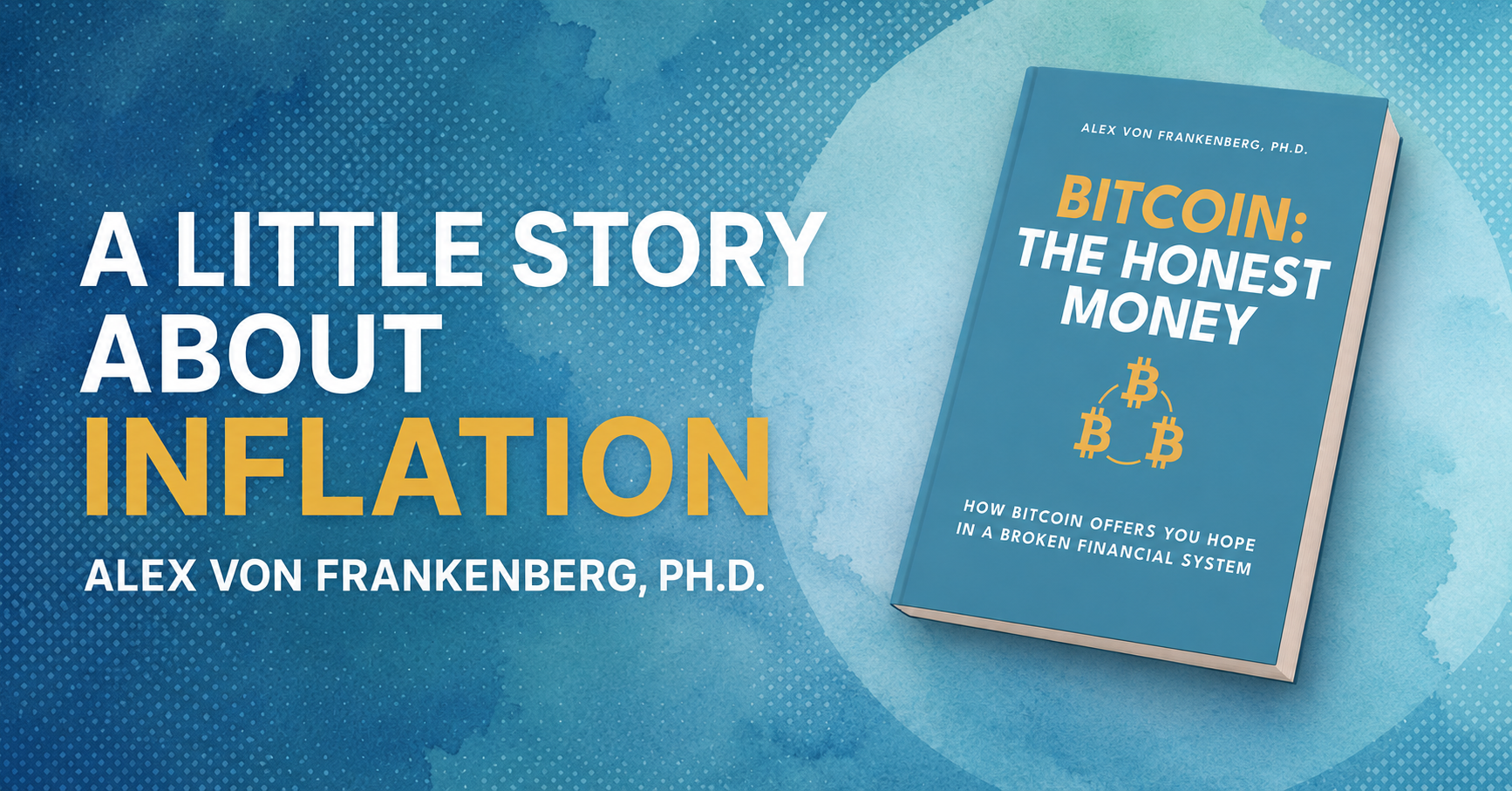
The excerpt uses a simple ice-cream example to show how money can buy less over time even when wages rise. It argues that inflation quietly transfers value away from savers and workers, while bitcoin’s fixed supply is meant to preserve purchasing power.
The article says money can slowly turn into less stuff over time, like a ticket that buys fewer ice creams each year. Bitcoin is described like a ticket with only a fixed number made, so its value is meant not to get watered down.
Analysis
Inflation as lost purchasing power
The excerpt opens with a personal example from Germany: a teenager once earned 10 Deutsche Marks an hour and could buy 33 scoops of ice cream with that wage. By 2025, the article says a newspaper delivery job in Germany pays up to €12 an hour, but ice cream now costs far more, reducing that hour’s buying power to roughly six to eight scoops. The point is not just that prices rise, but that work itself buys less over time.
The article’s core claim
The piece argues that inflation is a broad and persistent transfer of value away from ordinary people. It says the damage is worst for people with lower incomes, since they have fewer ways to escape the devaluation of savings and wages. It also links inflation to major historical breakdowns, citing the French Revolution and the fall of the Western Roman Empire as examples where currency debasement played a role.
Bitcoin as the contrast
Bitcoin is presented as the opposite model. The excerpt emphasizes the 21 million cap, says about 19.9 million bitcoin already exist as of early 2026, and notes that the remaining issuance will unfold over roughly 115 years. In the article’s framing, that fixed supply means bitcoin should not be diluted the way fiat money can be. Measured in bitcoin, the author says, goods should become cheaper over time rather than more expensive.
Editorial takeaway
This is less a market analysis than a concise argument for bitcoin’s monetary thesis: fixed supply, no dilution, and protection against inflation. The piece is clearly promotional, but its logic is tightly focused on why scarcity matters to savers.
Key points
- The excerpt uses a German wage-and-ice-cream comparison to show how inflation reduces real purchasing power.
- It argues that inflation hurts savers and wage earners, especially lower-income people who have fewer ways to protect themselves.
- The article presents bitcoin’s 21 million supply cap as the opposite of inflationary money.
- It claims bitcoin should preserve purchasing power because its supply cannot be expanded beyond the protocol limit.
- The piece frames bitcoin as a long-term answer to monetary debasement rather than a short-term trading story.
If the article’s framing holds, bitcoin looks like a way to protect savings from losing buying power over time. Its fixed supply could make it more attractive to people worried about inflation and currency debasement.
The argument depends on bitcoin being accepted as reliable money, and the article does not address volatility or adoption hurdles. If people still need local currency for daily life, bitcoin’s scarcity alone may not solve the problems inflation creates.