A rural city, once known for livestock, now provides China’s AI computing fuel
Ulanqab, a city in Inner Mongolia previously known for livestock, is transforming into a major AI computing hub, leveraging its abundant wind power and cool climate.
Intelligence analysis by Gemini 2.5 Flash
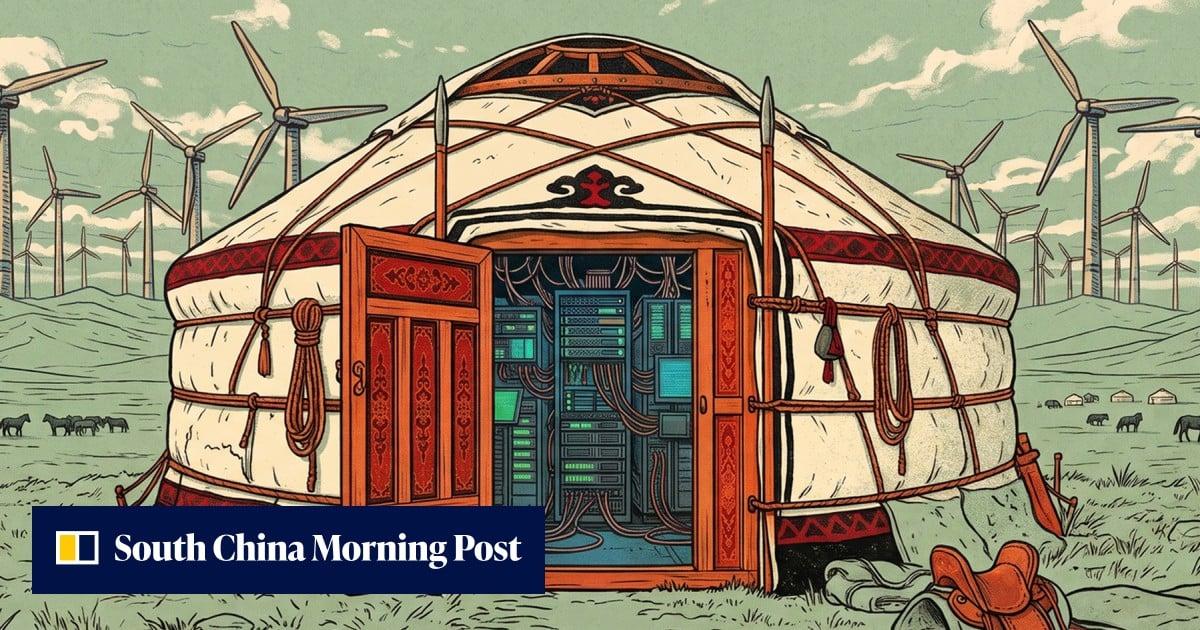
Fueled by its natural advantages of strong winds and a cool environment, Ulanqab is becoming a critical center for China's artificial intelligence infrastructure. The city, once reliant on its pastoral economy, now hosts massive data centers, including Envision Group's Galaxy Campus, which is designed to be one of the world's largest AI computing facilities.
Imagine a windy, cool place where cows used to graze and potatoes grew. Now, instead of just farms, giant windmills are popping up, making lots of clean electricity. This electricity is used to power huge computer brains, called AI data centers, that help smart computers learn and think. One city in China, Ulanqab, is turning its natural windy and cool weather into a superpower for these AI computers, making it a really important place for new technology.
Analysis
The transformation of Ulanqab from a pastoral region to a significant AI computing hub underscores a broader trend in China's technological development, emphasizing self-sufficiency and strategic resource utilization. Historically, Ulanqab's economy was tied to its windswept pastureland, supporting livestock and potato farming. However, the very climate that sustained this traditional economy—cool temperatures and strong winds—is now being harnessed to meet the escalating demand for computing power driven by the global artificial intelligence boom. This pivot is not merely an economic shift but a strategic national move to secure the foundational infrastructure necessary for AI advancement.
Ulanqab
Ulanqab, located several hundred kilometers northwest of Beijing, is leveraging its unique geographical and climatic advantages to become a powerhouse for AI computing. The city's cool climate naturally reduces the energy required for cooling vast data centers, while its strong winds provide a plentiful source of cheap renewable energy. This combination makes it an ideal location for energy-intensive AI facilities. The presence of giant wind turbines alongside traditional livestock grazing areas symbolizes this profound economic and technological transition, illustrating how a rural area can be integrated into the high-tech landscape.
Envision Group
Chinese renewable energy company Envision Group is at the forefront of this transformation, having recently brought its Galaxy Campus online in Ulanqab. This initiative by Envision Group signifies a major investment in China's AI infrastructure, demonstrating how private enterprises are aligning with national strategic goals. The company's decision to establish such a large-scale facility in Ulanqab highlights the economic viability and strategic importance of the region's natural resources for powering advanced computing operations. This move also positions Envision Group as a key player in providing the 'fuel' for China's burgeoning AI sector.
Galaxy Campus
The Galaxy Campus is a monumental undertaking, featuring a 120,000-square-meter AI data center, an area equivalent to approximately 20 standard football pitches. Its design capacity to accommodate up to one million AI accelerators and a planned power capacity exceeding two gigawatts positions it as one of the world's largest AI computing facilities. For context, this scale surpasses that of Colossus 2, a massive US-based AI data center run by Elon Musk's SpaceXAI, which has a projected 1.5-gigawatt IT power capacity. The sheer size and power capacity of the Galaxy Campus underscore the immense computational demands of modern AI and China's commitment to meeting these needs domestically.
Key points
- Ulanqab, Inner Mongolia, is transforming from a livestock-based economy to a major AI computing hub.
- The city leverages its cool climate and abundant wind power to efficiently run energy-intensive AI data centers.
- Envision Group has launched its Galaxy Campus in Ulanqab, featuring a 120,000-square-meter AI data center.
- The Galaxy Campus is designed to house up to one million AI accelerators with over two gigawatts of power, making it one of the world's largest AI computing facilities.
- This initiative highlights China's strategic investment in domestic AI infrastructure to meet growing computing demands.
This development could significantly bolster China's domestic AI capabilities, reducing reliance on external computing resources and fostering technological self-sufficiency. It also offers a model for sustainable economic development in rural areas, transforming traditional economies into high-tech hubs powered by renewable energy.
The concentration of such massive computing infrastructure in one region could create single points of failure or resource dependency issues. Furthermore, even with renewable energy, the sheer scale of these data centers implies significant environmental impact from construction and ongoing operations, potentially straining local resources.