Why students are being paid £2,000 to play computer games
The University of Roehampton is offering esports scholarships of up to £2,000 to students who can balance academic progress with competitive gaming. This initiative aims to recognize talent in the growing esports field and provide financial support.
Intelligence analysis by Gemini 2.5 Flash Lite
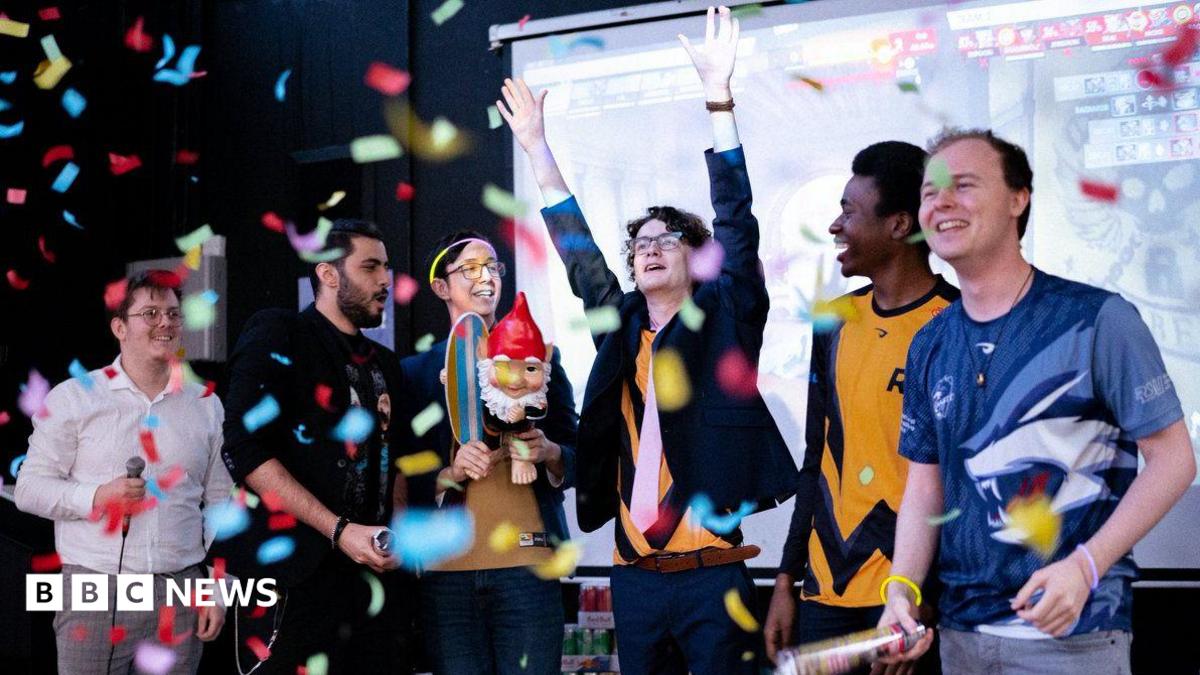
The University of Roehampton is providing esports scholarships, with some students receiving up to £2,000, to encourage participation in competitive video gaming alongside their studies. This move highlights the increasing recognition of esports as a legitimate talent area and offers a way to alleviate financial stress for students.
Imagine your favorite video game, but played in big competitions like a sport! Some universities are now giving money, like £2,000, to students who are really good at these games and also do well in their schoolwork. It's like getting a sports scholarship, but for playing games, to help pay for college.
Analysis
University of Roehampton
The University of Roehampton has introduced esports scholarships, offering up to £2,000 to students who demonstrate excellence in competitive video gaming while maintaining academic progress. This initiative, inspired by similar programs in American universities, aims to acknowledge the burgeoning popularity of esports and provide tangible financial assistance to students.
Registrar Mark Ellul stated that the scholarship recognizes talent in a rapidly growing field. Scholars are expected to participate in weekly university tournaments and represent the institution at in-person events. While minimum rankings in major games are required, applications from those close to the threshold, especially those with significant followings on streaming platforms like Twitch, are also considered.
Cameron Dray
Former esports scholar Cameron Dray found the Roehampton scholarship instrumental in his ability to study in an expensive city without needing part-time work. Initially set at £1,500, the scholarship amount was raised to £2,000 due to the team's performance and increasing popularity. Dray emphasized that the scholarship's requirements were transparent and manageable, encouraging other students to explore all available funding opportunities.
His experience underscores the potential for scholarships to reduce student debt, which in England averages over £47,500 for graduates. Dray's success highlights how such programs can alleviate financial burdens, allowing students to focus on both their academic and gaming pursuits.
Thomas Cole
Esports player Thomas Cole, known as 'Pac', specializing in the racing game Trackmania, believes that unique scholarships like Roehampton's can academically motivate students by reducing financial stress. He expressed enthusiasm for the concept, stating he would have welcomed such an opportunity during his university years. Cole suggests that if the academic side does not suffer, these scholarships can indeed spur individuals to excel in their gaming endeavors.
This perspective aligns with the broader discussion around student finance and the need for diverse funding streams. As the cost of higher education continues to rise, innovative approaches to financial aid, like esports scholarships, become increasingly important for student well-being and academic success.
Key points
- The University of Roehampton offers esports scholarships of up to £2,000 to students.
- Scholarships require a balance between academic progress and competitive gaming excellence.
- The initiative aims to support students in the growing field of esports and reduce financial stress.
- Former scholar Cameron Dray found the funding crucial for studying without part-time work.
- Student finance expert Tom Allingham notes that many scholarships go unclaimed due to lack of awareness.
The introduction of esports scholarships could lead to greater recognition and support for competitive gaming as a legitimate pursuit, potentially fostering a more inclusive academic environment. It may also inspire other universities to adopt similar programs, creating more opportunities for students to receive financial aid while pursuing their passions.
There's a risk that focusing too much on esports scholarships could detract from traditional academic priorities or create an imbalance where gaming success is prioritized over other crucial aspects of student development. Furthermore, the long-term viability and scalability of such programs across different institutions remain uncertain.