A Trojan Horse Is Supposed to Have Humans Inside It
Christopher Nolan's film Odyssey features a massive, hollow horse as a symbol of moral decline, but its repurposing as a popcorn container hints at the malleability of the conceit. The Trojan horse has been a tricky symbol, used by generations of storytellers and artists …
Intelligence analysis by Llama
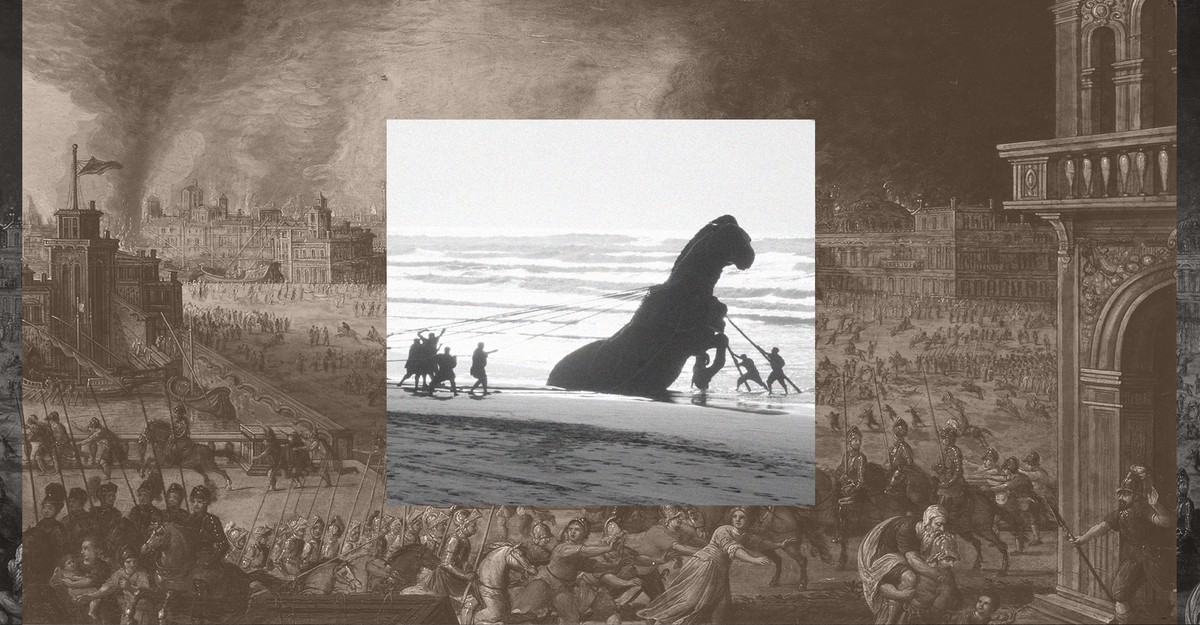
Nolan's Odyssey features a massive, hollow horse as a symbol of moral decline, but its repurposing as a popcorn container hints at the malleability of the conceit. The Trojan horse has been a tricky symbol, used by generations of storytellers and artists to map shifting perceptions of deception in war.
The Trojan horse is a symbol of deception in war, used by generations of storytellers and artists to map shifting perceptions of deception in war. In Christopher Nolan's film Odyssey, the horse is used as a symbol of moral decline, but its repurposing as a popcorn container hints at the malleability of the conceit. The physical design of Nolan's version is striking and wildly out of keeping with earlier representations, including ancient depictions and the pull-toy design of the giant equine in Wolf Petersen's fun 2004 blockbuster, Troy. The horse is discovered half-buried in the sand, proving almost impossible for the Trojans to lug into the city. This cinematic prop is an extraordinary feat of engineering: It stands nearly 40 feet tall and took hundreds of people to drag up the beach. The physical horror of people being trapped inside as the seawater rises is brilliantly and terrifyingly evoked.
Analysis
A Symbol of Deception in War
The Trojan horse has been a symbol of deception in war for centuries, used by generations of storytellers and artists to map shifting perceptions of deception in war. In Christopher Nolan's film Odyssey, the horse is used as a symbol of moral decline, but its repurposing as a popcorn container hints at the malleability of the conceit. The physical design of Nolan's version is striking and wildly out of keeping with earlier representations, including ancient depictions and the pull-toy design of the giant equine in Wolf Petersen's fun 2004 blockbuster, Troy. Nolan's horse rears upright rather than standing on four hooves, and is discovered half-buried in the sand, proving almost impossible for the Trojans to lug into the city. This cinematic prop is an extraordinary feat of engineering: It stands nearly 40 feet tall and took hundreds of people to drag up the beach. The physical horror of people being trapped inside as the seawater rises is brilliantly and terrifyingly evoked. But on a narrative level, Nolan's horse is light as air. In comparison with other blockbusters—such as, say, the Die Hard films, also action-packed tales of one man's dangerous journey back to his wife—The Odyssey contains far more pontificating about values and civilizational decline, but much less coherence and less heart. It gestures at a critique of xenophobia and violence, but it focuses primarily on the perspective of the guilty, traumatized warrior rather than that of his victims. Moreover, the movie's devoted attention to mechanics, and its heedless willingness to give us massacres as spectacle, undermines its moralizing claims of caring about man's inhumanity to man. Verbally, we are told that people matter; visually, we are shown that they do not.
The Myth of the Trojan Horse
The myth of the Trojan horse has been in circulation for at least the early seventh century B.C.E. The earliest extant artistic depiction is on a large storage jar (in Greek called a pithos) from the island of Mykonos. It features a long-legged horse that has square cutout windows for the warriors to be seen through; outside the horse, more fighters are enslaving terrified women and children. The image is, like the popcorn-bucket horse, a joke: It would ruin the trick if the horse had windows. The Homeric Odyssey, along with The Iliad and the poems of Hesiod, were likely composed around roughly the same time as the making of the Trojan-horse pithos, using the new technology that had become available in the Greek-speaking world in the mid-eighth century B.C.E.: the alphabet. This development enabled one or more composers—“Homer”—to create and preserve monumental written poems based on the oral tales about the great, lost days of heroes—characters who did extraordinary things and were closer to the gods than any normal mortal. The myths included partial, fictionalized folk memories of the earlier period of Greek prosperity, when the Mycenaeans built palatial structures and formed extensive trade routes across the eastern Mediterranean and beyond.
The Repurposing of the Trojan Horse
In The Odyssey, Odysseus repeatedly finds new ways to reenact his most famous trick of hiding inside the horse (an assumed backstory not described in the main narrative). He hides in the care of Calypso (whose name suggests “hiding”), beneath the name of No Man, under the sheep of Polyphemus, and in the guise of an old beggar. Eventually, he replicates his triumph at Troy in his own house by technological mastery of another trick involving a wooden weapon (this time, his bow). Odysseus’s mastery of technology enables him to invade a heavily defended home in disguise, achieve an impossible victory, and break an impasse, answering the long-deferred question of which man will claim the household and Penelope as his bride. In one of only two extensive passages in Homer that evoke the horse explicitly (a long episode that Nolan excises), Odysseus, while enjoying the lavish hospitality of the Phaeacians on Scheria, asks a blind poet to sing the story of the Trojan horse. The poet complies, and Odysseus weeps at the story of his greatest triumph. The narrator offers a surprising simile: Odysseus sobs “as pitifully as a woman weeps” while watching her warrior husband die in a failed attempt to defend his city and his children. The woman falls desperately on her dying husband, but his killers are behind her, hitting her with spears as they force her into a life of enslavement. The simile suggests a connection between the victorious Odysseus and the victims of his greatest success.
Key points
- The Trojan horse is a symbol of deception in war, used by generations of storytellers and artists to map shifting perceptions of deception in war.
- In Christopher Nolan's film Odyssey, the horse is used as a symbol of moral decline, but its repurposing as a popcorn container hints at the malleability of the conceit.
- The physical design of Nolan's version is striking and wildly out of keeping with earlier representations, including ancient depictions and the pull-toy design of the giant equine in Wolf Petersen's fun 2004 blockbuster, Troy.
- The horse is discovered half-buried in the sand, proving almost impossible for the Trojans to lug into the city.
- This cinematic prop is an extraordinary feat of engineering: It stands nearly 40 feet tall and took hundreds of people to drag up the beach.
The article suggests that the repurposing of the Trojan horse as a popcorn container hints at the malleability of the conceit, and that this could lead to new and creative interpretations of the symbol. This could be seen as an optimistic outlook, as it suggests that the symbol of the Trojan horse can be reinterpreted and reimagined in new and exciting ways.
The article also highlights the darker aspects of the Trojan horse, including its use as a symbol of deception in war and its connection to the victims of war. This could be seen as a pessimistic outlook, as it suggests that the symbol of the Trojan horse can be used to perpetuate harm and violence.