A wall of water, a tragedy, a warning: What Nepal floods tell us about the Himalaya
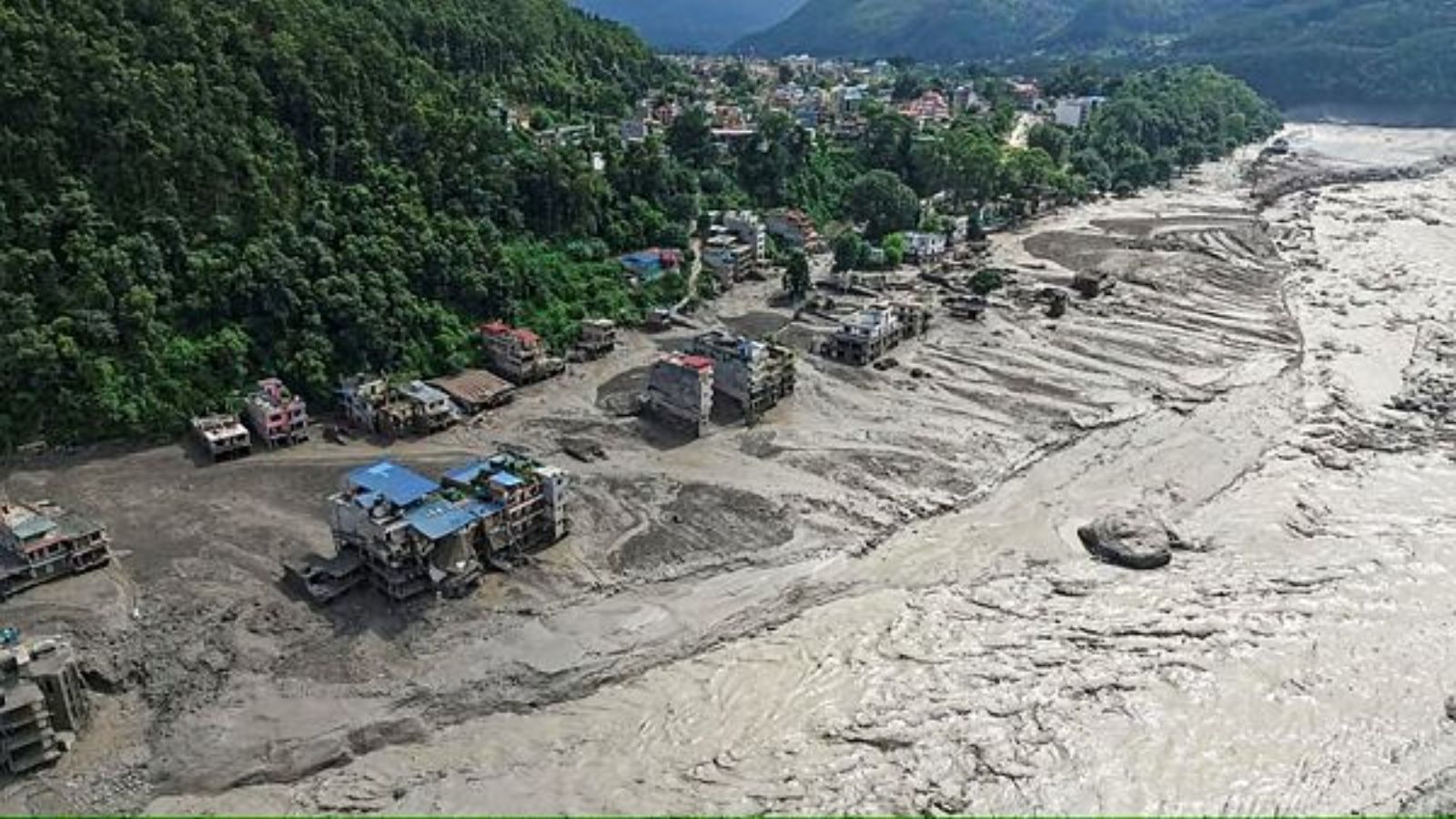
A recent catastrophic flood in Nepal's Bhote Koshi valley, which killed over 110 people and left hundreds missing, is attributed to cryo-hydrological hazards exacerbated by rapid Himalayan warming.
Intelligence analysis by Gemini 2.5 Flash
The article frames the devastating Nepal floods as a stark warning of the escalating cryo-hydrological risks in the warming Himalaya, where accelerated glacier melt and extreme precipitation are creating unstable conditions, demanding urgent regional cooperation and improved disaster preparedness.
Imagine a giant ice cube on a mountain that's melting super fast because the world is getting warmer. Sometimes, this melting ice creates big puddles that suddenly burst like a popped balloon, sending a huge wall of water rushing down the river, destroying everything in its path. This is happening more often in big mountains like the Himalaya, making it very dangerous for people and towns living near the rivers.
Analysis
The recent tragedy in the Bhote Koshi valley serves as a critical indicator of the escalating environmental crisis in the High Mountain Asia region. The flood, which resulted in significant loss of life and infrastructure, is not merely a consequence of heavy rainfall but a complex interaction of climate change-induced phenomena. Investigators are pointing towards a rock-ice avalanche that temporarily dammed the Lhende/Bhote Koshi river, leading to a sudden, catastrophic release of water downstream. This event underscores a growing pattern of cryo-hydrological hazards, where destabilized ice, snow, and meltwater play a pivotal role in triggering extreme flood events.
Himalaya
The Himalaya region is experiencing warming at a rate faster than most other parts of the planet, a phenomenon known as elevation-dependent warming. This accelerated warming has profound implications for the stability of the region's glaciers and ice formations. Glacier thinning is occurring at an alarming pace, exposing previously stable ice patches to new modes of failure. Furthermore, the formation and expansion of glacial and supraglacial lakes have increased significantly, as evidenced by a 2026 study that documented a jump from 1,926 to 2,631 glacial lakes in the Nepal Himalaya between 2005 and 2024. This direct correlation between regional warming and erratic precipitation patterns highlights the systemic nature of the risk.
Another analysis cited in the article reveals that ice loss rates across the Hindu Kush Himalaya have roughly doubled since 2000. This substantial increase in ice melt elevates downstream risks for an estimated 2 billion people who rely on these vital river systems for their livelihoods and water supply. The destabilization of these cryospheric elements creates a precarious balance, where the margins between stability and disaster are becoming increasingly narrow. Past events, such as the Purepu Glacier outburst in Tibet in July 2025 and a flash flood in Dharali, Uttarakhand, traced to an ice patch collapse in 2025, serve as grim precedents, demonstrating the destructive potential of these cryo-hydrological phenomena.
South Asian monsoon
The disaster occurred during the South Asian monsoon season, a period already undergoing significant transformations due to global climate change. Human-induced warming has been linked to an increased likelihood and intensity of extreme rainfall events in Nepal. This alteration in atmospheric circulation patterns means that rainfall is now more likely to occur in heavy, unpredictable showers, rather than prolonged, moderate precipitation. The consequence is a dangerous synergy: increasingly heavy rainfall saturates the hills, while simultaneously, glaciers and ice formations melt at an accelerated rate, contributing more water to river systems.
While attributing any single event directly to climate change can be complex, the article emphasizes that the connections are undeniably apparent. Climate change is a significant threat multiplier, increasing glacier mass loss, expanding lake sizes, and altering englacial drainage systems, which can contribute to the hydrofracturing of ice dams. Concurrently, a warmer atmosphere possesses a greater capacity to hold moisture, leading to the extreme precipitation events that can trigger outbursts in an already fragile high-mountain environment. This combination of factors significantly increases the probability of future Bhote Koshi-like surge disasters, making proactive measures and regional cooperation indispensable for mitigating risks and protecting vulnerable populations.
Key points
- A recent catastrophic flood in Nepal's Bhote Koshi valley resulted in over 110 deaths, hundreds missing, and significant infrastructure damage, including hydropower projects.
- The disaster is linked to cryo-hydrological hazards, specifically a rock-ice avalanche that created a temporary dam which subsequently burst.
- The Himalaya region is warming faster than the global average, accelerating glacier thinning and the formation of dangerous glacial and supraglacial lakes.
- Climate change acts as a "threat multiplier," increasing both glacier mass loss and the intensity of extreme precipitation, making such flood events more probable.
- Urgent measures like real-time monitoring, community-based alert systems, and regional cooperation are critical to mitigate future risks in the vulnerable Himalayan region.
The article suggests that implementing real-time monitoring of glaciers and river levels, expanding community-based alert systems, and integrating cryo-hydrological risk into land-use planning can significantly reduce exposure to future disasters. Enhanced regional cooperation in data sharing and transboundary flood response drills could also improve preparedness and save lives.
Without urgent and effective action, the increasing rate of Himalayan warming will continue to destabilize glaciers and intensify extreme precipitation, leading to more frequent and severe cryo-hydrological hazards. This could result in further loss of life, widespread infrastructure damage, and significant disruption to communities dependent on these fragile river systems.