Waqf: Pointed out the possibility of non-Muslims appointed being RSS members - Umar Faizy
Samastha Mushawara member Mukkam Umar Faizy defended his speech at a CPM-organized Waqf seminar, clarifying his concerns about the potential appointment of non-Muslims, specifically RSS members, to the Waqf Board. He accused the Kerala government of aligning with RSS and …
Intelligence analysis by Gemini 2.5 Flash
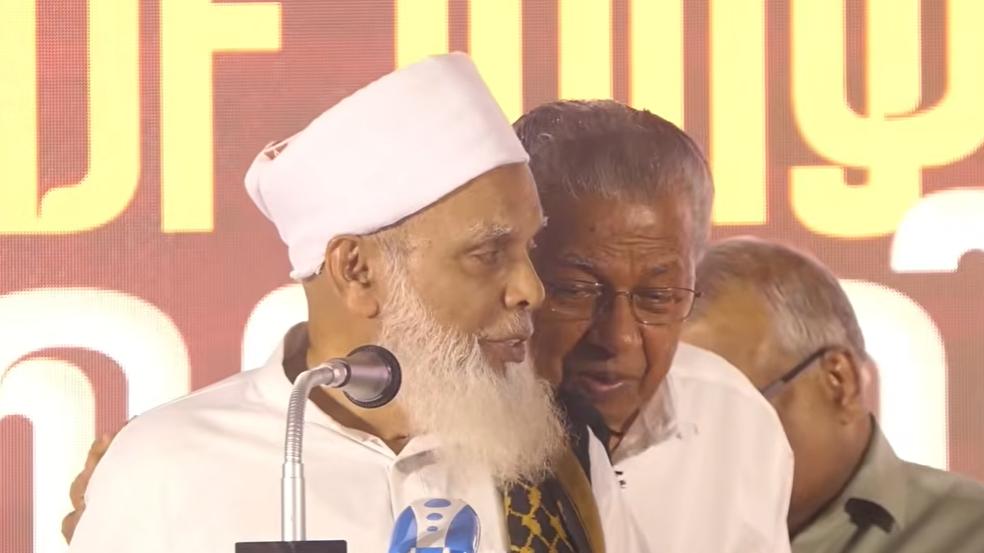
Umar Faizy, a prominent Muslim cleric, is facing backlash for his remarks at a CPM seminar where he warned about the possibility of non-Muslims appointed to the Waqf Board being RSS affiliates. He asserts his comments were based on High Court documents, alleging the Kerala government has shown a favorable stance towards RSS and BJP positions on Waqf issues, particularly concerning the…
Imagine a special club that looks after important buildings and lands for a specific community. A leader from this community, Umar Faizy, spoke at a meeting and said he was worried that if people from a different group, who might not have the community's best interests at heart, were allowed to join the club's management, it could cause problems. He thinks the government might be agreeing with this other group, and he's trying to warn everyone about it.
Analysis
Mukkam Umar Faizy's Defense
Mukkam Umar Faizy, a member of Samastha Mushawara, has strongly refuted allegations against him following his speech at a CPM-organized Waqf seminar in Malappuram. He clarified that his participation was driven by a sense of duty as a Waqf Board member to inform the public about the realities surrounding the Munambam Waqf land issue and the broader state Waqf Board affairs. Faizy emphasized that his remarks were not baseless but were intended to shed light on existing concerns. He noted that the seminar itself was attended by various organizational representatives, including former Hajj Committee Chairman C. Mohammed Faizy, indicating a broader engagement on the topic.
Faizy's defense centers on the claim that his speech merely elucidated certain current issues related to the Waqf Board, rather than making unfounded accusations. He positioned himself as a truth-teller, aiming to counter what he described as "false propaganda" directed against him and the Waqf Board. This stance suggests a deliberate effort to frame his comments as a responsible disclosure of facts rather than a controversial political statement, despite the ensuing uproar.
Kerala Government's Alleged Alignment
A core accusation made by Umar Faizy is that the Kerala government has shown a concerning alignment with the stances of the RSS and BJP regarding Waqf matters in the High Court. He pointed out that those criticizing him now were silent when the state government allegedly filed statements and its advocate adopted positions favorable to the RSS and a BJP leader in court. Faizy specifically cited a petition filed by BJP State Vice President Shone George, which, according to him, clearly recorded the RSS's view that the Waqf Board obstructs Kerala's public order.
Faizy further alleged that the government's reply to the High Court did not reject this RSS argument but rather accepted it. He also claimed that evidence in Shone George's petition indicated the government's favorable response to the RSS argument about dissolving the Waqf Board over the Munambam issue. These allegations suggest a perceived betrayal or compromise by the state government on issues critical to the Muslim community's endowments, fueling the controversy.
Waqf Board Appointments and RSS Concerns
The crux of Umar Faizy's controversial speech revolved around the potential implications of appointing non-Muslims to the Waqf Board. He stated that his remarks highlighted the possibility of such appointees being RSS members, especially if the government fulfills its assurance to the High Court to appoint two non-Muslims, based on the positions outlined in Shone George's petition. Faizy asserted that these concerns are not speculative but are clearly evident upon examining the High Court records.
This specific point has ignited significant debate, touching upon the religious and administrative autonomy of the Waqf Board. The fear expressed by Faizy is that if individuals with an alleged RSS affiliation are appointed, it could undermine the board's purpose and potentially lead to its dissolution, as suggested by the RSS's stated positions. The controversy thus extends beyond a mere political spat, delving into fundamental questions about the protection and management of Muslim religious endowments in Kerala.
Key points
- Samastha Mushawara member Umar Faizy defended his speech at a CPM Waqf seminar, clarifying his concerns about non-Muslim appointments to the Waqf Board.
- Faizy alleged that the Kerala government has shown a favorable stance towards RSS and BJP positions in High Court regarding Waqf matters.
- He specifically warned about the possibility of non-Muslim appointees to the Waqf Board being RSS members, citing High Court documents.
- The controversy stems from allegations that the government accepted the RSS's view of the Waqf Board as an obstacle to public order.
- Faizy also criticized opposition leaders V.D. Satheesan and P.K. Kunhalikutty for their alleged stance on the Munambam Waqf land encroachment.
The controversy could lead to greater transparency and public scrutiny of Waqf Board appointments and government dealings, potentially ensuring that the board's integrity and purpose are upheld. It might also foster a more robust dialogue among political parties and religious organizations to clarify roles and responsibilities regarding community endowments.
The ongoing dispute could further polarize religious and political groups in Kerala, leading to increased communal tensions and distrust in government institutions. It might also complicate the effective administration of the Waqf Board, potentially hindering its ability to manage Muslim endowments efficiently and fairly.