Africa: All of Africa Today - August 18, 2026
Zambian President Hakainde Hichilema won a second term amid opposition claims of irregularities, while Zimbabwe suffered its deadliest transport disaster with 92 dead on Lake Kariba. DR Congo's Ebola outbreak became its deadliest, and Uganda faces a severe doctor shortage.
Intelligence analysis by Gemini 2.5 Flash
This AllAfrica daily roundup highlights critical developments across the continent, including a contested presidential election in Zambia, a tragic ferry disaster in Zimbabwe, and a worsening Ebola outbreak in DR Congo. It also sheds light on Uganda's severe shortage of active medical doctors, underscoring persistent challenges in governance, public health, and infrastructure.
Imagine a busy day at school where lots of big things happened! In Zambia, the principal got re-elected, but some kids said the vote wasn't fair. In Zimbabwe, a big boat accident sadly killed many people, like a school bus crash. And in DR Congo, a bad sickness like a super flu is spreading faster than doctors can stop it, making many sick. Plus, Uganda doesn't have enough doctors to help everyone who needs it.
Analysis
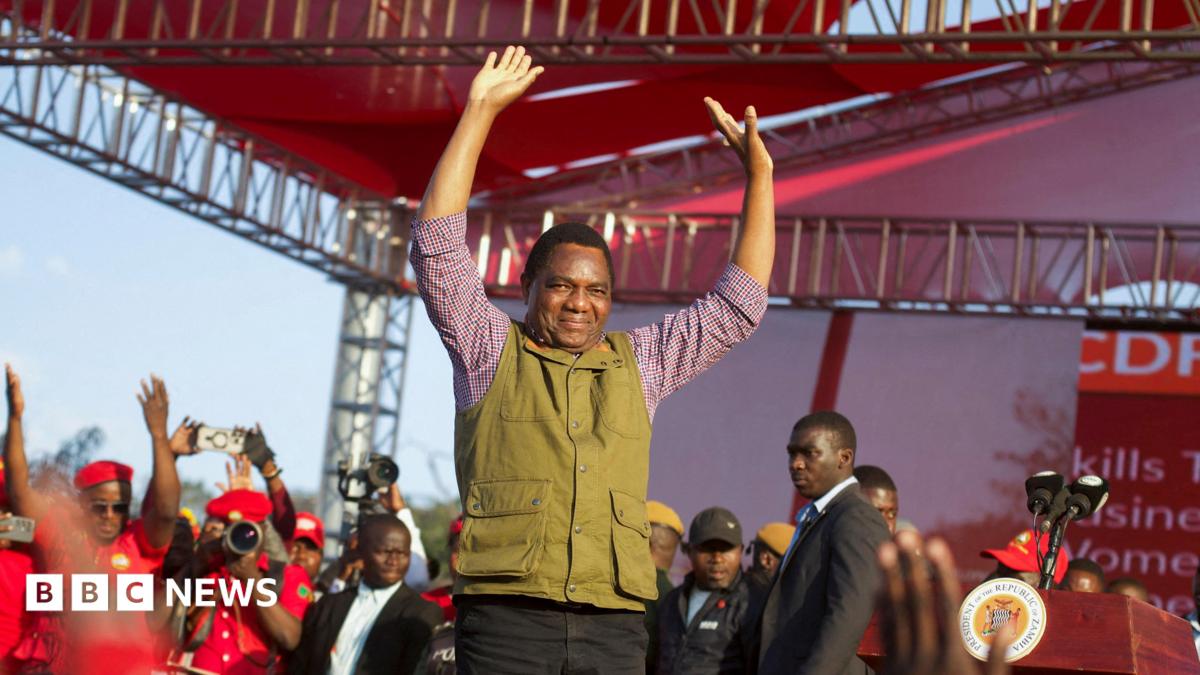
Hakainde Hichilema
Zambia's recent presidential election has concluded with incumbent Hakainde Hichilema securing a second five-year term, garnering 60% of the vote. This victory, announced by the electoral commission, saw him defeat his closest rival, Brian Mundubile, who obtained 38%. Hichilema, at 64, publicly thanked the electorate, framing the election as a testament to Zambia's enduring commitment to democratic principles and the peaceful transfer of power. This narrative is crucial for a continent often plagued by electoral disputes and instability, positioning Zambia as a potential model for democratic resilience.
However, the electoral process was not without contention, as Mundubile promptly disputed the results, citing allegations of voting irregularities and discrepancies. These claims led to a brief suspension of vote counting by the electoral commission amidst reports of violence and stolen ballots, casting a shadow over the perceived peacefulness of the exercise. While regional and international observers generally noted a peaceful polling day, they concurrently voiced concerns regarding limitations on media freedom, the belated implementation of electoral reforms, and restrictions imposed on opposition activities. Such issues, even if not overturning the outcome, can erode public trust and fuel political polarization, potentially impacting Zambia's long-term stability and democratic health.
Rida Mbuya Nehanda
The sinking of the Rida Mbuya Nehanda ferry on Lake Kariba has tragically escalated into Zimbabwe's most devastating transport disaster, with the death toll now reaching 92. This grim figure surpasses the 1991 Nyanga bus disaster, which previously held the record with 89 fatalities. The recovery efforts have been arduous, with eight additional bodies found, some significantly distant from the initial crash site, indicating the force of the incident. Furthermore, six bodies remain unidentified, prompting authorities to consider DNA testing as decomposition severely hinders conventional identification methods, highlighting the profound and lasting impact on victims' families.
The ferry was reportedly carrying approximately 168 passengers, a diverse group including families, traders, and fish buyers, underscoring its vital role in local commerce and community connectivity. While 67 individuals have been rescued, the disaster has wrought immense devastation upon communities such as Mola, where numerous families have suffered multiple losses, including children left without parents. Beyond the immediate human tragedy, these communities now face severe food shortages as they await the recovery of their loved ones, illustrating the broader socio-economic ripple effects of such catastrophes. Search operations are ongoing, and authorities have issued a somber warning that the death toll could yet increase, pointing to the persistent challenges in maritime safety and emergency response infrastructure across the region.
Ebola Bundibugyo
The Democratic Republic of Congo is currently battling its deadliest Ebola outbreak on record, attributed to the Ebola Bundibugyo strain, which has now claimed 2,325 lives from 4,945 confirmed cases. This alarming fatality rate of 46% has surpassed the 2,299 deaths recorded during the 2018–2020 outbreak, marking a critical escalation of the public health crisis. The World Health Organization (WHO) has voiced significant concern, stating unequivocally that the outbreak is "outpacing the response," a dire situation exacerbated by persistent armed conflict, severely underdeveloped health infrastructure, and a deep-seated distrust of authorities among the affected populations. These factors collectively create a formidable barrier to effective containment and treatment efforts.
Compounding the crisis is the absence of an approved treatment specifically for the Ebola Bundibugyo strain, although promising vaccine trials are actively underway, offering a crucial beacon of hope for future management and prevention. In response to the escalating threat, the United Nations has allocated a substantial $54.5 million to bolster the response efforts, while WHO is undertaking a major scale-up operation with the ambitious goal of bringing transmission under control within the next three months. The regional implications are also significant, prompting neighboring countries, including South Sudan and the Central African Republic, to intensify their surveillance and preparedness measures, recognizing the potential for cross-border spread and the imperative for a coordinated regional health security strategy.
Key points
- Zambian President Hakainde Hichilema secured a second term with 60% of the vote, though the opposition alleges irregularities.
- Zimbabwe experienced its deadliest transport disaster as the Rida Mbuya Nehanda ferry sank on Lake Kariba, killing at least 92 people.
- DR Congo's Ebola Bundibugyo outbreak has become its deadliest, with 2,325 deaths and the WHO noting the response is "outpacing."
- Uganda faces a critical shortage of medical professionals, with only one active doctor for every 6,400 people.
- Former Kenyan Deputy President Rigathi Gachagua is appealing a High Court decision upholding his impeachment.
Despite challenges, Zambia's election, even if disputed, represents a continuation of democratic processes. The ongoing vaccine trials for the Ebola Bundibugyo strain offer a crucial pathway towards controlling the deadliest outbreak and preventing future health crises in the region.
The disputed election results in Zambia could lead to political instability, while the ferry disaster highlights critical safety failures with devastating human cost. The escalating Ebola outbreak, coupled with weak health infrastructure and distrust, poses a severe and ongoing threat to public health across Central Africa, further compounded by Uganda's doctor shortage.