Zambia's president wins second term with 60% of the vote
Hakainde Hichilema has been re-elected as Zambia's president for a second term, securing 60% of the vote. The election faced challenges with opposition claims of irregularities and arrests of opposition figures.
Intelligence analysis by Gemini 2.5 Flash Lite
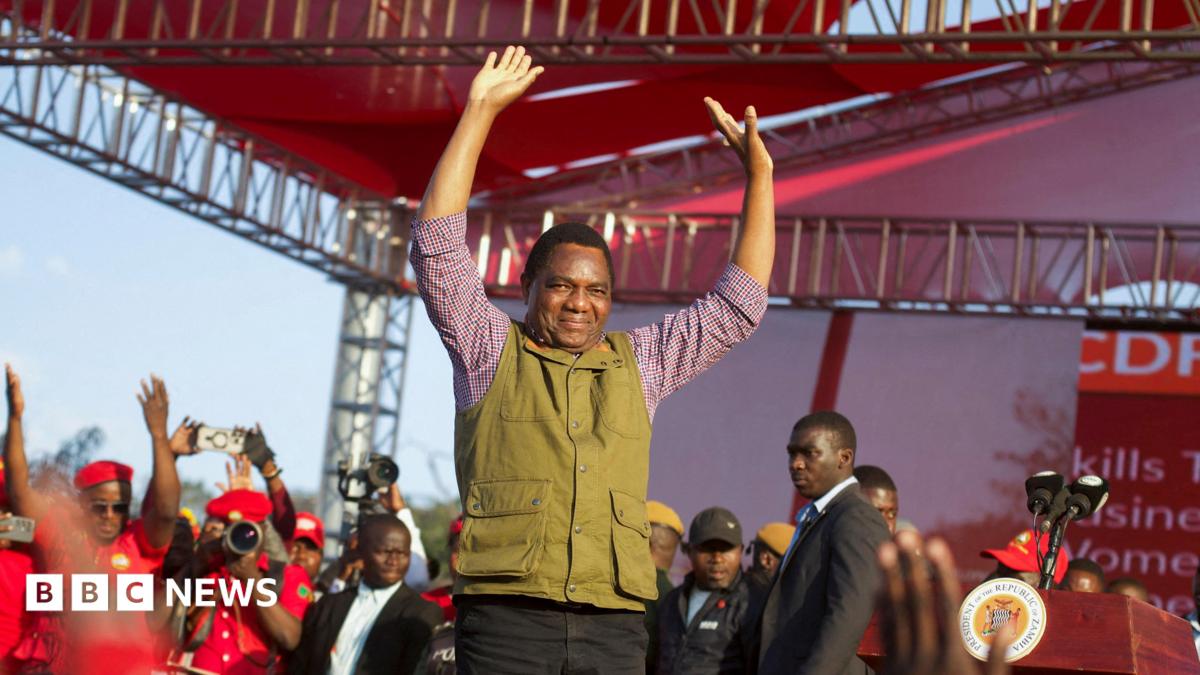
Zambian President Hakainde Hichilema has secured a second term with a decisive 60% of the vote, as announced by the electoral commission. Despite a widely expected win, the election was marked by opposition leader Brian Mundubile's claims of irregularities and allegations of a raid on his home, which authorities denied.
Imagine Zambia had a big school election for president. The person who was already president, Mr. Hichilema, won again! Lots of people voted for him, about 6 out of every 10. But, the other main candidate said some things were unfair, and some people were even arrested before the results. Still, the election officials said he won fair and square, and his supporters celebrated.
Analysis
Hakainde Hichilema's Second Term
President Hakainde Hichilema has secured a second five-year term as Zambia's leader, a victory widely anticipated and confirmed by the electoral commission with 60% of the vote. This outcome underscores the continued support for his United Party for National Development (UPND) and its platform. His supporters, clad in the party's signature red, took to the streets of the capital, Lusaka, in jubilant celebration, reflecting a strong public endorsement of his leadership. Hichilema, in his victory statement, emphasized Zambia's democratic credentials, stating that the nation settles its differences at the ballot box and pledging to govern for all citizens, including those who supported the opposition.
Brian Mundubile's Allegations
The electoral process was not without controversy, primarily stemming from the challenges posed by the main opposition candidate, Brian Mundubile. Mundubile, who secured 38% of the vote, prematurely claimed victory and alleged voting irregularities without providing concrete evidence. His campaign was further overshadowed by an incident where armed personnel raided his home, which he described as a violent intrusion. Authorities, however, accused him and others of plotting an insurrection and storing military-grade weapons, claims Mundubile vehemently denied. The opposition's allegations, coupled with the arrest of leading opposition figures on charges of plotting an insurrection, cast a shadow over the election's perceived fairness and raised concerns about political repression.
Electoral Observer Concerns
Regional and international observer missions, while largely describing election day as peaceful, raised significant concerns regarding the pre-election environment and the process itself. The Southern African Development Community (Sadc) observer mission noted reports of intimidation, assault, abduction, and property damage in several provinces, though they could not verify all claims. The EU observation mission pointed to restrictions on the opposition during the campaign period, suggesting it may have contributed to an uneven contest. A brief suspension of vote counting and result announcements by the electoral commission, attributed to reports of violence and ballot paper theft, also drew criticism for potentially undermining the credibility and voter confidence in the process. These observations highlight persistent challenges in ensuring a fully transparent and equitable electoral landscape in Zambia.
Key points
- Hakainde Hichilema has been re-elected as Zambia's president for a second term, winning 60% of the vote.
- The election saw challenges, with the closest rival, Brian Mundubile, alleging irregularities and claiming his home was raided.
- Opposition figures were arrested days after the vote, accused by authorities of plotting an insurrection.
- Regional and international observers raised concerns about late electoral reforms, media access, and reported incidents of intimidation.
- Despite controversies, election day was largely described as peaceful, and Zambia has a history of peaceful power transfers.
President Hichilema's re-election with a clear majority could provide the stability needed to implement his economic and social reform agenda. His commitment to working for all citizens, including opposition supporters, may foster greater national unity and encourage foreign investment, boosting Zambia's economic recovery.
The opposition's claims of irregularities and the arrests of their figures could lead to prolonged political instability and legal challenges. If these concerns are not adequately addressed, it may erode public trust in democratic institutions and deter foreign investment, hindering Zambia's development prospects.