After ‘testing ground’ in Kashmir, pellet guns used on student protesters in India's capital
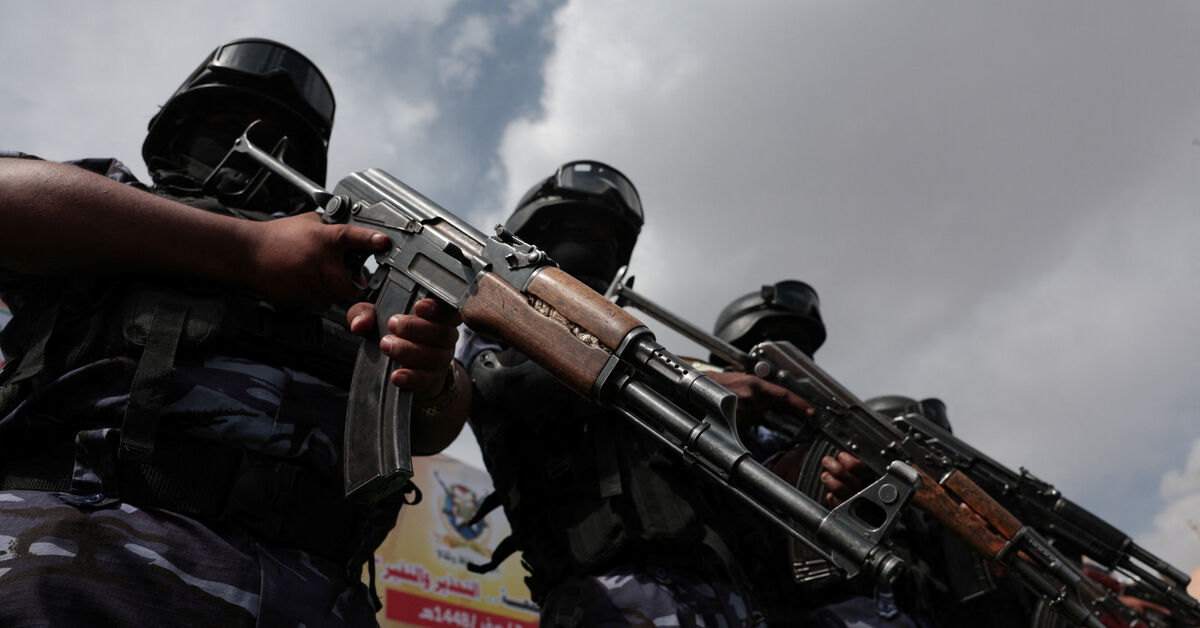
Indian forces used pump-action pellet guns on student protesters in New Delhi, hospital records show. The protesters had been demanding educational reforms and the resignation of the education minister, Dharmendra Pradhan. Rights organisations have called for investigatio…
Intelligence analysis by Llama

Indian forces used pellet guns on student protesters in New Delhi, despite claims of 'excessive force' being used. The protesters had been demanding educational reforms and the resignation of the education minister, Dharmendra Pradhan. Rights organisations have called for investigations into the use of 'excessive force' against the protesters.
Indian forces used special guns that shoot metal pellets at student protesters in New Delhi. The protesters were demanding changes to the education system and the resignation of the education minister. This is the first time Indian forces have used these guns in the capital city, but they have been used before in the state of Kashmir.
Analysis
A Pattern of Repression in Delhi and Kashmir
The use of pellet guns by Indian forces in New Delhi is a worrying trend, especially given the history of human rights violations in Indian-controlled Kashmir. The protests in New Delhi are part of a broader movement demanding government accountability and the resignation of Prime Minister Narendra Modi.
The Delhi police described claims of pellet gun use as 'completely false and misleading' in a statement posted on X on Tuesday. However, the Rapid Action Forces (RAF), a specialised riot police force deployed by India's central government, admitted the use of 'excessive use of force' following an internal investigation.
This marks the first known incident of pellet gun use by Indian armed forces in Delhi. However, the tactic has been a long-standing one in quelling protests in Indian-controlled Kashmir. In 2018, the Office of the United Nations High Commissioner for Human Rights described pellet guns as 'one of the most dangerous weapons used against protesters' by the military in Indian-controlled Kashmir.
The ongoing protests in Delhi started in June with calls initiated by the satirical 'Cockroach Janta Party' (CJP), an online movement, in response to Indian Chief Justice Surya Kant's calling unemployed Indian youth 'cockroaches' and 'parasites'. Protesters began by demanding the resignation of Pradhan, and accountability for the National Eligibility cum Entrance Test (NEET), which has been marked by corruption, disparity and exam paper leaks, leading to over 20 student suicides.
India's 'Cockroach Party' takes aim at Narendra Modi's government after national exam debacle Read More »
The ongoing protests gained mass popularity after popular Indian activist Sonam Wangchuck joined the hunger strike in Jantar Mantar for 26 days, culminating in mass protests and a march on the parliament beginning last week. Pradhan announced his resignation on Saturday, after days of escalated protests; however, the CJP responded in a statement on X that protests would continue until other demands were met.
Protests across India have expanded beyond the CJP's initial demands for educational reforms, with many making broader demands for government accountability and the resignation of Prime Minister Narendra Modi as well. Police across states have also detained and charged protesters, including Muslim CJP volunteer Mohd Junaid, whose home was raided, family members detained, and identity cards seized by Uttar Pradesh state police.
On Saturday, minutes before Pradhan announced his resignation, Delhi police assaulted student protesters with batons and used tear gas bombs. In addition to violence from Indian armed forces, Hindu nationalist groups have also made repeated public threats to disrupt protests and attack those who are participating.
Kashmir as a 'testing lab'
While rights groups have documented human rights violations by Delhi police during popular protests in recent years, such as the Muslim-led student protests against citizenship amendment bills in 2019, the use of pellet guns is unprecedented.
Lethal weapon: How Bollywood's 'Chauhaan' trivialises the suffering of Kashmiris maimed by Indian forces Read More »
'This is the first recorded incident in the capital of what is known as the world's largest democracy,' Tanvi Mishra, a cultural worker and activist who has been actively attending the Delhi protests, told Middle East Eye.
Mishra added, however, that this pattern extends beyond just the pellet guns.
'Many would not have imagined an internet shutdown in the centre of the capital of India until now, but why is it that we are conditioned into accepting it as a state of normalcy in Kashmir?'
She said that tactics used by the Indian state in Kashmir have also been used to attack Muslims within the country.
'It is the Muslim identity that is being attacked, and actually the razing of the homes is a very similar kind of tactic that is being used by the Indian state.'
For years, rights groups have documented the Indian government's use of arbitrary home demolitions as a punitive tactic against political dissent, typically against Muslims, and frequently in Indian-controlled Kashmir.
'India funds, Gaza burns': Protests against genocide erupt across cities in India Read More »
Eph, a Kashmiri writer and researcher who spoke to MEE un
Key points
- Indian forces used pellet guns on student protesters in New Delhi, despite claims of 'excessive force' being used.
- The protesters had been demanding educational reforms and the resignation of the education minister, Dharmendra Pradhan.
- Rights organisations have called for investigations into the use of 'excessive force' against the protesters.
- The Delhi police described claims of pellet gun use as 'completely false and misleading' in a statement posted on X on Tuesday.
- The Rapid Action Forces (RAF), a specialised riot police force deployed by India's central government, admitted the use of 'excessive use of force' following an internal investigation.
- The ongoing protests in Delhi started in June with calls initiated by the satirical 'Cockroach Janta Party' (CJP), an online movement, in response to Indian Chief Justice Surya Kant's calling unemployed Indian youth 'cockroaches' and 'parasites'.
- Protests across India have expanded beyond the CJP's initial demands for educational reforms, with many making broader demands for government accountability and the resignation of Prime Minister Narendra Modi as well.
The resignation of the education minister, Dharmendra Pradhan, is a positive step towards addressing the demands of the protesters. However, the protests will continue until other demands are met, including compensation for families of youths who died by suicide in connection with NEET and action against police attacks on the 20 July Jantar Mantar protest.
The use of pellet guns by Indian forces in New Delhi is a worrying trend, and the protests may escalate further. The Indian government's history of human rights violations in Kashmir and its use of arbitrary home demolitions as a punitive tactic against political dissent are also concerns.