Palestinians hope UNESCO designation halts Israeli push at West Bank site
Palestinian officials welcomed UNESCO's designation of Sebastia in the occupied West Bank as a World Heritage site, hoping it will prevent Israel extending its control at the ancient village, while Israel condemned it as a political decision.
Intelligence analysis by Llama
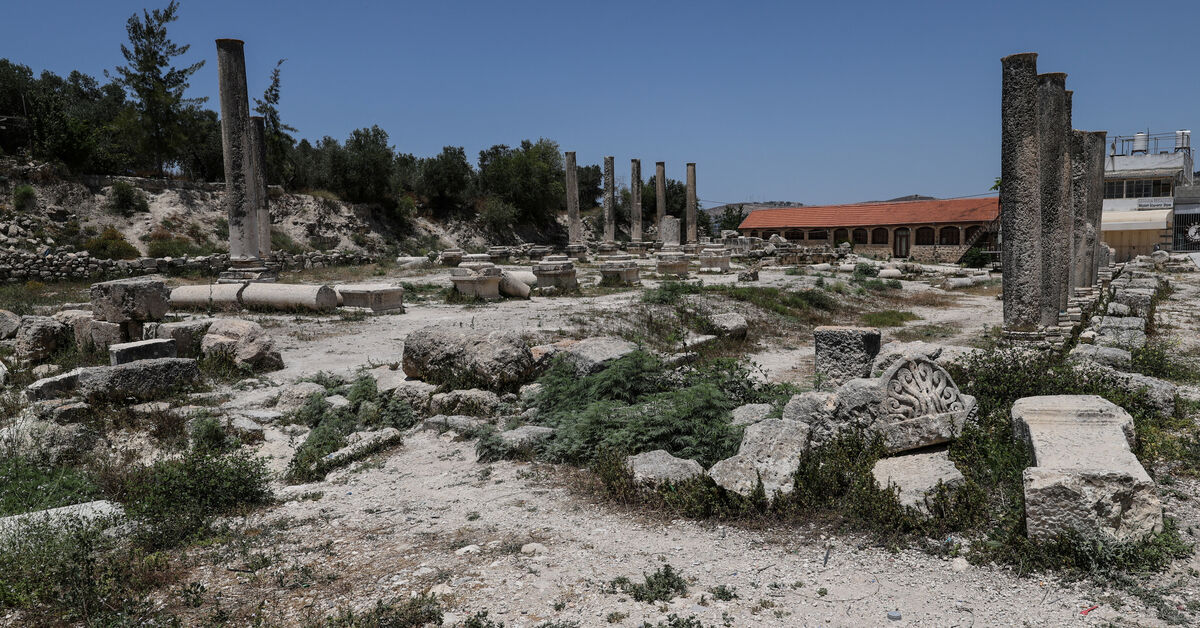
Palestinian officials hope UNESCO's designation of Sebastia in the occupied West Bank as a World Heritage site will prevent Israel from extending its control at the ancient village, while Israel condemned it as a political decision.
Palestinians are hoping that a UNESCO designation will help protect an ancient village in the West Bank from being taken over by Israel. The village is special because it has lots of old buildings and artifacts from different time periods. Israel wants to take some of the land to build on it, but Palestinians are worried that this will hurt their tourism industry and their connection to the site.
Analysis
A UNESCO World Heritage Site in Peril
The recent UNESCO designation of Sebastia in the occupied West Bank as a World Heritage site has sparked hope among Palestinian officials that it will prevent Israel from extending its control at the ancient village. Sebastia, in the northern West Bank, has archaeological remnants from successive periods dating back at least to the 9th-century BC capital of the Israelite kingdom, through the Hellenistic, Roman, Byzantine, Islamic periods, Crusader and Ottoman eras, according to UNESCO. The site is traditionally seen as the burial place of John the Baptist.
However, Palestinian residents of the adjacent village, many of whom rely on tourism for a living, are facing land confiscations after Israel announced a plan to seize about 1,800 dunams (445 acres) at the site, which it said was meant to develop the area. The Palestinian tourism and foreign ministries said on Friday that they hoped the UNESCO recognition would help mobilize international support against Israeli measures there.
Israel's Foreign Minister Gideon Saar said the UNESCO decision was part of a Palestinian drive to obscure Jewish ties to the land. "No vote in an international organization can change history," he said in a statement. Palestinian officials are also concerned about a new Israeli bill, that has yet to be written into law, that would extend Israeli civil control over ancient sites in the West Bank. That in effect would strip away oversight of the ancient sites from the Western-backed Palestinian Authority, which under the 1990s Oslo peace accords has exercised limited self-rule in parts of the West Bank, territory Israel captured in a 1967 war.
The UNESCO designation of Sebastia is a significant development in the region, as it may prevent Israel from extending its control at the ancient village and could mobilize international support against Israeli measures. However, the future of the site remains uncertain, as Israel's plans to seize land at the site have not been halted. The Palestinian Authority has expressed concern about the new Israeli bill, which would extend Israeli civil control over ancient sites in the West Bank.
Why UNESCO Matters
UNESCO's designation of Sebastia as a World Heritage site is significant, as it recognizes the site's cultural and historical importance. The site is a testament to the rich history of the region, with archaeological remnants from successive periods dating back at least to the 9th-century BC capital of the Israelite kingdom. The UNESCO designation is also a recognition of the site's importance to the Palestinian people, who have a deep connection to the site.
The Road Ahead
The future of Sebastia remains uncertain, as Israel's plans to seize land at the site have not been halted. The Palestinian Authority has expressed concern about the new Israeli bill, which would extend Israeli civil control over ancient sites in the West Bank. The UNESCO designation of Sebastia is a significant development in the region, as it may prevent Israel from extending its control at the ancient village and could mobilize international support against Israeli measures.
Key points
- UNESCO designated Sebastia in the occupied West Bank as a World Heritage site
- Palestinian officials hope the designation will prevent Israel from extending its control at the ancient village
- Israel condemned the UNESCO decision as a political move
- Palestinian residents of the adjacent village are facing land confiscations after Israel announced a plan to seize land at the site
- The Palestinian tourism and foreign ministries said they hoped the UNESCO recognition would help mobilize international support against Israeli measures
The UNESCO designation of Sebastia may prevent Israel from extending its control at the ancient village and could mobilize international support against Israeli measures. This could lead to a more stable and secure environment for Palestinian residents of the adjacent village, who rely on tourism for a living.
The future of Sebastia remains uncertain, as Israel's plans to seize land at the site have not been halted. The Palestinian Authority has expressed concern about the new Israeli bill, which would extend Israeli civil control over ancient sites in the West Bank. This could lead to a loss of control over the site for the Palestinian Authority and a further erosion of Palestinian rights.