Age Fraud; BCCI Bans Indian Under-19 Player Rohit Yadav
Indian Under-19 cricketer Rohit Yadav has been banned for two years by the BCCI and removed from the national squad due to age fraud, involving multiple birth certificates and manipulated Aadhaar details.
Intelligence analysis by Gemini 2.5 Flash
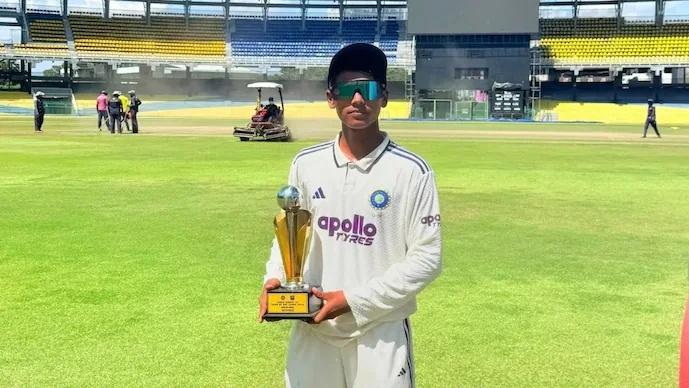
The Board of Control for Cricket in India (BCCI) has taken stringent action against Bengal leg-spinner Rohit Yadav after discovering significant discrepancies in his age records, including three different birth certificates and altered Aadhaar details, leading to his removal from the U19 squad for the upcoming Australia series and a two-year domestic ban.
Imagine playing a game where everyone needs to be a certain age, but one player secretly has different birth certificates that say they are younger or older at different times. That's what happened with a young cricketer named Rohit Yadav. The cricket bosses found out he had different papers showing different ages, so they stopped him from playing for two years to make sure everyone plays fairly and honestly.
Analysis
Rohit Yadav's Discrepancies
Bengal leg-spinner Rohit Yadav faced severe repercussions after irregularities were found in his age records. Investigations revealed that Yadav possessed three distinct birth certificates, listing his birth years as 2007, 2009, and 2010. Furthermore, his Aadhaar card details showed significant manipulation, with the birth year initially registered as 2007 with the Cricket Association of Bengal (CAB), then altered to 2006 in 2017 and 2020, and subsequently updated to 2009 in 2021. These inconsistencies came to light during a meticulous review of documents while he was part of the Indian Under-19 team touring Sri Lanka in July, where he had performed creditably by taking six wickets.
BCCI's Two-Year Ban
Following the discovery of these discrepancies, the BCCI acted decisively, imposing a two-year ban on Rohit Yadav from all domestic cricket. He was also immediately removed from the Indian Under-19 squad slated to play against Australia in upcoming One-Day and Multi-Day series in Rajkot and Ahmedabad. The Junior Cricket Committee swiftly announced replacements, with Aryan Savsani from the Saurashtra Cricket Association joining the ODI team and Tanmay Baloda from the Haryana Cricket Association being included in the Multi-Day squad. This swift action by the BCCI signals a strong stance against age-related malpractices in junior cricket.
CAB's Broader Crackdown
The Cricket Association of Bengal (CAB) has been proactive in combating age fraud, indicating a systemic issue within junior cricket. The article notes that the CAB has disqualified approximately 62 players from tournaments for the 2026-27 and 2027-28 seasons due to similar age-related irregularities. Notable players among those disqualified include Ravi Kumar, who was a member of India's Under-19 World Cup-winning team in 2022, where a 45-month age discrepancy was found in his records, and first-class player Vishal Bhatia. The CAB has affirmed its commitment to strengthening eligibility checks in age-group categories, aiming to ensure transparency and fairness in youth cricket.
Key points
- Indian Under-19 player Rohit Yadav has been banned for two years by the BCCI for age fraud.
- Irregularities included three different birth certificates (2007, 2009, 2010) and manipulated Aadhaar card details.
- Yadav was removed from the upcoming U19 series against Australia; Aryan Savsani and Tanmay Baloda were named as replacements.
- The Cricket Association of Bengal (CAB) has disqualified approximately 62 players for age fraud in recent seasons.
- Among those disqualified by CAB are Ravi Kumar, a member of India's 2022 U19 World Cup-winning team, and first-class player Vishal Bhatia.
The incident could severely damage Rohit Yadav's cricketing career and reputation, potentially hindering his future prospects despite any past performances. It also highlights a persistent and widespread problem of age fraud in junior cricket, suggesting that despite regulatory efforts, the integrity of youth tournaments and the development pathway for genuine talent remain vulnerable to manipulation.