Unusual sighting in an Odisha forest: 5 baby orangutans
Five baby orangutans were discovered in an Odisha forest, prompting a rescue operation and raising concerns about international wildlife smuggling, as the species is not native to India.
Intelligence analysis by Gemini 2.5 Flash
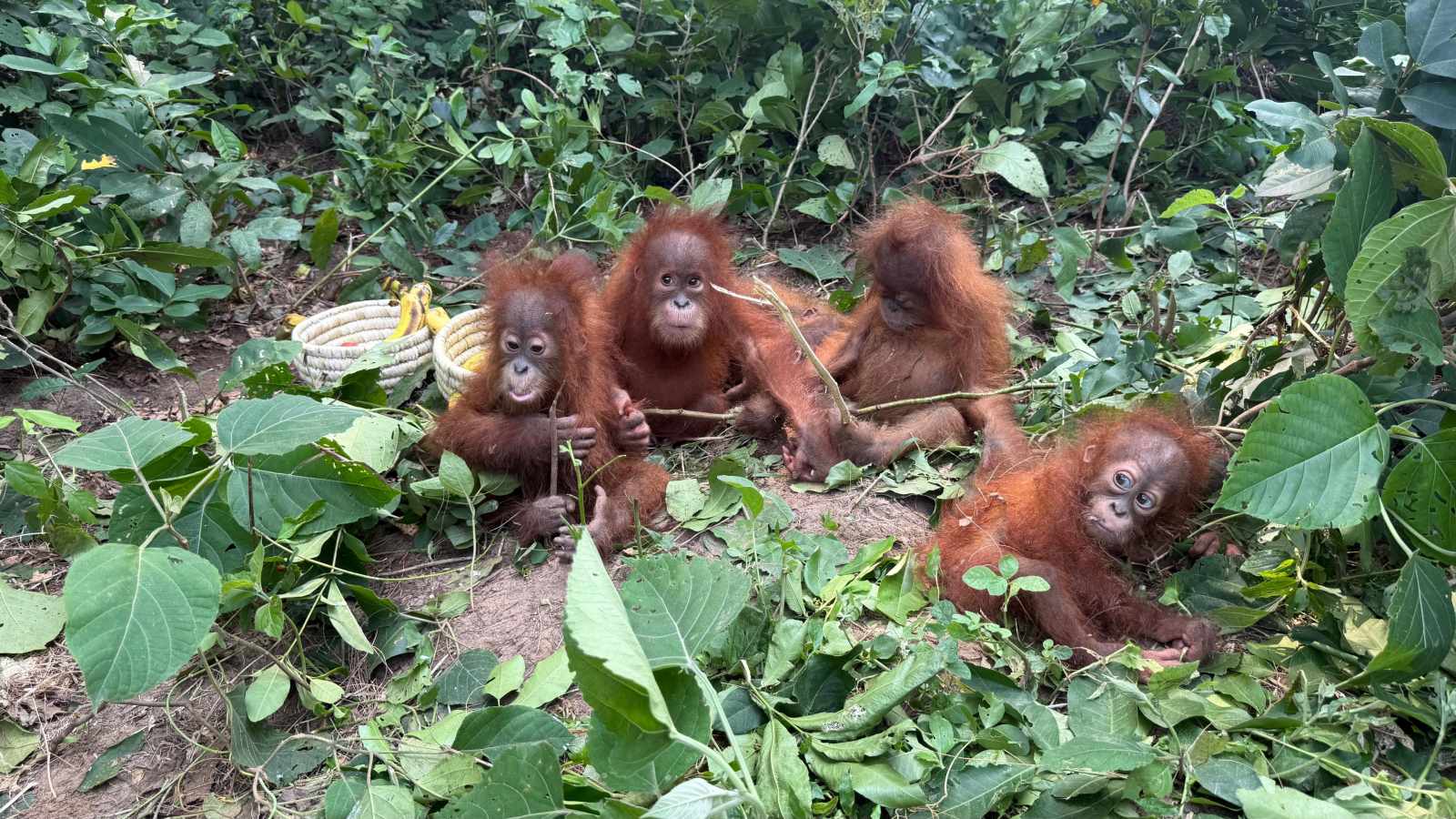
Forest officials in Odisha's Balasore district rescued five baby orangutans, a critically endangered species native to Borneo and Sumatra, after they were spotted by locals. Authorities suspect the primates were brought into the state through an international wildlife-smuggling racket, as natural migration is highly unlikely.
Imagine finding five tiny, furry orange monkeys in a forest in India, even though they usually live far away in places like Borneo! That's what happened in Odisha. Experts think someone might have brought them there illegally, like a secret delivery, because these special animals are very rare and need protection. Now, kind forest officers are taking care of them and trying to find out who brought them and why.
Analysis
Balasore Sighting
The unexpected discovery of five baby orangutans in the Badapai village forest of Odisha's Balasore district has sparked significant concern and immediate action from forest authorities. Local residents first spotted the rare primates, leading to a rapid gathering of onlookers and prompting the forest department to intervene for their rescue. Four of the five juveniles, measuring between 1 to 1.5 feet, were found to be healthy and are currently under the care and observation of forest officials and veterinary doctors.
Balasore Divisional Forest Officer Pratik Prakash Indalkar confirmed the rescue and the ongoing medical examination. The presence of orangutans in Odisha is highly unusual, as the region is not their natural habitat, immediately raising suspicions about their origin.
Critically Endangered Primates
Orangutans, native exclusively to the rainforests of Borneo and Sumatra, are Asia's only great apes and are classified as Critically Endangered by the IUCN Red List, facing a severe survival crisis. The DFO explicitly stated that natural migration to the Balasore forest is highly improbable due to the lack of a corridor link, strongly suggesting a "human-induced act." This assessment points towards the involvement of an international wildlife-smuggling racket, a criminal industry valued at multi-million dollars globally.
Odisha's forest and environment minister, Ganesh Ram Singh Khuntia, has indicated that the Wildlife Crime Control Bureau (WCCB), a central multi-disciplinary agency, will investigate the matter. A formal complaint has been lodged under wildlife laws, and police assistance has been sought to identify individuals or organized groups involved in this illicit trade.
Nandankanan Zoological Park
Following their rescue and initial care, the baby orangutans are most likely to be transferred to the Nandankanan Zoological Park in Bhubaneswar. A team from the zoo has already departed for Balasore to coordinate the shifting process, after which the primates will undergo a period of quarantine. This move is significant as Nandankanan previously housed Binny, the country's only orangutan, which died in 2019 at the age of 41. Binny had been brought from Pune in 2003, having originally come from Singapore.
Forest officials note that orangutans typically live up to 40 years in the wild, with lifespans extending to over 50-55 years in captivity. The transfer to Nandankanan aims to provide a safe and suitable environment for these endangered animals, while the broader investigation continues to unravel the complexities of their unexpected appearance in an Indian forest.
Key points
- Five baby orangutans were found in the Badapai village forest in Odisha's Balasore district.
- Orangutans are not native to India and are classified as Critically Endangered, raising suspicions of international wildlife smuggling.
- Four of the five rescued baby orangutans are healthy and are under the care of forest officials and veterinary doctors.
- The Wildlife Crime Control Bureau (WCCB) will investigate the suspected international smuggling racket.
- The orangutans are likely to be transferred to Nandankanan Zoological Park in Bhubaneswar for quarantine and long-term care.
The prompt rescue and care by forest officials offer hope for the baby orangutans' survival and eventual rehabilitation in a suitable environment like Nandankanan Zoological Park. The involvement of the Wildlife Crime Control Bureau also suggests a serious effort to combat the suspected international wildlife trafficking.
The discovery highlights a concerning international wildlife smuggling network operating in India, posing a severe threat to critically endangered species like orangutans. The "human-induced act" underscores the ongoing challenge of protecting vulnerable animals from illegal trade and the difficulty in dismantling such sophisticated rackets.