AJK begins third phase polling across four Poonch Division constituencies
Polling opened in four constituencies of Bagh and Haveli districts in Poonch Division on Aug. 10, with nearly 460,000 registered voters. Seven other seats have been postponed.
Intelligence analysis by Llama
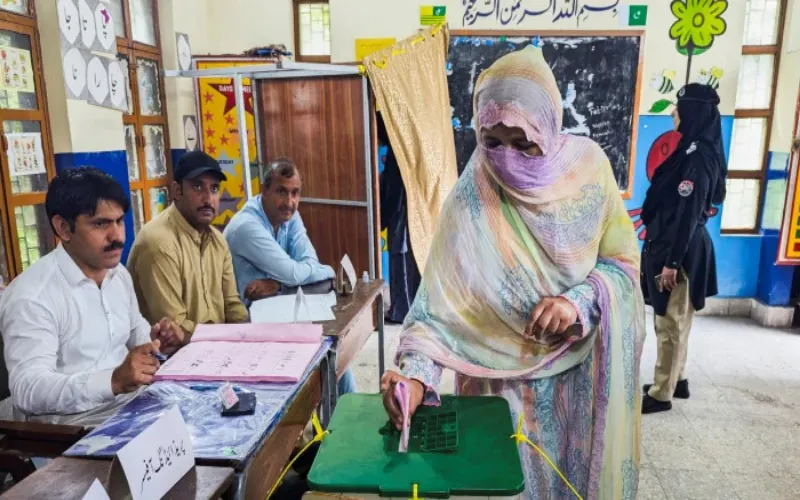
The third phase of the Azad Jammu and Kashmir Legislative Assembly elections got underway Monday in four Poonch Division constituencies, while seven seats across Poonch and Sudhnoti districts were postponed for unspecified reasons. PML-N leads the count so far with 24 seats to PPP's 10.
Imagine the AJK assembly as a class with 45 students, and each region gets to pick some of them. Pakistan already picked students from Mirpur and Muzaffarabad, and PML-N is winning the most. Now people in Bagh and Haveli are voting too, while a few areas have to wait a bit longer before their turn comes.
Analysis
Four Constituencies, 460,000 Voters
Polling in the third phase opened on Aug. 10 across four constituencies in Bagh and Haveli districts, both part of Poonch Division. The AJK Election Commission said nearly 460,000 registered voters were eligible to cast ballots for seats in the Legislative Assembly. Election officials, quoted in the report, said arrangements including security deployment, polling staff and voter facilities had been finalized. The Chief Election Commissioner stated that authorities had taken steps to provide a safe environment for voters, staff and candidates, with monitoring in place to ensure transparency and compliance with election rules. Results are to be announced after vote counting and verification.
Seven Postponed Seats
Alongside the voting underway, the Election Commission confirmed that elections for seven seats have been delayed. Five of those are in Poonch district and two are in Sudhnoti district, with the article citing unspecified reasons for the postponement. New dates are expected to be announced by the Election Commission. The delay raises questions about voter turnout continuity and the timeline for completing the assembly formation, particularly in Poonch district where only four constituencies are voting this phase while five others are on hold. The staggered process also stretches the electoral cycle across multiple windows, complicating media coverage and party campaign coordination.
PML-N's 24-Seat Lead
The first two phases set the baseline going into this round. In the first phase, polling was held for 13 seats in Mirpur Division, with PML-N winning nine and PPP securing four. The second phase covered nine seats in Muzaffarabad Division plus 12 seats reserved for refugees, where PML-N won 15 and PPP took six. Across the 45-member Azad Jammu and Kashmir Legislative Assembly, the cumulative count puts PML-N at 24 seats and PPP at 10 before the third phase results are tallied. That margin gives PML-N a comfortable working position for government formation once the remaining phases conclude, though the deferred seats in Poonch and Sudhnoti could still shift the arithmetic.
Key points
- Third-phase polling opened Aug. 10 in four Bagh and Haveli constituencies with around 460,000 registered voters.
- Elections for seven seats across Poonch and Sudhnoti districts were postponed for unspecified reasons.
- PML-N leads the AJK assembly count with 24 seats after phases one and two, ahead of PPP's 10.
- Phase one covered 13 Mirpur Division seats; phase two covered 9 Muzaffarabad Division seats plus 12 refugee-reserved seats.
- The AJK Legislative Assembly has 45 total members, and the Election Commission is expected to announce new dates for the deferred seats.
If polling proceeds smoothly and the postponed seats are rescheduled quickly, the AJK Election Commission could deliver a fully formed assembly on schedule, giving PML-N a clear mandate to govern and reducing political uncertainty in the region. A high turnout across the four active constituencies would also strengthen the legitimacy of the resulting government.
The unspecified reasons behind the seven postponed seats in Poonch and Sudhnoti districts risk undermining public confidence in the process if they remain unexplained for long. Continued delays could fragment the assembly's formation timeline and give rival parties a longer window to contest results or mobilize legal challenges.