Alsobrooks says Clarity Act needs ethics deal before Senate vote
Sen. Angela Alsobrooks says she will not back the Clarity Act on the Senate floor until ethics, illicit finance, and Agriculture Committee issues are resolved.
Intelligence analysis by GPT-5.4 Mini
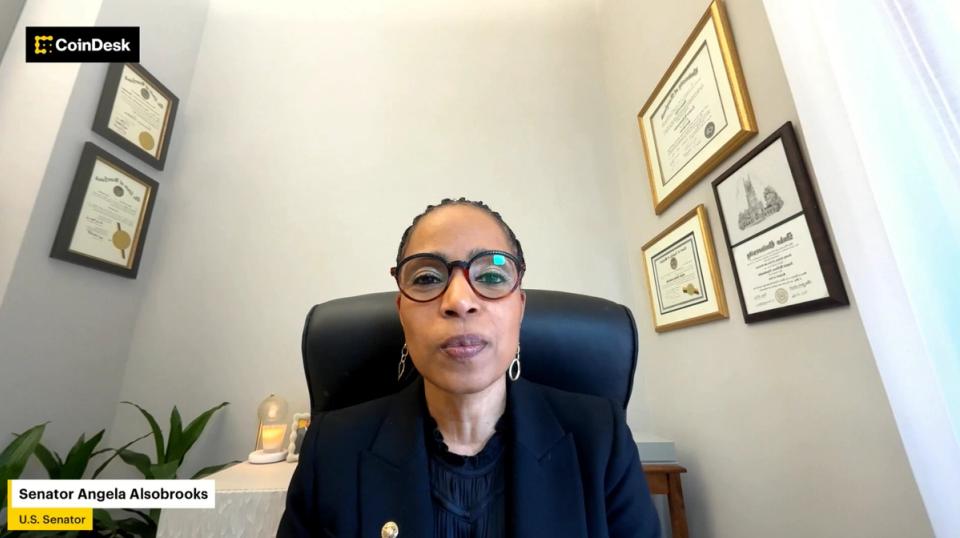
Alsobrooks says the crypto bill is close, but final Senate support still depends on a separate ethics deal and agreement on other outstanding provisions. She also defended the stablecoin yield compromise as a balance between innovation, consumer protection, and banking concerns.
A law about crypto is almost ready, but one senator says the last pieces still need fixing. It is like a board game where the players agree on most rules, but must settle a few safety rules before starting.
Analysis
What Alsobrooks is saying
Sen. Angela Alsobrooks said she will not vote for the Clarity Act on the Senate floor unless negotiators first reach agreement on ethics provisions and other unresolved issues. She said her earlier committee vote should be read as support for continued bipartisan talks, not as unconditional backing for final passage.
The remaining sticking points
Alsobrooks said ethics remains the main obstacle, with illicit finance language and unfinished work in the Agriculture Committee also still on the table. She said negotiators still need to settle terms acceptable to both parties before the bill can move forward in the Senate.
Stablecoin yield compromise
The senator defended the bill's stablecoin yield language, which had drawn criticism from JPMorgan Chase CEO Jamie Dimon and parts of the banking industry. She said she was one of the first senators to warn that interest-bearing stablecoins could pull deposits away from community banks. According to Alsobrooks, negotiators spent about nine months shaping language that bars crypto firms from paying yield solely on stablecoin balances and blocks products that mimic bank accounts without bank-like protections.
Why she says the bill still matters
Alsobrooks framed crypto regulation as a response to current consumer adoption, not a distant policy debate. She said tens of millions of Americans already own crypto and argued lawmakers have a duty to create protections. She also said digital assets can be an economic opportunity for younger Americans who feel shut out of traditional paths to wealth.
The political backdrop
The article suggests Democratic resistance is driven less by the technology itself than by concerns about corruption, fraud, and ethics. Alsobrooks pointed to concerns involving President Trump's business interests and broader questions about ethics in digital assets. Her view is that staying engaged in negotiations gives constituents a voice in the final rules.
Key points
- Alsobrooks said she will not support the Clarity Act on the Senate floor until ethics provisions are settled.
- She also said illicit finance language and Agriculture Committee work still need bipartisan agreement.
- She defended the stablecoin yield compromise as a balance between innovation and banking-sector protections.
- Alsobrooks said consumer adoption makes crypto regulation a current policy need, not a future one.
- She linked Democratic skepticism to ethics, corruption, and fraud concerns rather than the technology itself.
If negotiators resolve the ethics and illicit finance issues, the bill could keep moving and give the crypto industry clearer federal rules. The stablecoin compromise could also help lawmakers balance innovation with protections for consumers and community banks.
If ethics talks stall, the bill could lose momentum before a final Senate vote. The unresolved banking, fraud, and illicit finance concerns could also keep lawmakers divided and delay broader crypto legislation.