Am I a chicken-shop lefty? Here’s what a French fast food row taught me about politics
A dispute over a halal chicken chain's opening in France highlights class and political divisions within the left, mirroring debates about identity and gentrification.
Intelligence analysis by Gemini 2.5 Flash Lite
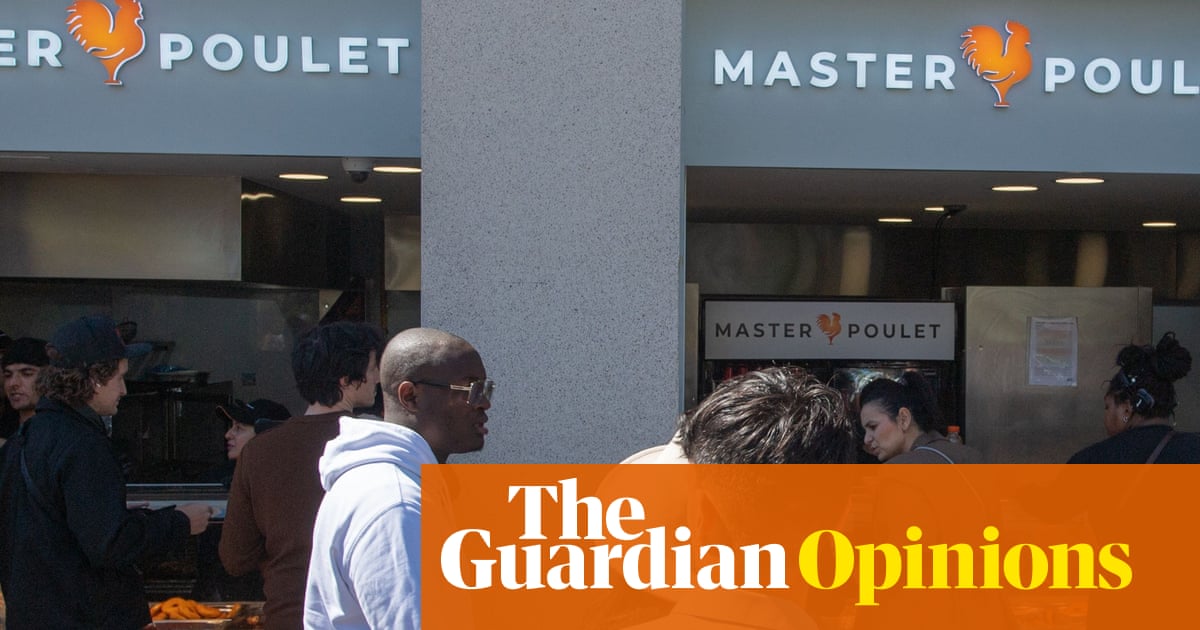
The article explores a political row in France concerning the opening of a halal chicken shop, Master Poulet, in a gentrifying area. The local mayor's attempts to block the business have sparked accusations of classism and Islamophobia, revealing deep divisions within the French left and raising questions about progressive politics and cultural identity.
Imagine a town where a new fast-food chicken place opened, but the mayor tried to stop it with plants and blocks! Some people think he's just trying to make the town fancier and push out cheaper places. Others say it's about noise and smells. It's like a big argument on the left side of politics about who belongs and what kind of businesses are okay, especially when the far-right is getting stronger.
Analysis
The 'Chicken Shop Left' Conundrum
The author uses the controversy surrounding Master Poulet in Saint-Ouen-sur-Seine as a lens through which to examine the fragmented nature of contemporary progressive politics. The piece posits that disagreements over policy and identity have become so entrenched that they can lead to internal conflict, questioning whether one can be 'chicken shop left' – a term that evokes a connection to working-class, multicultural Britain often represented by the cultural significance of chicken shops.
This cultural touchstone, the chicken shop, is presented not just as a purveyor of affordable food but as a space deeply intertwined with immigrant histories, Black British youth culture, and a certain whimsical, eclectic British identity. The author draws parallels between the French situation and the UK's own political landscape, particularly in light of rising populism, suggesting a need for unity on the left that seems increasingly elusive.
Gentrification and Class Warfare
The core of the French dispute appears to be rooted in the rapid gentrification of Saint-Ouen-sur-Seine, a transformation accelerated by the upcoming Paris Olympics. Mayor Karim Bouamrane's obstructionist tactics against Master Poulet, initially framed as concerns over quality of life due to late deliveries and cooking smells, are viewed by critics as a thinly veiled attempt to displace businesses and residents associated with a lower socio-economic status. The affordability of Master Poulet's offerings, contrasted with the less scrutinized presence of McDonald's, fuels the argument that the objection is not to the food itself but to its cultural and class associations.
This narrative of class conflict is amplified by the involvement of politicians from the further-left La France Insoumise (LFI), who have publicly supported Master Poulet and accused the mayor of Islamophobia and classism. The author notes the irony of a prominent LFI figure, Éric Coquerel, wading into the debate, highlighting the complex inter-party dynamics at play.
Fractured Alliances and the Far-Right Threat
The article touches upon the broader political context, referencing the temporary alliance of the Socialist Party (PS) and LFI in the Nouveau Front Populaire (NFP) to counter the far-right National Rally. However, the Master Poulet incident, coupled with Bouamrane's presidential ambitions and his subsequent criticism of LFI, suggests that such unity is fragile. The author expresses concern that these internal divisions within the left could weaken their collective ability to confront the growing threat of the far-right, particularly as polls indicate a strong showing for Marine Le Pen.
The piece concludes with a poignant reflection on the nature of political engagement, advocating for a more cohesive and less adversarial approach – 'birds of a feather' rather than 'ruling the roost' – especially in the face of external political challenges.
Key points
- A political row erupted in France over the opening of a halal chicken shop, Master Poulet, in a gentrifying area.
- Critics accuse the local mayor of classism and Islamophobia, suggesting his actions are driven by gentrification efforts rather than genuine quality-of-life concerns.
- The incident highlights deep divisions within the French left, particularly between the Socialist Party and La France Insoumise.
- The author reflects on the cultural significance of chicken shops in multicultural working-class communities and their role in political identity.
- The internal conflicts on the left are seen as potentially detrimental in the face of a growing far-right threat.
The dispute could lead to a more nuanced understanding of how economic development and cultural identity intersect in urban areas, potentially fostering more inclusive regeneration strategies. It might also prompt a re-evaluation of progressive alliances, encouraging greater unity against the rise of the far-right.
The ongoing infighting within the left, exemplified by the Master Poulet controversy, risks alienating working-class and minority communities, thereby weakening their political power. This fragmentation could allow far-right movements to gain further traction by exploiting these divisions.