Analysis: Why Syria’s latest fuel price hike is stoking public anger
Syria's government raised fuel prices by up to 40 percent, triggering widespread protests across several regions as citizens struggle with escalating costs of living and pervasive poverty.
Intelligence analysis by Gemini 2.5 Flash
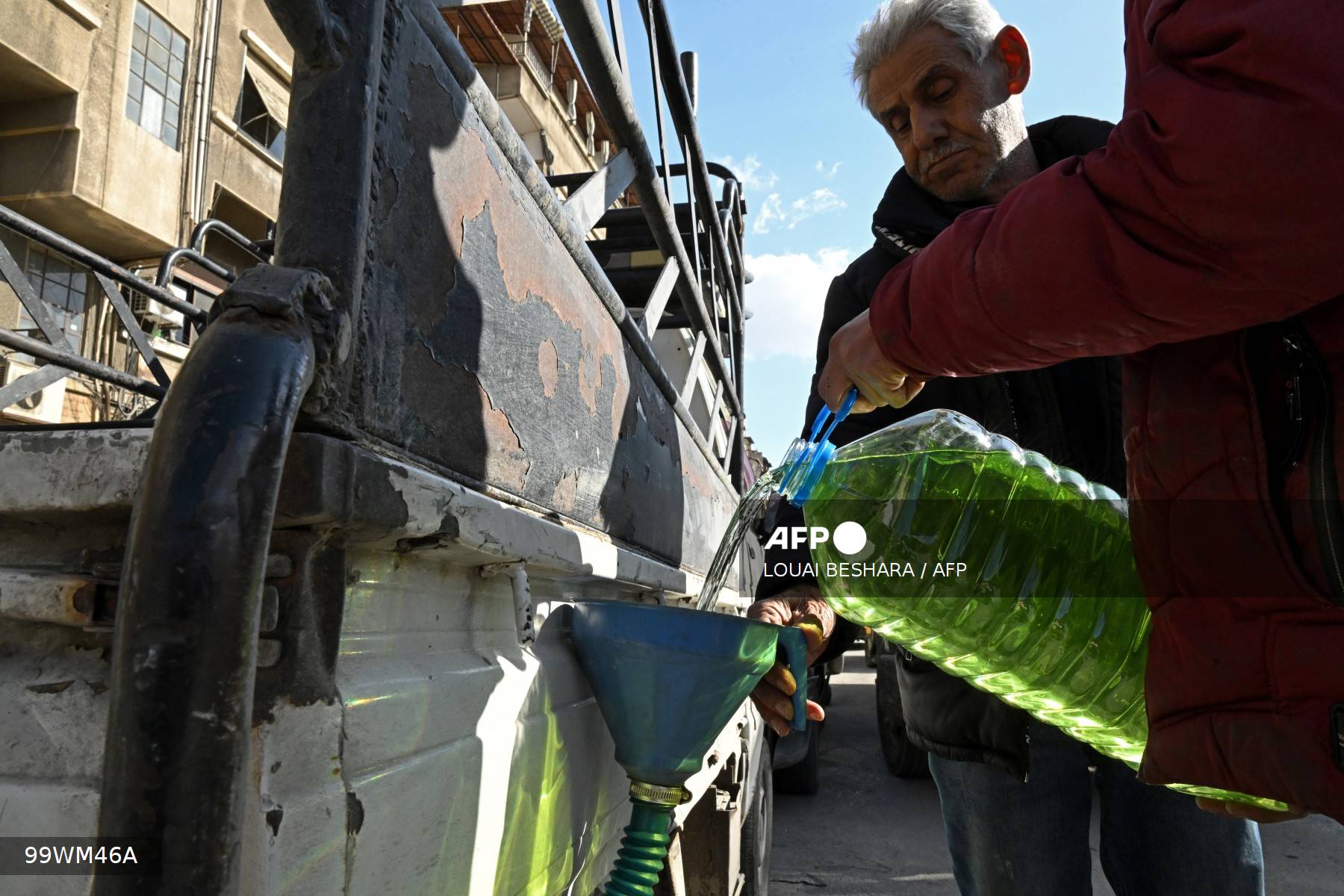
The Syrian government's decision to significantly increase petrol and diesel prices has ignited public anger and protests, with demonstrators blocking roads and demanding a reversal. This move comes as Syria faces a severe domestic oil production shortfall, forcing increased imports, and exacerbates an already dire economic situation where 90 percent of the population lives below the …
Imagine your family needs gas for the car and heating for your home, but suddenly the government makes gas way, way more expensive, like 40% more! That's what's happening in Syria. People are super angry because it means everything else, like food and getting to school or work, also gets much pricier. Most families there are already very poor, so this makes it even harder for them to buy what they need to live.
Analysis
The recent decision by the Syrian government to hike fuel prices by as much as 40 percent has ignited a fresh wave of public anger and protests across various regions, underscoring the profound economic distress gripping the nation. This increase, attributed to a significant shortfall in domestic oil production and the necessity of costly imports, places an unbearable burden on a population already struggling with widespread poverty and a severe lack of essential services. The demonstrations, which saw roads blocked and calls for the price hikes to be rescinded, reflect a deep-seated frustration with the government's handling of the economic crisis, particularly in a country where basic living standards are far from being met for the vast majority.
Mohammed Al-Bashir
Syria's energy minister, Mohammed Al-Bashir, explained the rationale behind the fuel price increase, citing a stark imbalance between domestic oil production and demand. The country is reportedly producing only around 102,000 barrels of oil per day, a fraction of the approximately 325,000 barrels required to meet national needs. This substantial deficit necessitates increased imports, which, coupled with a two-month overhaul of the Baniyas Refinery, contributed to what the ministry termed a "temporary" price adjustment. However, for ordinary Syrians, this temporary measure translates into immediate and severe hardship, impacting everything from daily commutes to the cost of essential goods and services. The government's explanation, while detailing the supply-demand gap, has done little to quell the public's outrage, as many feel their basic needs are being neglected.
Hassan Murad
Economic expert Hassan Murad emphasized that the issue of fuel prices in Syria extends far beyond the cost at the pump, representing a fundamental challenge to the nation's economic future. He warned that higher fuel prices would inevitably lead to increased costs across multiple sectors, including the transportation of raw materials and finished goods, the operation of agricultural machinery, irrigation pumps, generators, and delivery services. This ripple effect threatens to further erode citizens' purchasing power, diminish businesses' profitability, and hinder employment and investment prospects. Murad critically questioned the automatic passing of international oil prices to Syrian consumers, suggesting that the country's domestic oil production, local resources, and refining facilities, despite their limitations, should allow for a more nuanced pricing strategy, perhaps through a weighted average calculation, to mitigate the impact on an already fragile economy and its struggling populace.
Baniyas Refinery
The two-month overhaul of the Baniyas Refinery was cited by the energy ministry as a contributing factor to the "temporary" fuel price increase. While such maintenance is crucial for long-term operational efficiency, its timing has exacerbated the immediate supply crunch and, consequently, the financial strain on Syrian households. The refinery's temporary closure for maintenance highlights the vulnerabilities within Syria's energy infrastructure, which has seen an 80 percent fall in energy production and over 70 percent of power plants and transmission lines damaged since 2011. This infrastructural damage has severely reduced the national grid capacity, making the country highly dependent on imports and susceptible to price fluctuations and supply disruptions, further complicating the government's ability to provide stable and affordable energy to its citizens.
Key points
- Syria's government increased petrol and diesel prices by up to 40 percent, citing a significant shortfall in domestic oil production and increased import needs.
- The price hikes triggered widespread protests across regions like Aleppo, Idlib, Deir Ezzor, Hasakah, and Raqqa, with demonstrators blocking roads.
- Approximately 90 percent of Syrians live below the poverty line, and three out of four rely on humanitarian aid, making the price increase a severe burden.
- Economists warn that the fuel price hike will have a cascading effect, increasing costs for transportation, agriculture, generators, and overall consumer goods.
- Syria's energy production has fallen by 80 percent, with extensive damage to power plants and transmission lines, severely limiting national grid capacity.
Should the government heed the public outcry and economic expert advice, it might explore alternative pricing mechanisms, such as a weighted average, to alleviate the burden on citizens. A successful and timely completion of the Baniyas Refinery overhaul could also stabilize domestic supply, potentially leading to a review of the "temporary" price hikes.
The current fuel price hikes are likely to deepen the humanitarian crisis, pushing more Syrians into extreme poverty and increasing reliance on humanitarian aid. Continued public anger could escalate into broader social unrest, further destabilizing the country and hindering any prospects for economic recovery and reconstruction.