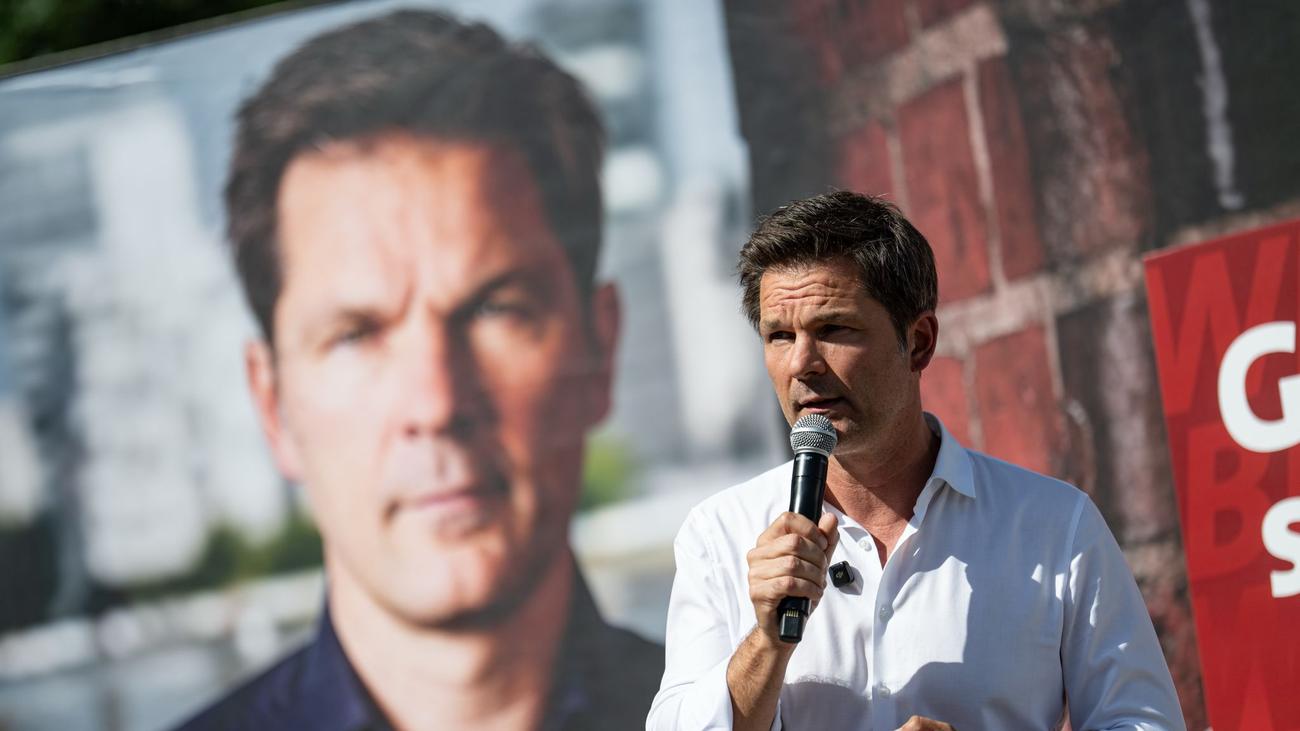
Andrea Orcel: Who is the manager who is swallowing Commerzbank?
Andrea Orcel, CEO of Unicredit, is nearing the acquisition of Commerzbank, having accumulated nearly 50% ownership. His aggressive, "boxing" management style has been met with resistance from Commerzbank and the German government, but he is determined to build a European …
Intelligence analysis by Gemini 2.5 Flash

The article profiles Andrea Orcel, the CEO of Unicredit, highlighting his relentless and strategic approach to business, likened to boxing. Despite initial resistance from Commerzbank and the German government, Orcel is on the verge of integrating the German bank into Unicredit, aiming to create a larger European financial entity. The key challenge now is to foster harmony among emplo…
Imagine two big banks, one from Italy called Unicredit, and one from Germany called Commerzbank. The boss of the Italian bank, Andrea Orcel, is like a determined boxer who really wants to make his bank even bigger by joining with the German one. Even though the German bank and its government weren't too happy about it at first, he's almost succeeded. Now, the big challenge is to get everyone from both banks to work together happily, like a team, after such a tough fight.
Analysis
Andrea Orcel's Strategy
Andrea Orcel, CEO of Unicredit, has pursued the acquisition of Commerzbank with a strategic rigor and determination that has earned him comparisons to a boxer. His approach, characterized by a "Caesar-like vigor," aims to forge a larger European financial empire. Orcel's method involved a gradual accumulation of Commerzbank shares, beginning in summer 2024 when the German federal government started divesting its stake. He acquired an additional five percent in September 2024, asserting that Unicredit was "invited" to purchase these shares, despite Commerzbank later perceiving his actions as "hostile." This calculated, step-by-step process underscores his long-term vision for Unicredit's expansion and influence within the European banking sector.
The article emphasizes Orcel's belief in the complementary nature of Unicredit's German subsidiary, HypoVereinsbank (HVB), and Commerzbank. He argues that while HVB serves larger medium-sized companies and wealthy clients, Commerzbank focuses on smaller medium-sized enterprises and broad retail banking. Regionally, HVB is strong in Germany's north and south, complementing Commerzbank's presence in other parts of the country. This strategic alignment, Orcel contends, will lead to a more robust and diversified banking group, capable of generating greater revenue and profit than the two entities operating separately.
Commerzbank's Resistance
The path to this impending merger has been fraught with tension, marked by significant resistance from Commerzbank's management and even the German federal government. The article notes that Frankfurt and Berlin initially invoked an "unwritten rule of economic courtesy," suggesting that a takeover should not proceed if the target company's management resists, especially concerning a financial institution from a friendly nation. However, Orcel "ignored the convention," pushing forward with his aggressive strategy. Commerzbankers, in particular, have viewed Orcel's determination as "brutality," his persistence as "vandalism," and his cunning as "malice."
This perception of hostility stems from the contentious nature of the takeover, which has been described as an "embittered fight." The article highlights that Commerzbank management initially offered "welcoming signals" but later shifted to perceiving Orcel's engagement as a "hostile act" after the September share purchase. This shift underscores the deep cultural and operational divides that Orcel now faces. The challenge for him is not merely to complete the acquisition but to bridge these gaps and secure the cooperation of Commerzbank's employees, without whom the success of the merged entity remains precarious.
The Integration Challenge
With Orcel now owning almost 50 percent of Commerzbank and negotiations for its full absorption into Unicredit imminent, the critical question shifts from if the merger will happen to how it will succeed. The article explicitly asks whether Orcel, known for his aggressive "boxing" style, can "organize consensus, even harmony" among the disparate workforces. The success of this "new financial temple" hinges on the ability of employees to rally behind the new leadership, a task made difficult by the contentious nature of the takeover.
Orcel's efforts to address these concerns are evident in his presentations to HypoVereinsbank employees, where he emphasizes the strengths of Italian-organized banking and the complementary nature of the two institutions. However, the article points out that "the Frankfurt side sees incompatibilities and contrasts where the Milanese see complementarities and synergies." This fundamental difference in perception represents a significant hurdle for integration. Overcoming this will require more than strategic alignment; it will demand a delicate balance of strong leadership and empathetic engagement to ensure that the merged entity can truly thrive and deliver on its promise of increased revenue and profit.
Key points
- Andrea Orcel, Unicredit CEO, is close to acquiring Commerzbank, holding nearly 50% of its shares.
- Orcel's aggressive, "boxing" management style has overcome resistance from Commerzbank and the German government.
- He aims to build a European financial empire by leveraging the complementary customer bases and regional strengths of Unicredit's HVB and Commerzbank.
- A major challenge remains in integrating the two banks and fostering harmony among employees after a bitter takeover battle.
- The German government had previously intervened to save Commerzbank in 2008 and later divested its stake, which Orcel capitalized on.
If Andrea Orcel successfully integrates Commerzbank into Unicredit, the combined entity could leverage complementary customer bases and regional strengths, leading to increased revenue and profit. A harmonized workforce, despite initial resistance, could create a more robust European financial institution, benefiting from diversified operations and a broader market reach.
The contentious nature of the takeover, perceived as "brutality" and "malice" by Commerzbankers, could lead to significant employee resistance and cultural clashes. If Orcel fails to foster consensus and harmony, the merged entity might struggle with integration, potentially leading to decreased productivity, talent drain, and an inability to realize the projected synergies, ultimately undermining its financial performance.