Argentina’s ‘Madman’: Inside the world of Javier Milei
Al Jazeera profiles Javier Milei's rise from an abusive childhood to Argentina's presidency, and examines his shock-therapy agenda, mixed results, and scandals.
Intelligence analysis by GPT-5.4 Mini
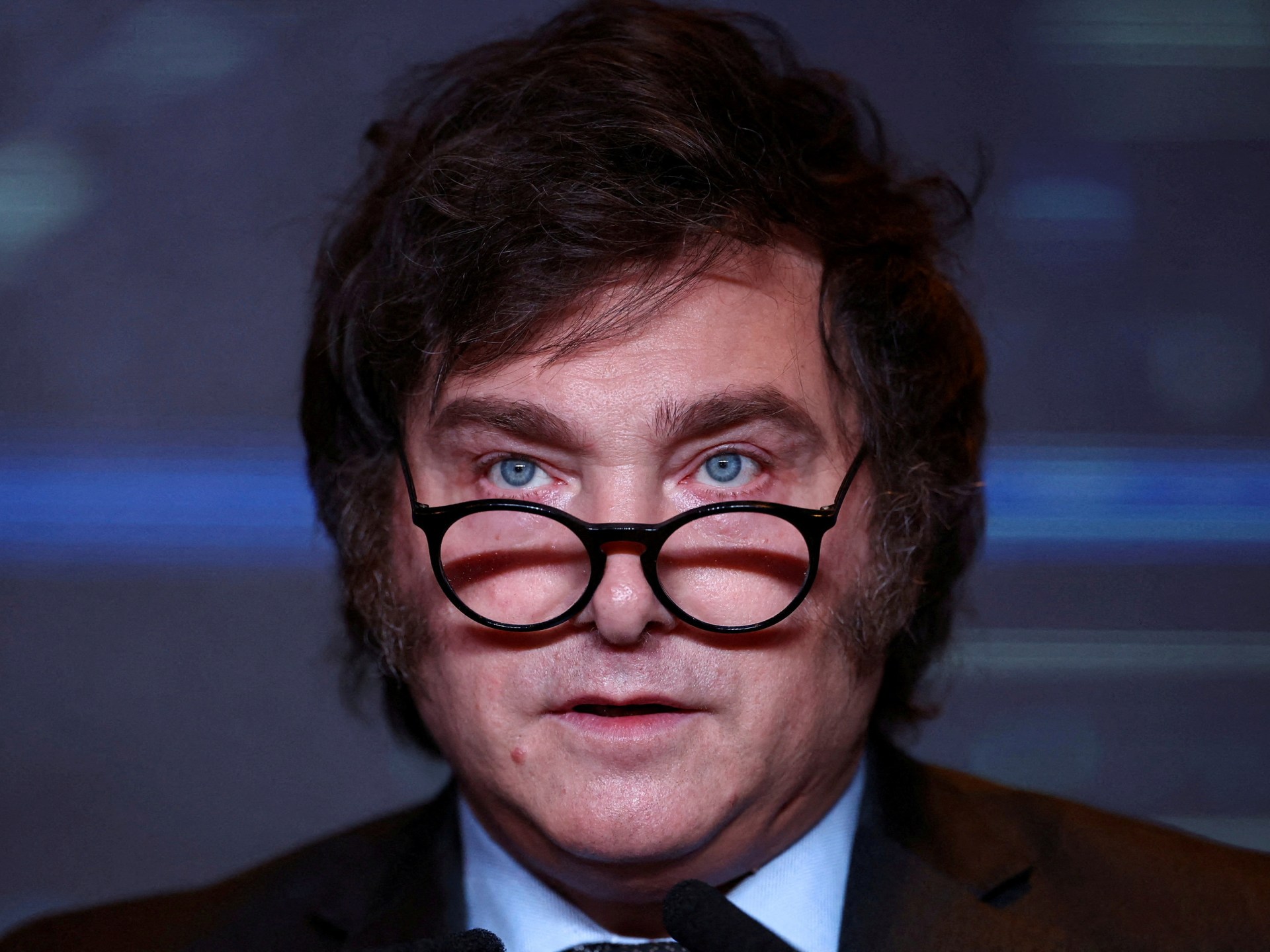
The piece presents Milei as a theatrical libertarian shaped by a violent home life and a deep distrust of the state. It follows his rise from fringe economist and cosplayer to president, then weighs his economic gamble and the corruption clouds around his government.
It tells how Javier Milei went from a rough childhood and wild costumes to becoming Argentina's president. He wants the government to be much smaller, like a school where the teacher mostly steps back, but the article says the results have been mixed.
Analysis
From fringe to presidency
The article portrays Javier Milei as a theatrical libertarian economist whose politics grew out of both ideology and personal history. Born in Buenos Aires in 1970, he grew up with an abusive father, while his sister Karina was his main protector. That family background is presented as central to understanding his anger, volatility, and closeness to Karina later in life.
Before politics, Milei moved through music, football, and academia. He sang in a Rolling Stones tribute band, briefly played as a goalkeeper for Chacarita Juniors, and later earned two master's degrees. In graduate school he encountered John Maynard Keynes and became drawn instead to libertarian thinkers who rejected the idea that government should manage the economy.
The Milei presidency
The piece says Milei turned his outsider persona into political capital, first appearing in costumes and then winning Argentina's presidency in 2023. He campaigned on “shock therapy,” meaning deregulation and sharp spending cuts aimed at rescuing a crisis-hit economy. The article says those policies have produced mixed results, while corruption scandals have complicated his rule.
It also frames Milei as intensely theatrical and often extreme: swinging a chainsaw at rallies, speaking in outsized terms, and surrounding himself with a tight inner circle. A quoted economist describes his government as “autocratic, anarchic and paranoid,” reflecting the article’s broader view that Milei’s personality and governing style are inseparable. The result is a portrait of a leader who embodies his own political project, but whose temperament, family ties, and economic gamble all create serious questions about where Argentina goes next.
Key points
- Milei is presented as a libertarian outsider whose politics were shaped by an abusive childhood and a strong bond with his sister Karina.
- Before entering politics, he moved through music, football, and academia, then embraced anti-Keynesian, pro-market ideas.
- He won the presidency on a promise of shock therapy: deregulation and deep spending cuts to revive Argentina's economy.
- The article says the results have been mixed, and corruption scandals have complicated his administration.
- Karina Milei, one of his closest confidants, was implicated in a kickback scheme involving foreign pharmaceutical firms.
If Milei's deregulation and spending cuts help stabilize the economy, Argentina could recover from its crisis and regain confidence. Success would also strengthen his claim that drastic reforms can work where older policies failed.
If the shock-therapy approach hurts people without fixing the economy, public anger could grow and his support could weaken. The corruption allegations around his inner circle and his confrontational style could further erode trust in the government.