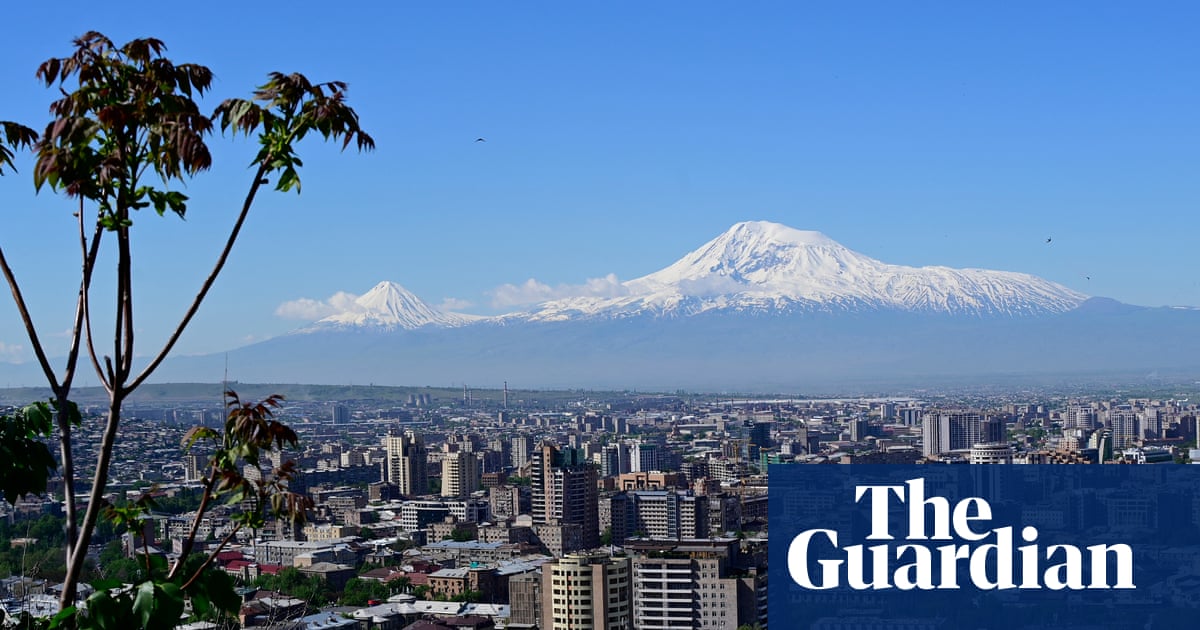
Armenia heads to polls amid Russian pressure and threat of ‘Ukrainian scenario’
Armenia votes on Sunday as Russia piles on trade pressure and warns against its westward drift. The election is also a test of Prime Minister Nikol Pashinyan's effort to pivot toward Europe and the US.
Intelligence analysis by GPT-5.4 Mini
The article says Armenia's election is unfolding under heavy Russian pressure, including import bans on key goods and open warnings from Moscow. It frames the vote as a test of whether Pashinyan can keep steering the country away from Russia despite deep economic dependence.
Armenia is like a small shop trying to choose a new customer while its biggest old customer keeps leaning on it. Russia is using trade pressure and warnings to try to stop Armenia from moving closer to Europe and the US.
Analysis
Pressure before the vote
Armenia goes to the polls after a period of growing friction with Moscow. The Guardian says Russia has imposed a series of trade restrictions on Armenian exports, including flowers, fish, fruit, and cognac, which are widely seen in Yerevan as political pressure rather than neutral regulation. The cognac ban matters because Russia is the main market for many Armenian producers, and the country sends about 40% of its exports there.
A slow break with Moscow
For much of the post-Soviet era, Armenia was one of Russia's closest partners in the South Caucasus. It hosted Russian troops, bought Russian weapons, and tied itself to Kremlin-led political and economic structures. That relationship has weakened under Prime Minister Nikol Pashinyan, whose Civil Contract party came to power after the 2018 revolution and has pushed Armenia toward Europe.
The turning point, the article says, came after Azerbaijan seized Nagorno-Karabakh in 2023 and more than 100,000 ethnic Armenians fled the enclave. Many Armenians saw Russia's response as a failure of the security guarantees it had promised through the Moscow-led Collective Security Treaty Organisation. Pashinyan later suspended Armenia's participation in that alliance.
Russia's warnings and Western opening
The story reports that Vladimir Putin warned Armenia could face a "Ukrainian scenario" if it kept pursuing European integration. Dmitry Medvedev also made a threat-laced comment comparing Pashinyan's fate to Leon Trotsky's. At the same time, the article says Pashinyan has been building ties with the West: Armenia hosted a European Political Community summit in April, and US figures including Donald Trump, JD Vance, and Marco Rubio have all shown attention to Yerevan.
The piece presents the election as a test of whether Armenia can keep moving westward while still living with economic dependence on Russia. It also suggests Moscow is trying to force a clear political choice through pressure, trade restrictions, and support for Pashinyan's challengers.
Key points
- Russia has banned imports of some Armenian goods, including cognac, which many in Armenia see as political pressure.
- The election is a test of Prime Minister Nikol Pashinyan's effort to steer Armenia toward Europe and away from Moscow.
- Armenia's break with Russia accelerated after Azerbaijan seized Nagorno-Karabakh in 2023 and Russia did not intervene.
- The article says Putin warned of a 'Ukrainian scenario' if Armenia continued European integration.
- Western engagement with Armenia has increased, including visits from senior US officials and a summit in Yerevan.
If Pashinyan's course holds, Armenia could keep widening its ties with Europe and the US while reducing its dependence on Russia. The article suggests that the country already has some new diplomatic attention and a clearer debate over its future direction.
If Russian pressure works, Armenia's economy could keep taking hits through trade bans and export disruption. The article also raises the risk that Moscow will use political pressure or influence operations to punish Yerevan for moving away from its orbit.