Armenia votes as Russia piles pressure on pro-West government
Armenians voted in an election that could keep the country moving toward Europe or pull it back toward Russia. Moscow is using trade and energy pressure as Prime Minister Pashinyan seeks re-election.
Intelligence analysis by GPT-5.4 Mini
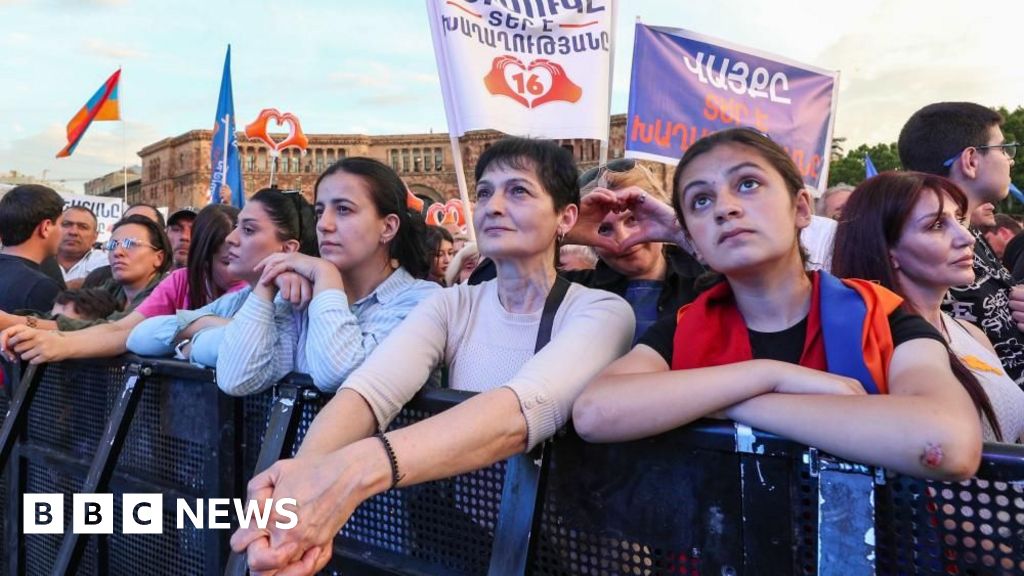
The vote in Armenia is really about foreign alignment: stay on a pro-Western path or lean back toward Russia. Prime Minister Nikol Pashinyan has pushed EU integration, but his support has slipped, while Moscow is applying economic pressure ahead of the result.
Armenia is at a fork in the road. One path goes closer to Europe, the other back toward Russia, which sells it gas and buys many of its goods. The vote is like choosing which direction the country should walk next.
Analysis
What the election is deciding
Armenia’s vote is being framed as a choice over the country’s direction: continue edging toward the West under Prime Minister Nikol Pashinyan, or return to a closer relationship with Russia, its traditional ally and biggest trading partner.
Pashinyan has moved Armenia in a more Western direction since taking power in 2018. The article says he backed a law to begin the process of joining the EU, pushed ahead with peace talks with Azerbaijan through a US-brokered deal, and hosted EU leaders and Ukrainian President Volodymyr Zelensky in Yerevan earlier this year.
Why support has weakened
Despite those moves, his domestic backing has fallen sharply. The main issue is Nagorno-Karabakh, the enclave that Azerbaijan seized in 2023, after which many Armenians blamed Pashinyan for conceding too much in the name of peace. The article says public opinion on the Azerbaijan peace deal is split, with a recent poll showing more support than opposition but not a clear consensus.
Russia’s pressure campaign
Moscow is not being subtle. The article says Vladimir Putin highlighted the economic costs Armenia could face from deeper ties with the West, and Russian authorities then banned exports of several Armenian goods, including flowers, mineral water, cognac, vegetables, and fruit. Russia still accounts for a large share of Armenia’s trade and supplies gas at a far lower price than European market levels.
At the same time, Armenia’s military dependence on Russia has weakened. The article quotes an analyst saying most military imports now come from India, France, China, and other countries, which limits Russia’s leverage. That leaves the economy as Moscow’s clearest tool.
The opposition is divided, and the article says Pashinyan’s party is leading in polling, but a large share of voters do not trust any political figure. That makes the result hard to call, and the stakes extend well beyond one election.
Key points
- Armenians voted in an election that may decide whether the country keeps moving toward the West or returns closer to Russia.
- Pashinyan has promoted EU integration and a peace process with Azerbaijan, but his support has fallen since 2021.
- Russia is using trade restrictions and energy leverage as its main pressure tools.
- The opposition is split, while many voters say they trust no political figure.
- Armenia still depends heavily on Russian trade, even as it has reduced reliance on Russian military equipment.
If Pashinyan’s line holds, Armenia could keep building ties with Europe and the United States while pressing ahead with peace efforts. The article also suggests the country is already reducing dependence on Russian military supplies, which could give it more room to make its own choices.
If Russian economic pressure bites hard, it could hurt Armenian exporters and sway voters against the pro-Western path. A divided opposition and deep public anger over Nagorno-Karabakh could also leave the country politically unstable after the vote.