As a ‘woman victim’, the government let me protest. At Jantar Mantar, it seems afraid
The article argues that the Indian state permits women to protest as 'victims' of sexual violence, but suppresses them when they protest as 'citizens' demanding voting rights and political agency, particularly at sites like Jantar Mantar.
Intelligence analysis by Gemini 2.5 Flash
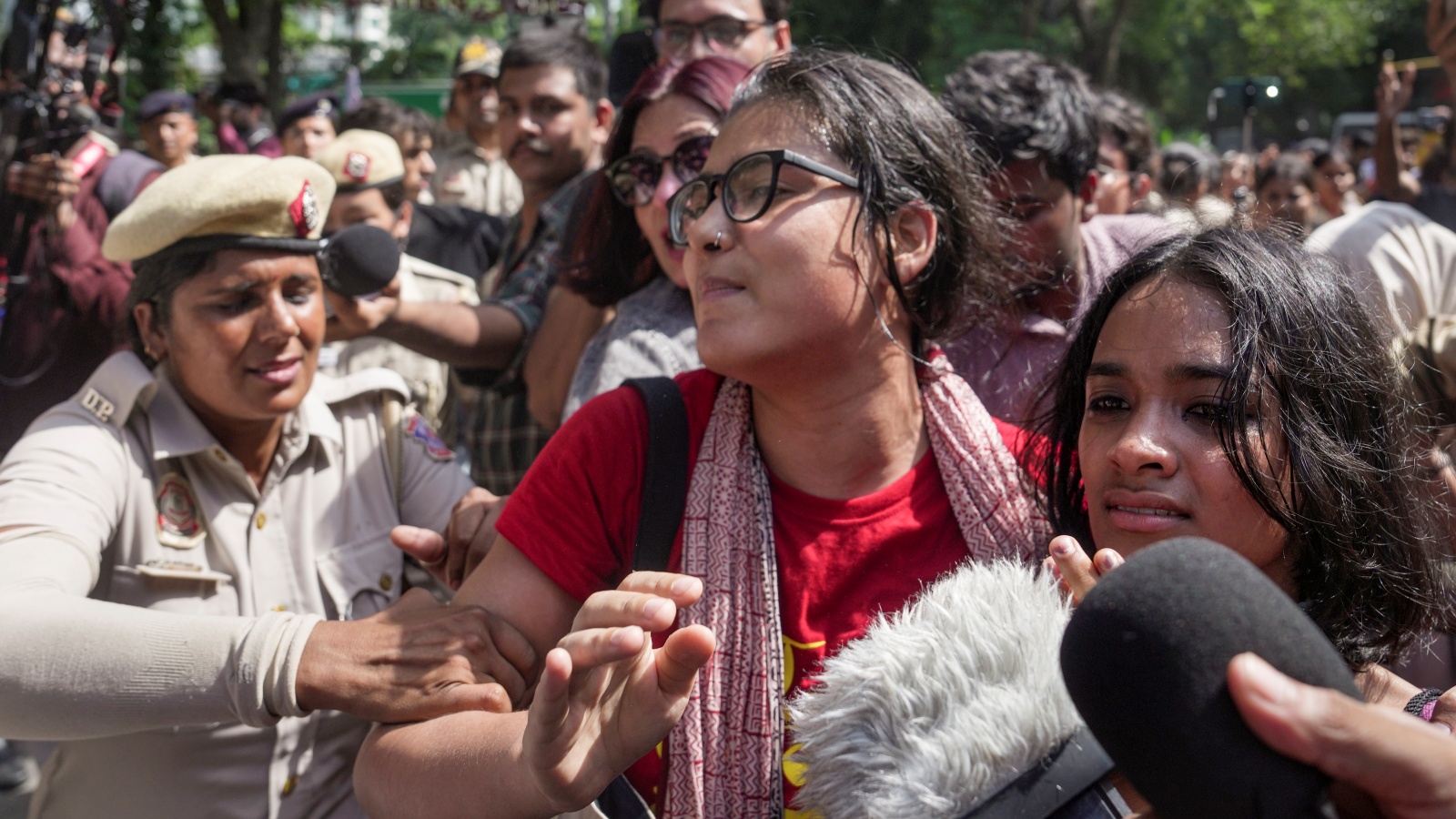
The author highlights a stark contrast in how the state polices women's dissent in India: protests against sexual violence are accommodated, framing women as victims needing protection. However, when women protest as politically sovereign citizens against issues like electoral malfeasance, they are met with brute force and suppression, indicating the state's fear of their collective a…
Imagine you want to play with your friends, but your parents only let you if you're crying because you fell down, so they can comfort you. But if you want to play because you're strong and want to choose your own games, they get scared and tell you to stop. This story says the government in India acts a bit like that with women who protest: it's okay if they protest as 'victims' needing help, but if they protest as strong citizens demanding their rights, especially about voting, the government gets worried and tries to stop them with force.
Analysis
The author critically examines the Indian state's approach to women's protests, drawing a sharp distinction between how it treats women perceived as 'victims' versus those asserting their 'citizenship.' When women protest against sexual violence, such as the Aastha Kunj gangrape, the state often accommodates these demonstrations, diverting traffic and granting permissions. This calculated patience, the article suggests, allows the patriarchal system to cast itself as a paternal protector, reducing systemic issues to manageable law and order problems.
Woman Victim
The state's preferred role for the political woman, according to the article, is that of a 'victim.' This framing allows the state to sanitize protests by recasting itself as a benevolent guardian, addressing issues like sexual violence through measures such as improved street lighting or increased police patrols. By doing so, the underlying systemic crisis is transformed into a more palatable problem of public safety, which the state can then be seen to 'solve.' This approach effectively depoliticizes the women's movement, containing it within a framework that does not challenge the broader power structures.
Electoral Malfeasance
The article links the suppression of protests to significant 'electoral malfeasance,' citing an estimated 13.5 crore voters who were flagged or locked out in electoral roll revisions. This disenfranchisement disproportionately affects marginalized groups, including women, Dalits, Adivasis, and Muslims. When these women step forward not as docile subjects but as equal citizens demanding their voting rights or protecting their land, the state's response shifts dramatically. Their assertion of political agency is perceived as a direct threat to the established hierarchy, leading to a more aggressive crackdown.
Jantar Mantar
The designated protest site of 'Jantar Mantar' serves as a critical example of this shift. While protests against sexual violence might be accommodated elsewhere, women protesting at Jantar Mantar against 'vote chori' (vote theft) are met with severe repression. The article describes how women protesters and journalists are 'groped, thrashed and shoved into buses,' often hauled off after sunset without the legally mandated presence of women police officers. This brutal response, the author argues, reveals the state's fear of politically sovereign women who refuse to be rescued and instead challenge the very foundations of electoral integrity and citizenship.
Key points
- The Indian state differentiates its policing of women's protests based on whether women are perceived as 'victims' or 'citizens'.
- Protests against sexual violence are often accommodated, allowing the state to assume a 'paternal protector' role.
- When women protest as politically sovereign citizens, particularly against electoral issues like 'vote chori', they face severe suppression.
- An estimated 13.5 crore voters, disproportionately women and marginalized groups, have been impacted by electoral roll revisions.
- Protests at Jantar Mantar against citizenship exclusion are met with brute force, including physical assault and illegal detention of women protesters.
Despite the harsh suppression, the article concludes with a powerful call for women to continue their 'unyielding defiance' in the fight for franchise and citizenship. This suggests a potential future where sustained activism could ultimately force the state to acknowledge and protect women's full political agency and voting rights, leading to a more inclusive democracy.
The article paints a grim picture of democratic backsliding, where the state actively suppresses women's political agency through brute force and electoral disenfranchisement. This could lead to further erosion of fundamental rights, increased marginalization of vulnerable communities, and a chilling effect on dissent, undermining the very foundations of a democratic republic.