As Asia’s strategic landscape evolves, what is the Quad’s purpose?
The article argues the Quad has become routine and reactive, but still has not defined what regional order it wants to build.
Intelligence analysis by GPT-5.4 Mini
The piece says Asia’s security debate has moved into a new era, but the Quad still looks stuck in an older one. It has expanded its agenda, yet its relevance appears tied more to reacting to China than to offering a clear positive vision for the region.
The article says the Quad is like a club that keeps meeting and adding projects, but still has not clearly said what job it is meant to do. It argues that if a team only reacts to one big neighbor, it may stay busy without becoming truly important.
Analysis
The article’s main argument
The author says Asia is entering a new strategic era, but the region’s geopolitical debate has not caught up. Governments are strengthening partnerships, supply chains, and military capabilities in response to China’s rise, yet the larger question of what kind of regional order they want remains unresolved.
What the Quad has done
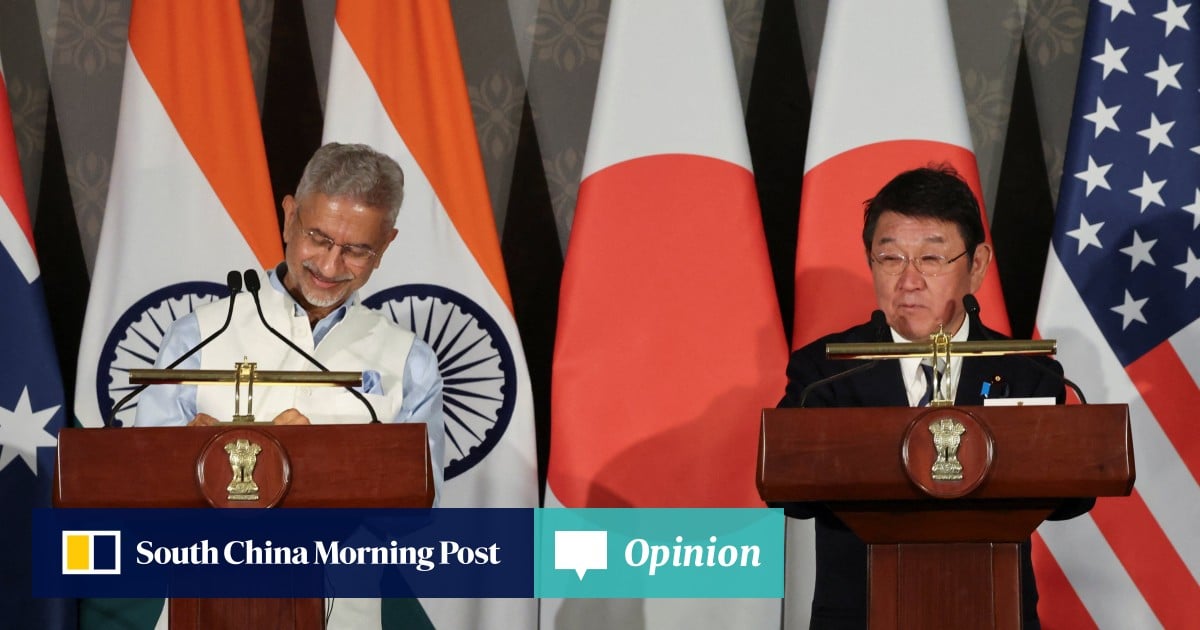
The Quad meeting in New Delhi is presented as a symbol of that uncertainty. The grouping has held many summits, ministerial meetings, and joint statements over nearly a decade. It has also broadened cooperation into maritime security, emerging technologies, supply chains, and critical minerals. The author does not dismiss that activity, but argues that activity alone does not equal purpose.
The core critique
The central concern is that the Quad still seems defined by China’s behavior rather than by its own positive agenda. In the author’s view, its urgency often comes from Beijing’s actions, not from a clearly stated regional vision. That creates an uncomfortable question: is the Quad better at reacting than leading?
Why the question matters
The piece suggests that India and similar countries cannot let their relationship with China be shaped only by a bloc built around reaction. If the Quad cannot explain why it is indispensable, then its meetings may continue to multiply without resolving the deeper strategic problem of what regional order Asian countries want to build.
Key points
- The author says Asia’s strategic environment has changed, but the regional debate still reflects an older era.
- The Quad has expanded cooperation, including on maritime security, technology, supply chains, and critical minerals.
- Its relevance is portrayed as increasingly tied to reacting to China rather than defining an independent vision.
- The article questions whether the Quad is leading regional strategy or mainly responding to events.
- For India, the piece warns against letting ties with China be defined only through a reactive grouping.
If the Quad can turn its growing work on maritime security, new technology, supply chains, and critical minerals into a clearer shared purpose, it could become a more useful regional platform. A stronger positive vision would make it easier for members to justify the group as more than a response to China.
If the Quad remains mostly a reaction to China’s behavior, its meetings may keep feeling routine rather than strategically meaningful. In that case, the grouping could stay active on paper while failing to become indispensable to Asia’s future order.