Asean and China must continue to strengthen collaborations: Chee Hong Tat
National Development Minister Chee Hong Tat said that ASEAN and China must continue to strengthen collaborations in areas of mutual interest, such as building liveable, resilient, and sustainable cities. He noted that Singapore and China cooperation has shown how countrie…
Intelligence analysis by Llama
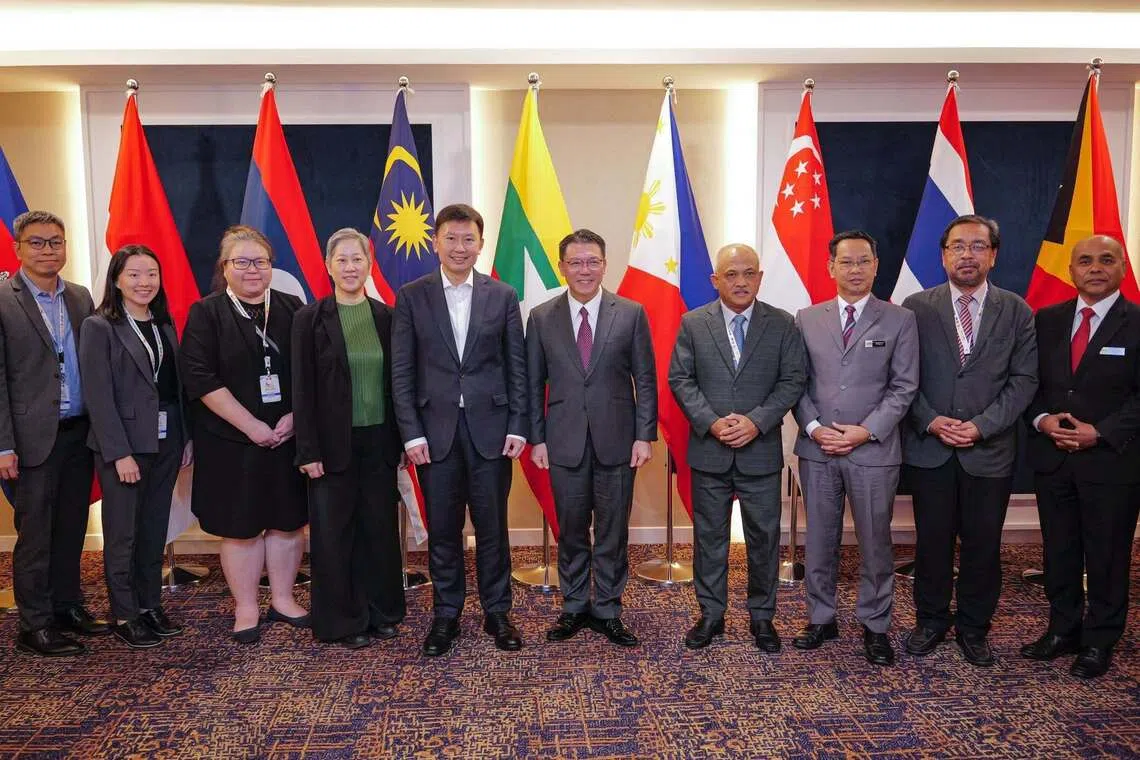
ASEAN and China must continue to strengthen collaborations in areas of mutual interest, such as building liveable, resilient, and sustainable cities. Singapore and China cooperation has shown how countries can co-create solutions.
Imagine building cities that are good for both the current and future generations. This is what ASEAN and China are working on together. They are sharing ideas and best practices on how to build cities that are liveable, resilient, and sustainable. This collaboration can help to deepen mutual learning in areas such as housing, landscaping, construction technology, and urban planning.
Analysis
Building Liveable, Resilient, and Sustainable Cities
The strengthening of collaborations between ASEAN and China is crucial for building future-ready cities that provide a good living environment for residents. This collaboration can also help to deepen mutual learning in areas such as housing, landscaping, construction technology, and urban planning.
At the regional level, ASEAN and China must continue to strengthen collaborations in areas of mutual interest. This can be seen in the Sino-Singapore Tianjin Eco-City project, which has shown how countries can co-create solutions that benefit their companies and citizens. The project has demonstrated the importance of international cooperation in building cities that are future-ready and provide a good living environment for residents.
At the global level, platforms such as the World Cities Summit provide useful opportunities for cities to learn from one another. This summit brings together city leaders from across the world to share ideas and best practices on how to build liveable, resilient, and sustainable cities. Singapore aims to continue close work with China and ASEAN for future-ready cities.
Deepening Mutual Learning
Singapore and Malaysia share the common goal of enhancing the liveability of our cities. We can deepen mutual learning in areas such as housing, landscaping, construction technology, and urban planning and renewal. This can be seen in the Johor-Singapore Special Economic Zone, which aims to encourage more investments and strengthen transport connectivity between Johor and Singapore.
Future-Ready Cities
Singapore will continue to work closely with China, fellow ASEAN member states, and other international counterparts to build cities that both the current and future generations will be proud to call home. We will continue to strengthen collaborations in areas of mutual interest, such as building liveable, resilient, and sustainable cities.
Key points
- ASEAN and China must continue to strengthen collaborations in areas of mutual interest.
- Singapore and China cooperation has shown how countries can co-create solutions.
- The Sino-Singapore Tianjin Eco-City project has demonstrated the importance of international cooperation in building cities that are future-ready and provide a good living environment for residents.
- Singapore and Malaysia share the common goal of enhancing the liveability of our cities.
- Singapore will continue to work closely with China, fellow ASEAN member states, and other international counterparts to build cities that both the current and future generations will be proud to call home.
If ASEAN and China continue to strengthen collaborations, they can build cities that are future-ready and provide a good living environment for residents. This can also help to deepen mutual learning in areas such as housing, landscaping, construction technology, and urban planning.
If ASEAN and China fail to strengthen collaborations, they may not be able to build cities that are future-ready and provide a good living environment for residents. This can also hinder mutual learning in areas such as housing, landscaping, construction technology, and urban planning.