Asia is reaching for the open road that Chinese AI offers
Asian nations are increasingly adopting open-source Chinese AI models to develop sovereign capabilities, moving away from a US-dominated AI landscape. This trend is driven by the economic advantages and accessibility of Chinese systems, fostering a multipolar AI order.
Intelligence analysis by Gemini 2.5 Flash
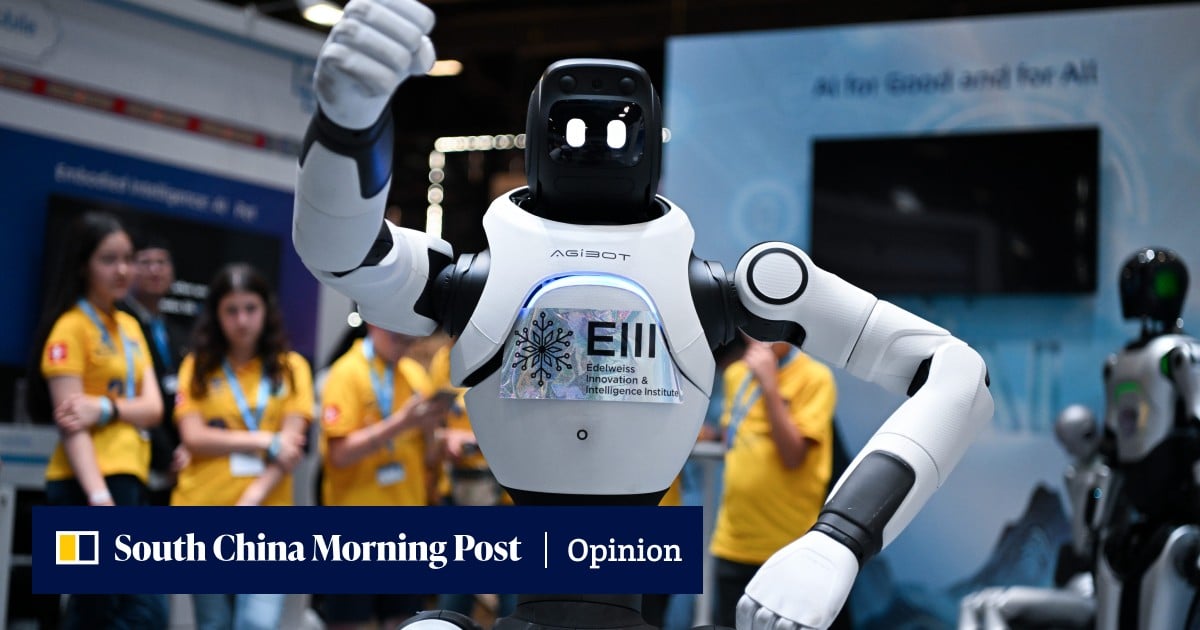
A recent Apec forum highlighted a consensus among Asia-Pacific ministers for open-source AI, challenging the notion of a zero-sum US-China tech rivalry. Many Asian governments are now building their own AI systems using open Chinese models, which are free, cost-effective, and allow for local data processing, enabling countries to control their AI capabilities rather than relying on fo…
Imagine countries wanting to build their own super-smart computer brains, like a helpful robot assistant for their people. Instead of buying a super expensive, ready-made robot from one big company, many Asian countries are now getting free blueprints and parts from Chinese companies. This lets them build their own unique robots that understand their language and culture, keep their secrets safe, and cost much less to run, like building with LEGOs instead of buying a whole pre-built toy.
Analysis
The article posits that Asia is embracing a new paradigm in artificial intelligence development, largely facilitated by the accessibility and cost-effectiveness of Chinese open-source models. This shift is seen as a direct challenge to the prevailing assumption of a singular, US-dominated AI future, instead fostering a multipolar environment where nations can cultivate their own AI capabilities. The economic realities, particularly the prohibitive costs of developing frontier AI models, make open Chinese systems an attractive alternative for many countries.
Apec digital technology and AI forum
At a recent Apec digital technology and AI forum in Chengdu, a significant statement was issued by ministers across the Asia-Pacific Economic Cooperation forum, endorsing open-source artificial intelligence models. This rare point of agreement underscores a regional desire for greater autonomy in AI development, moving beyond the framework of a zero-sum US-China competition. The forum's outcome suggests a collective aspiration among Asian nations to build an AI order that prioritizes sovereign control over technological dependence.
This consensus reflects a broader trend where governments are actively seeking to control their own AI infrastructure and data, rather than relying on foreign platforms that might entail data sovereignty concerns or higher operational costs. The open-source nature of leading Chinese systems, which are free to download and customize, aligns perfectly with these national objectives. It allows countries to develop tailored AI solutions that meet their specific needs while keeping data within their borders, addressing critical security and privacy considerations.
SEA-LION
One prominent example of this trend is AI Singapore's SEA-LION project, which transitioned from using Meta's Llama to running its large-language models on Alibaba Group Holding's Qwen. This move illustrates a practical decision driven by the advantages offered by Chinese open-source models. The ability to freely download and reshape these models, coupled with their lower operational costs, makes them a compelling choice for national AI initiatives.
SEA-LION's adoption of Qwen highlights how countries are building flagship national models directly on Chinese bases. This approach not only reduces the financial burden associated with AI development but also empowers local entities to adapt and innovate upon existing frameworks. Such projects are instrumental in fostering indigenous AI talent and infrastructure, contributing to the broader goal of technological sovereignty across Southeast Asia.
01.AI
The involvement of Chinese start-up 01.AI in developing Kazakhstan's AlemLLM further exemplifies the reach of Chinese AI solutions. AlemLLM was built on a DeepSeek base, demonstrating how even countries with limited computational resources, such as only a few hundred ageing chips, can access and leverage advanced AI technology. This accessibility is a critical factor in democratizing AI development beyond the leading global powers.
01.AI's contribution underscores the role of Chinese companies in enabling other nations to overcome significant barriers to entry in the AI space. By providing open-weight models that are less resource-intensive to operate, these companies are facilitating the creation of national AI systems in regions that might otherwise be left behind. This collaborative model fosters a more inclusive global AI ecosystem, where diverse nations can participate in and benefit from the ongoing AI revolution.
Key points
- Asian nations are increasingly adopting open-source Chinese AI models to build sovereign AI capabilities.
- A recent Apec forum saw ministers support open-source AI, challenging the assumption of a US-China zero-sum contest.
- Chinese open-weight models are free to download, run on local servers, and are significantly cheaper to operate than leading American systems.
- Countries are pursuing AI development through flagship national models, government pilot programs, and private start-ups leveraging Chinese bases.
- Examples include AI Singapore's SEA-LION project using Alibaba's Qwen and Kazakhstan's AlemLLM developed by 01.AI on a DeepSeek base.
The widespread adoption of open-source Chinese AI models could lead to a more equitable and multipolar global AI landscape, empowering more nations to develop sovereign AI capabilities. This accessibility could significantly lower the barriers to entry for AI development, fostering innovation and local control over critical technologies across Asia.