Assembly of Experts demands retribution for martyred Leader
Ayatollah Movahedi Kermani demanded prosecution and punishment of all those behind the assassination of Ayatollah Khamenei, at a Tehran memorial attended by Iran's top officials.
Intelligence analysis by Llama
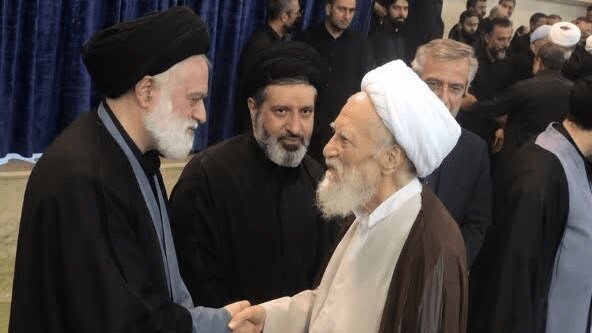
The head of Iran's Assembly of Experts used a major memorial for Ayatollah Khamenei to demand retribution for the leader's killing. The new Leader, Ayatollah Mojtaba Khamenei, sent a message insisting patience and revenge are not mutually exclusive, sharpening Iran's posture toward the US and Israel.
Think of the Assembly of Experts as a group of wise grandpas who pick Iran's top leader. Their grand leader got hurt very badly, and they are very sad but also very angry. They want everyone who did this to be found and punished. The new leader sent a note saying it is okay to feel sad AND want to get even. Lots of people came to a big ceremony in Tehran to remember their leader together.
Analysis
A Clerical Ultimatum from the Assembly
Ayatollah Movahedi Kermani's call for the identification, prosecution, and decisive punishment of everyone involved in the late Leader's killing represents the institutional weight of the Assembly of Experts behind a retaliatory posture. By delivering the demand on the sidelines of a state-scale memorial at the Grand Mosalla of Imam Khomeini rather than through a routine press release, the message was deliberately calibrated for public mobilization. The instruction to state institutions to pursue legal and intelligence files "with the utmost resolve" frames retribution as a constitutional and theological obligation, not a discretionary political choice. The presence of President Masoud Pezeshkian, Judiciary head Gholam-Hossein Mohseni-Eje'i, and Parliament Speaker Mohammad Baqer Qalibaf turns the ceremony into a visible show of cross-branch unity behind that line.
Mojtaba Khamenei's Message: Patience Without Pacifism
The message attributed to the new Leader, Ayatollah Seyyed Mojtaba Khamenei, and read aloud by the late Leader's eldest son Hojjatoleslam Seyyed Mostafa Khamenei, draws a careful but firm boundary. It thanks Iranian and Iraqi citizens for the scale of funeral participation, but then insists, according to the Tehran Times report, that "practicing patience in the face of such a loss is in no way incompatible with seeking revenge and confronting the global powers involved in these severe crimes." That phrasing is the political heart of the story: the new Leader is publicly rejecting the idea that mourning should translate into restraint, while preserving the language of patience for diplomatic cover. The reference to "global powers" — broader than just the US and Israel — leaves open the possibility of a confrontation wider than the February 28 campaign.
The Regional Calculus After February 28
The article situates the assassination at "the onset of the joint US-Israeli war," presenting the killing as the opening move of a regional conflict rather than a standalone operation. Funeral processions reportedly moved from Tehran across the border into Iraq, with historic marches through Najaf and Karbala — a route that simultaneously honors Iraqi Shia solidarity and projects Iranian religious authority into its neighbor. The state burial at the Imam Reza Shrine in Mashhad, completed only last week, suggests a deliberately staggered narrative rather than swift closure. The Tehran Times notes that continued mass gatherings show the public mood is being actively sustained, not allowed to dissipate — a signal that the demand for accountability is being treated as a long-running campaign rather than a finite phase of grief.
Key points
- Assembly of Experts head Movahedi Kermani demanded identification, prosecution, and punishment of all involved in the late Leader's killing
- A message from new Leader Ayatollah Mojtaba Khamenei, read by the late Leader's eldest son, insisted patience and revenge are not mutually exclusive
- Top officials including President Pezeshkian, the judiciary head, and parliament speaker attended the Grand Mosalla ceremony
- The article frames the killing as the opening of a 'joint US-Israeli war' that began on February 28
- Funeral processions extended from Tehran into Iraq via the holy cities of Najaf and Karbala, ending with burial at the Imam Reza Shrine in Mashhad
By channeling public grief into a legal and institutional demand for accountability rather than immediate retaliation, Iran's leadership may be buying diplomatic time and signaling that the response will be deliberate rather than impulsive. The new Leader's emphasis on patience alongside vengeance could also leave space for behind-the-scenes negotiations if regional conditions shift.
The explicit demand from the Assembly of Experts, combined with the new Leader's refusal to treat mourning and revenge as mutually exclusive, sharply raises the risk of a direct Iranian strike on US or Israeli assets. Continued mass gatherings and the framing of the killing as the start of a broader US-Israeli war suggest a sustained mobilization rather than a cooling-off period, with Iraq's holy cities now drawn into the public narrative.