Azerbaijan's President Suggests Building a Power Line Through Armenia; Yerevan Expresses Doubts
Azerbaijan's President Ilham Aliyev has suggested building a power line through Armenia to connect the country's autonomous region of Nakhchivan to the mainland. The proposal has sparked debate in Armenia, with some expressing concerns that it could compromise the country…
Intelligence analysis by Llama
Azerbaijan's President Ilham Aliyev has proposed building a power line through Armenia to connect the country's autonomous region of Nakhchivan to the mainland. The proposal has sparked debate in Armenia, with some expressing concerns that it could compromise the country's energy security.
Imagine a power line that connects two countries, Armenia and Azerbaijan. This power line would allow Azerbaijan to export electricity to Armenia, which would help Armenia to generate its own electricity and reduce its dependence on a single nuclear power plant. However, some people in Armenia are worried that this power line could compromise Armenia's energy security and make it more dependent on Azerbaijan.
Analysis
Armenia's Energy Security Concerns
Azerbaijan's President Ilham Aliyev has suggested building a power line through Armenia to connect the country's autonomous region of Nakhchivan to the mainland. The proposal has sparked debate in Armenia, with some expressing concerns that it could compromise the country's energy security.
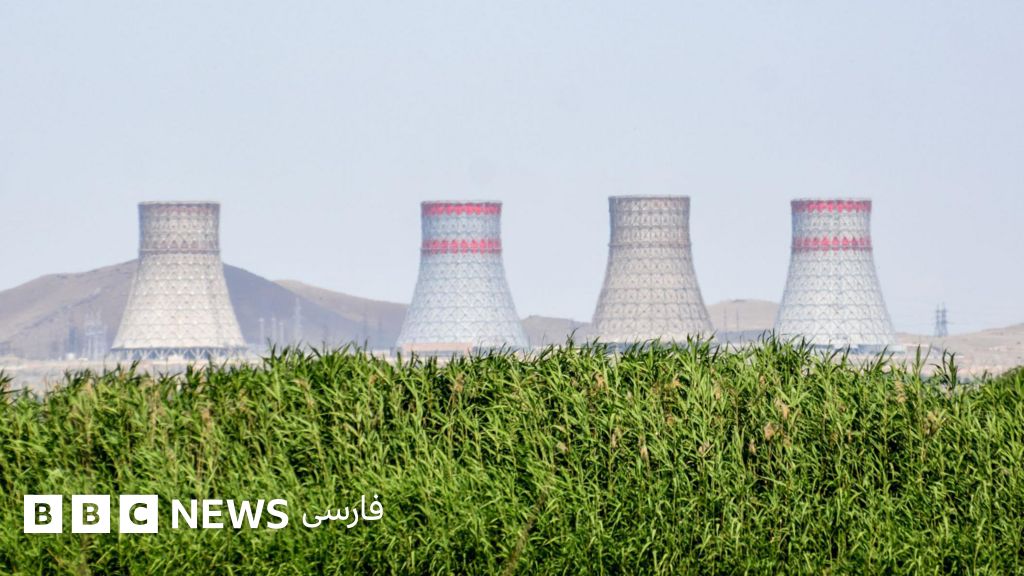
Armenia is heavily reliant on a single nuclear power plant, which is due to be shut down in 2036. The country's energy security is a major concern, and the proposal to build a power line through Armenia has raised fears that it could compromise the country's ability to generate its own electricity.
Azerbaijan's Motivations
Azerbaijan's President Ilham Aliyev has stated that the power line would not only benefit Azerbaijan but also Armenia. He has argued that the project would be a key component of the 'Tramp Peace and Prosperity Initiative', a regional energy project that aims to connect the energy grids of Azerbaijan, Armenia, and Turkey.
Regional Implications
The proposal has significant implications for the region, particularly in terms of energy security and geopolitics. Armenia's energy security is a major concern, and the proposal to build a power line through Armenia has raised fears that it could compromise the country's ability to generate its own electricity.
The project would also have significant implications for the region's energy politics, particularly in terms of Azerbaijan's relationship with Russia and Turkey. Azerbaijan has been seeking to diversify its energy exports and reduce its dependence on Russia, and the proposal to build a power line through Armenia could be seen as a way to achieve this goal.
Key points
- Azerbaijan's President Ilham Aliyev has suggested building a power line through Armenia to connect the country's autonomous region of Nakhchivan to the mainland.
- The proposal has sparked debate in Armenia, with some expressing concerns that it could compromise the country's energy security.
- The project would be a key component of the 'Tramp Peace and Prosperity Initiative', a regional energy project that aims to connect the energy grids of Azerbaijan, Armenia, and Turkey.
If the power line project is successful, it could lead to increased energy cooperation between Armenia and Azerbaijan, which could have positive implications for the region's energy security and geopolitics.
However, there are also risks associated with the project, including the potential for Armenia to become more dependent on Azerbaijan's energy exports, which could compromise its energy security.