‘Ball was on the ground’: Ex-cricketer baffled as Dhruv Jurel catch sparks controversy
India moved within touching distance of victory in the Galle Test on Tuesday, making repeated breakthroughs in Sri Lanka's batting order to leave themselves needing six more wickets on the final day to take a 1-0 lead in the two-match series. But the fourth day's play was…
Intelligence analysis by Llama
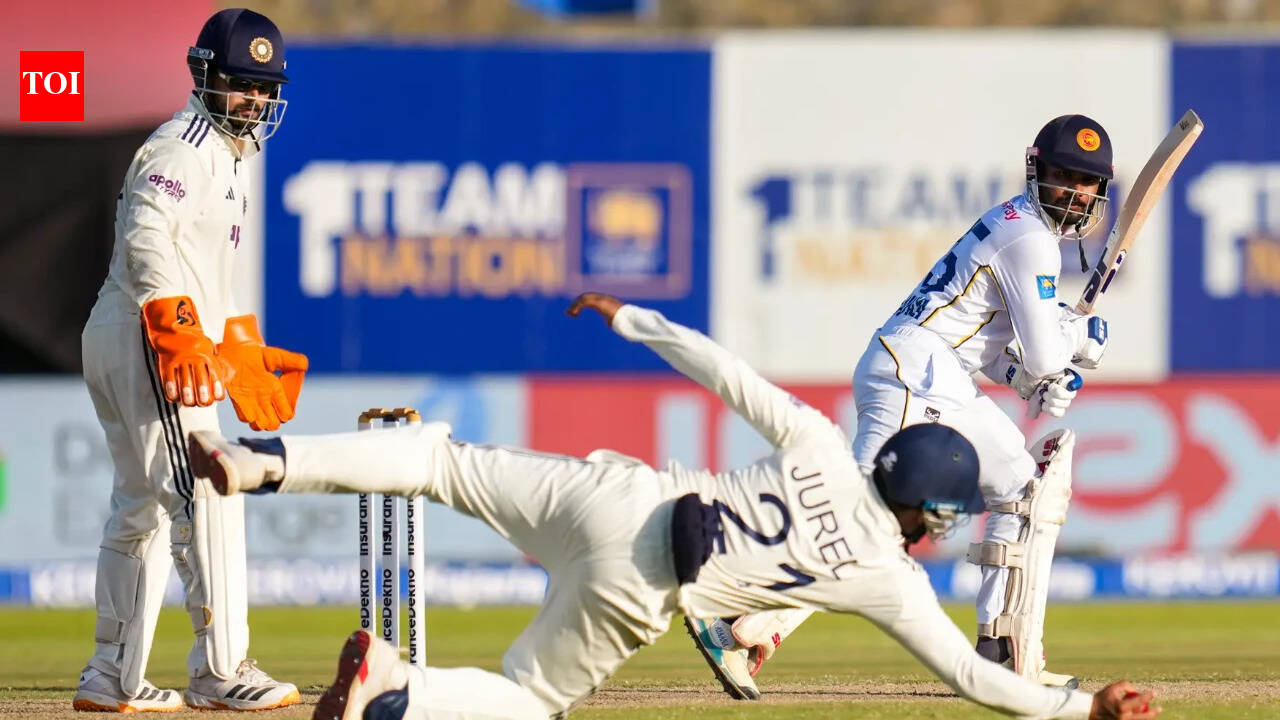
A contentious third-umpire decision involving wicketkeeper Dhruv Jurel's catch to dismiss Sri Lanka opener Lahiru Udara has sparked debate among fans and commentators in the Galle Test.
Imagine you're playing cricket and the umpire makes a decision that you don't agree with. That's what happened in the Galle Test when Dhruv Jurel caught a ball, but the umpire thought it was a clean catch. The problem is that the ball might have touched the ground, which means it's not a clean catch. This has sparked a big debate among fans and commentators, and it's made people think about how technology can help improve the accuracy of umpiring decisions.
Analysis
The Controversial Catch: A Closer Look at Dhruv Jurel's Decision-Making Skills
The fourth day of the Galle Test was marked by a contentious third-umpire decision involving wicketkeeper Dhruv Jurel's catch to dismiss Sri Lanka opener Lahiru Udara. The incident took place on the fourth ball of the 22nd over, with Manav Suthar bowling. Jurel completed the catch, but Udara immediately appeared unsure whether the ball had been taken cleanly. The matter was referred to third umpire Raveendra Wimalasiri, with replays showing the ball going into Jurel's hands but leaving some doubt over whether his fingers were underneath it. Jurel had held the ball with his right hand and, as his momentum carried him forward, there appeared to be a possibility that the ball had made contact with the ground. Wimalasiri, however, was satisfied with the available evidence and ruled Udara out. Udara was visibly unhappy with the decision and appeared reluctant to leave the field. The Sri Lankan opener had made 16 off 58 balls before being forced to walk back to the pavilion.
Former Sri Lanka batter Russel Arnold, who was part of the commentary team, was also not convinced that the catch was clean. He felt the ball had touched the ground and believed Udara should have remained at the crease. “It's been pushed along the ground for a bit. The ball was pushed along the ground. You can see, it was pushed along. When you look at that slow-motion replay, it seems that the fingers were pushed back and the front of the ball was touching the ground,” Arnold said on air. Join conversation View All Comments → Share your thoughts in the comments Post Comment Be respectful · TOI community guidelines “For me, the ball is on the ground there. The fingers are behind the ball,” he added.
India had set Sri Lanka a target of 372 after being dismissed for 193 in their second innings. Rishabh Pant top-scored with 66 and also became the first Asian batter to cross 100 sixes in Test cricket. Sri Lanka struggled during their chase as India picked up four wickets before stumps. Suthar claimed two, while Mohammed Siraj and Prasidh Krishna took one each. The hosts finished the fourth day on 84/4 and still require 288 runs to pull off a remarkable victory. With rain forecast for the final day, India will have to negotiate the weather as they look to complete a 1-0 series lead in Galle.
The contentious third-umpire decision involving Dhruv Jurel's catch has sparked debate among fans and commentators, highlighting the importance of accurate umpiring decisions in cricket. The incident has also raised questions about the role of technology in cricket and whether it can help improve the accuracy of umpiring decisions.
The Impact of the Controversial Catch on the Game
The contentious third-umpire decision involving Dhruv Jurel's catch has had a significant impact on the game. The decision has sparked debate among fans and commentators, with some arguing that the catch was clean and others believing that the ball had touched the ground. The incident has also raised questions about the role of technology in cricket and whether it can help improve the accuracy of umpiring decisions.
The Future of Umpiring Decisions in Cricket
The contentious third-umpire decision involving Dhruv Jurel's catch has highlighted the importance of accurate umpiring decisions in cricket. The incident has also raised questions about the role of technology in cricket and whether it can help improve the accuracy of umpiring decisions. As the game continues to evolve, it is likely that the use of technology will become more prevalent in umpiring decisions, with the aim of improving the accuracy of these decisions.
Key points
- Dhruv Jurel's catch to dismiss Sri Lanka opener Lahiru Udara was a contentious third-umpire decision.
- The incident has sparked debate among fans and commentators, highlighting the importance of accurate umpiring decisions in cricket.
- The use of technology in cricket could help improve the accuracy of umpiring decisions.
- The contentious third-umpire decision involving Dhruv Jurel's catch has had a significant impact on the game.
- The incident has raised questions about the role of technology in cricket and whether it can help improve the accuracy of umpiring decisions.
If the contentious third-umpire decision involving Dhruv Jurel's catch is reviewed and corrected, it could lead to a more accurate and fair outcome for the game. This could also lead to a greater emphasis on the use of technology in cricket to improve the accuracy of umpiring decisions.
If the contentious third-umpire decision involving Dhruv Jurel's catch is not reviewed and corrected, it could lead to a loss of trust in the umpiring decisions and a negative impact on the game. This could also lead to a greater emphasis on the use of technology in cricket to improve the accuracy of umpiring decisions, but it could also lead to a more complex and time-consuming process.