Benin-Burkina Faso: No Joint Operation at the Border
Social media videos suggesting a joint military operation between Benin and Burkina Faso have been clarified as misinformation, with the situation rooted in an old territorial dispute.
Intelligence analysis by Gemini 2.5 Flash
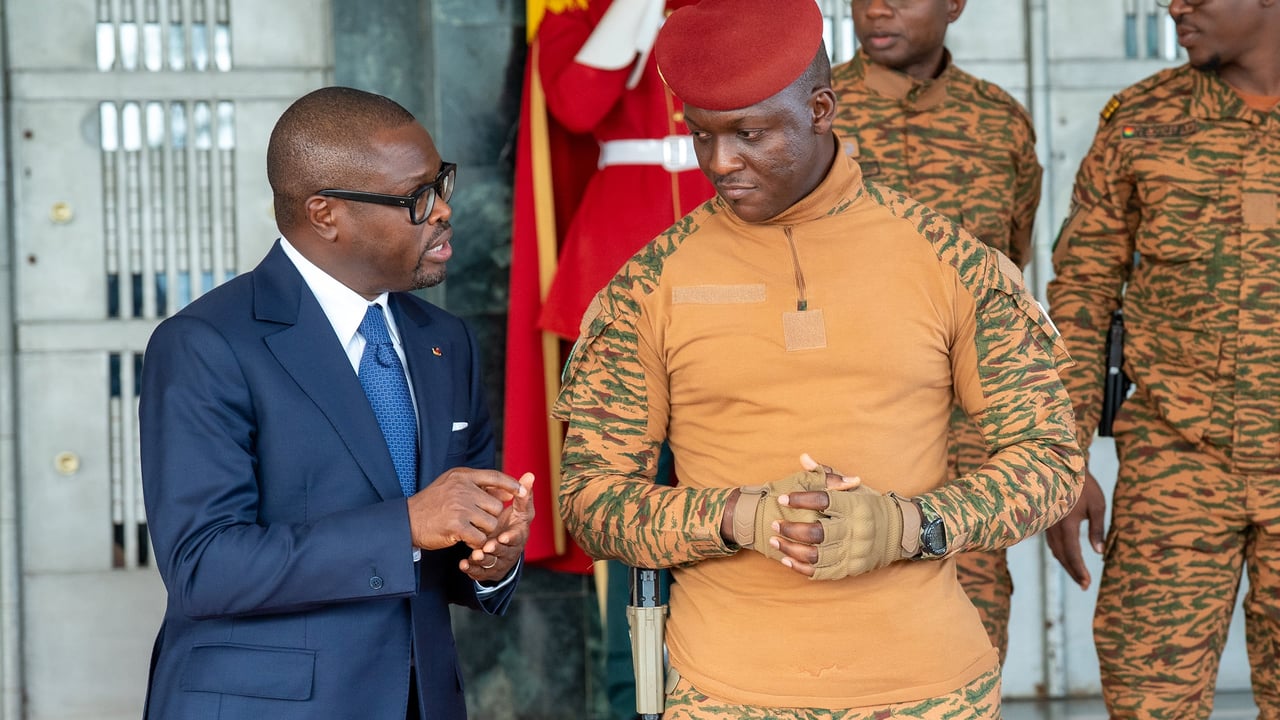
Reports of a joint military operation between Benin and Burkina Faso, fueled by social media videos showing soldiers interacting at the border, have been debunked. The article clarifies that the situation is more complex, stemming from a long-standing territorial disagreement rather than a coordinated military action.
Imagine two countries, Benin and Burkina Faso, are neighbors. Some people saw videos of their soldiers near the border, waving hello to each other, and thought they were starting a big team-up mission. But actually, they were just being friendly, and there's an old argument about exactly where their border line is. So, no big mission, just a friendly wave and a reminder of an old boundary talk.
Analysis
Unraveling the Border Incident
On July 14, a series of videos circulated widely on social media, depicting columns of Burkinabe military vehicles moving along a road while Beninese soldiers observed them, exchanging greetings. These images quickly led several media outlets in Benin, Burkina Faso, and Togo to report on a supposed joint military operation between the two West African nations. The rapid spread of such information highlights the significant role social media plays in shaping public perception and news narratives, often outpacing official clarifications.
However, the article from Jeune Afrique swiftly moved to correct this narrative, stating unequivocally that no joint operation had taken place. The interaction, while seemingly cooperative, was misinterpreted, underscoring the need for careful verification of information, especially in sensitive geopolitical contexts. The incident serves as a reminder of how easily visual content can be taken out of context and amplified, leading to widespread but inaccurate conclusions about military activities.
The Shadow of Territorial Disputes
The core of the misunderstanding, according to the article, lies in an "old territorial dispute" between Benin and Burkina Faso. While the specifics of this dispute are not detailed in the provided text, its existence provides a crucial backdrop to the border interactions. Such long-standing disagreements can make any unusual activity near the border prone to misinterpretation, as observers might project existing tensions or hopes onto ambiguous events. The presence of a territorial dispute suggests that even routine patrols or movements could be viewed through a lens of suspicion or, conversely, as a sign of unexpected cooperation.
This underlying issue complicates bilateral relations and necessitates careful diplomatic management. The article implicitly suggests that the friendly greetings exchanged between soldiers, while positive, do not necessarily signify a formal joint operation but rather a momentary interaction within a broader, more complex border dynamic. Addressing these historical territorial issues is paramount for fostering genuine and lasting security cooperation between the two countries.
Regional Security Context and Misinformation
The incident occurs within a broader regional context marked by significant security challenges, particularly the persistent threat of jihadist groups in the Sahel. Neighboring regions, such as the Togolese Savanes, are under constant pressure from incursions by militants from both Burkina Faso and Benin, as highlighted by related articles. In such an environment, accurate information about military movements and cooperation is vital for regional stability and counter-terrorism efforts. Misinformation, like the false reports of a joint operation, can sow confusion, undermine trust, and potentially complicate coordinated responses to shared security threats.
Furthermore, the article references past efforts to enhance regional cooperation, such as the commitment by Benin's President Romuald Wadagni and Burkina Faso's transitional President Ibrahim Traoré to reopen the border between Benin and Niger and resume security cooperation with Ouagadougou. These efforts underscore the desire for improved regional security collaboration. The recent border incident, therefore, serves as a critical case study in how easily these efforts can be overshadowed or misconstrued by unverified information, emphasizing the need for clear communication channels and robust fact-checking mechanisms in a volatile region.
Key points
- Videos circulated on social media on July 14 showed Burkinabe and Beninese soldiers interacting at their shared border.
- These videos led to media reports of a joint military operation between the two countries.
- The article clarifies that no such joint operation occurred, debunking the initial reports.
- The situation is linked to a long-standing territorial dispute between Benin and Burkina Faso.
- The incident underscores the challenges of misinformation in a sensitive regional security context.
The friendly exchange between soldiers, despite the underlying territorial dispute, suggests a potential for de-escalation and diplomatic resolution of border issues. The swift clarification by media outlets helps prevent further misinformation from escalating tensions and supports regional stability.
The ease with which social media videos can be misinterpreted highlights the fragility of regional security and the potential for misinformation to exacerbate existing tensions, especially given the ongoing jihadist threats in the Sahel region.