Benin: The First Economic Markers of the Wadagni Era
Benin's new president, Romuald Wadagni, is continuing the economic policies of his predecessor, Patrice Talon, focusing on fiscal stability while increasing social spending and promoting equitable growth distribution.
Intelligence analysis by Gemini 2.5 Flash
Romuald Wadagni's initial hundred days as Benin's president indicate a continuation and acceleration of the economic trajectory set by Patrice Talon. As a former finance minister, Wadagni prioritizes maintaining the country's strong market reputation while shifting focus towards social welfare and balanced territorial development.
Imagine Benin got a new school principal, Mr. Wadagni. He used to be the school's money manager, so he knows how to keep the school's budget healthy, just like the old principal, Mr. Talon. But Mr. Wadagni also wants to make sure all kids get new books and that every classroom, even in different parts of the school, gets fair resources.
Analysis
Romuald Wadagni
Romuald Wadagni, Benin's newly elected president, has quickly established his administration's economic direction, which is characterized more by an acceleration of existing policies than a radical departure. Having served as the Minister of Economy and Finance for nearly a decade, Wadagni brings a deep understanding of the nation's fiscal landscape to his new role. His initial hundred days in office reflect a strategic continuation of the economic framework that has defined Benin's recent past. A central tenet of President Wadagni's approach is the preservation of the macroeconomic balances that have bolstered Benin's standing among international markets. Simultaneously, his administration is placing a renewed emphasis on increasing social spending and ensuring a more equitable distribution of economic growth across all territories. This dual focus aims to maintain investor confidence while addressing internal disparities and improving the welfare of the populace.
Patrice Talon
The economic trajectory under President Wadagni is explicitly framed as a continuation of the path initiated by his predecessor, Patrice Talon. Talon, who steered the country's finances for a significant period, laid the groundwork for the policies that Wadagni is now building upon. This continuity suggests a deliberate strategy to ensure stability and predictability in Benin's economic governance. Despite Wadagni's new leadership, the article and related content imply that the influence of Patrice Talon remains significant, with Talon now serving as President of the Senate. This dynamic suggests that Wadagni operates, to some extent, "in the shadow" of his predecessor, indicating a carefully managed transition where the former leader's vision continues to shape the national agenda. The relationship between the two figures is crucial for understanding the nuances of current policy implementation.
Glo-Djigbé
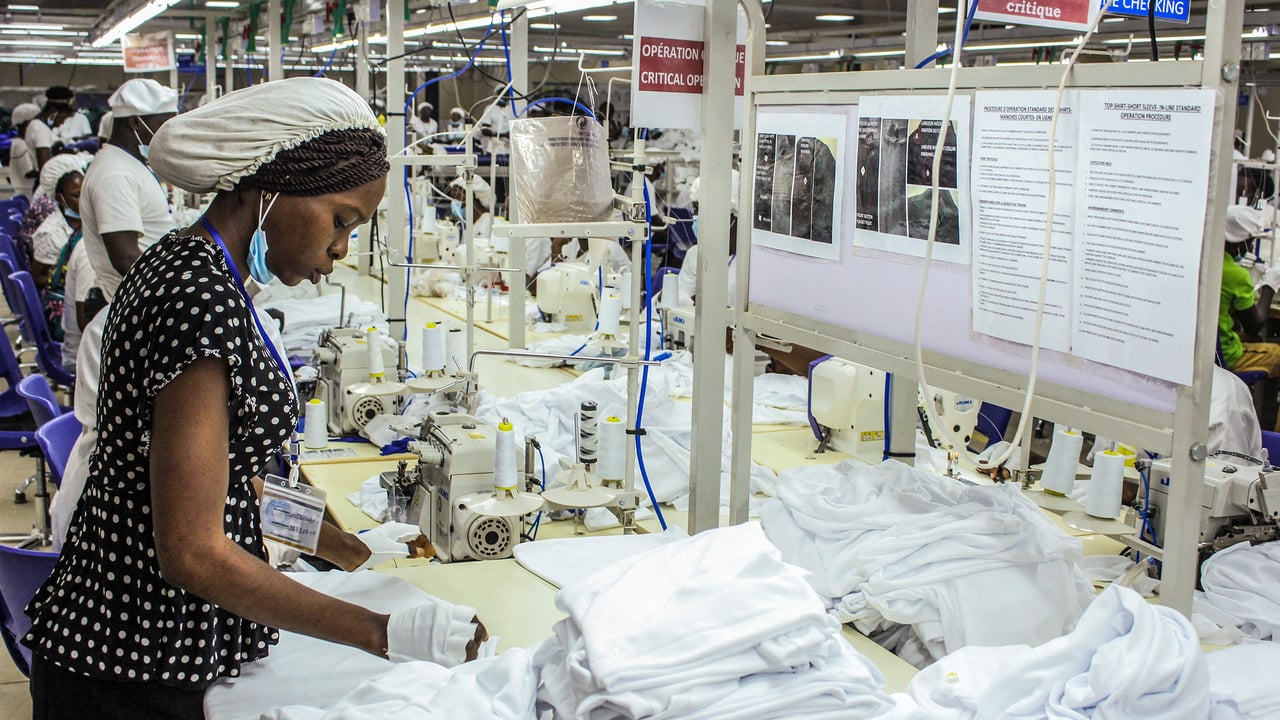
The Glo-Djigbé industrial zone (GDIZ), located approximately 45 kilometers from Cotonou, is highlighted as a tangible example of Benin's ongoing economic development. The article specifically mentions a shirt manufacturing factory within this zone, illustrating the type of industrial activity that contributes to the nation's economic output. Such zones are vital for attracting investment and fostering local production. The continued focus on areas like GDIZ aligns with Wadagni's stated goal of better distributing economic growth and creating opportunities beyond the capital. By promoting industrial hubs and manufacturing capabilities, the administration aims to generate employment and stimulate regional development, thereby translating national growth into tangible benefits for diverse communities across Benin. This strategy is key to achieving more inclusive prosperity.
Key points
- Romuald Wadagni's presidency marks an acceleration, not a rupture, in Benin's economic policy.
- Wadagni, a former finance minister, aims to preserve the country's strong reputation with financial markets.
- A key focus of the new administration is increased social spending and a more equitable distribution of growth across territories.
- The economic trajectory largely continues the path established under former President Patrice Talon.
- The Glo-Djigbé industrial zone exemplifies ongoing economic development efforts.
The continuity in economic policy under President Wadagni, combined with his focus on social spending and equitable growth, could lead to sustained economic stability and improved living standards for a broader segment of the Beninese population. This approach might strengthen investor confidence while addressing social inequalities.
While continuity is generally positive, the article hints at the "shadow of Patrice Talon" still hovering, suggesting potential challenges for Wadagni to fully establish his own distinct leadership. If the emphasis on social spending isn't carefully managed, it could strain the fiscal balances that have built Benin's market reputation.