In Morocco, striking lawyers invite themselves into the legislative campaign
Moroccan lawyers have been on strike for over 100 days in 2026, protesting Law 66.23 which reforms legal professions, including digital procedures and stricter entry rules. Their ongoing protest is now influencing the legislative election campaign.
Intelligence analysis by Gemini 2.5 Flash
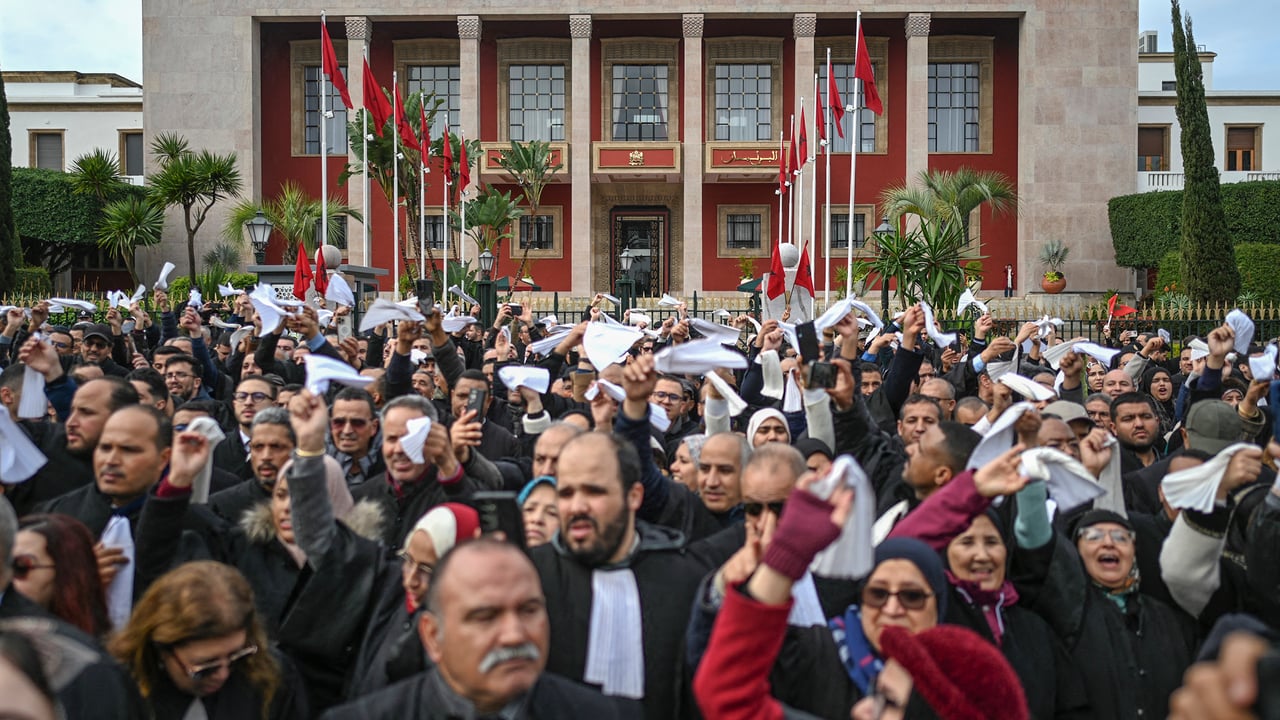
A prolonged strike by Moroccan lawyers against Law 66.23, which seeks to modernize and regulate the legal profession, has intensified following the law's adoption in August. The striking lawyers are strategically using their protest to inject their grievances into the ongoing legislative election campaign, aiming to pressure political parties.
Imagine a group of grown-up lawyers in Morocco are upset about new rules for their job, like using computers more and making it harder for new lawyers to start. They've stopped working for a long time, over 100 days! Now, there's an election coming up, and they're making sure everyone running for office knows they're unhappy, hoping the new leaders will change the rules.
Analysis
The ongoing strike by Moroccan lawyers, which has already spanned over one hundred days in 2026, represents a significant challenge to the government's legal reform agenda and has now become an unexpected factor in the legislative election campaign. The core of the dispute revolves around Law 66.23, a legislative text aimed at reorganizing the legal profession. Initially, the government attempted to de-escalate tensions by promising a review of the draft law earlier in the year. However, the subsequent adoption of the contested legislation in August reignited and intensified the lawyers' protest, pushing them to adopt a more confrontational stance.
Law 66.23
The contentious Law 66.23 seeks to introduce substantial changes to the practice of legal professions in Morocco. Lawyers are particularly vocal in their opposition to several key provisions within this new framework. Among the most significant concerns are the proposed dematerialization of legal procedures, which implies a shift towards digital processes, and the implementation of stricter conditions for entry into the legal profession. These changes are perceived by many lawyers as potentially undermining traditional practices, increasing bureaucratic hurdles, or limiting access to the profession.
The government's stated aim for Law 66.23 is likely to modernize the legal system, enhance efficiency, and ensure higher standards for legal practitioners. However, the legal community views these reforms with skepticism, fearing that they may not adequately address the practical realities of their work or could inadvertently create new obstacles. The resistance highlights a fundamental disagreement over the direction and implementation of legal sector reforms.
August Adoption
The adoption of Law 66.23 in August marked a critical turning point in the dispute. Prior to this, there had been a period of relative calm, with the government's earlier promise to re-examine the draft law offering a glimmer of hope for a negotiated resolution. However, the decision to proceed with the law's adoption without, from the lawyers' perspective, adequately addressing their concerns, was seen as a betrayal of trust and a disregard for their professional input.
This move by the government effectively hardened the stance of the striking lawyers, transforming their protest from a series of intermittent actions into a sustained and more politically charged movement. The adoption signaled a firm governmental resolve to push through the reforms, which in turn galvanized the opposition within the legal fraternity, leading to a renewed and more determined phase of industrial action. The timing, just ahead of legislative elections, amplified the political stakes.
Legislative Campaign
With the legislative elections underway, the striking lawyers have strategically positioned their grievances to influence the political discourse. By maintaining their strike and public demonstrations, such as the one held in Rabat on February 6, 2026, they are forcing political parties and candidates to acknowledge and potentially take a stance on the controversial legal reforms. This tactic aims to elevate the issue beyond a professional dispute into a matter of public and electoral concern.
The lawyers' objective is to ensure that the incoming legislature is compelled to revisit Law 66.23, either through amendments or a complete overhaul. Their sustained action during the campaign period puts pressure on candidates to articulate their positions on legal reform and potentially promise concessions to gain electoral support. This integration of a professional dispute into the broader political campaign underscores the significant leverage that organized professional bodies can exert in a democratic process, especially when their concerns resonate with wider issues of governance and justice.
Key points
- Moroccan lawyers have been on strike for over 100 days in 2026.
- The strike protests Law 66.23, which reorganizes legal professions.
- Key contested provisions include dematerialization of procedures and stricter entry conditions.
- The law's adoption in August intensified the strike.
- Lawyers are now using the strike to influence the ongoing legislative election campaign.
If the lawyers' demands are heard and a constructive dialogue emerges, it could lead to a revised law that balances modernization with professional concerns, fostering greater trust between the government and the legal community. This could result in a more robust and widely accepted legal framework for Morocco.
The continued standoff between the government and striking lawyers could escalate, further disrupting the justice system and potentially undermining public confidence in legal reforms. If the issue remains unresolved, it could become a persistent point of contention, complicating the legislative agenda of the incoming government.